
Health
Traditional Birth Attendants: Unsung Heroes in Maternal Healthcare


By Rabilu Abubakar, Gombe
Ambassador Fatima Muhammad Paga, the United Nations Focal Person to Yobe State Governor Mai Mala Buni, has highlighted the indispensable role of traditional birth attendants (TBAs) in improving maternal healthcare and reducing maternal mortality rates in Nigeria.
In an interview with our reporter in Gombe, Ambassador Paga emphasized the urgent need to prioritize the deployment of traditional birth attendants, particularly in underserved rural communities where healthcare infrastructure and personnel remain critically inadequate.
“Many rural areas face significant gaps in access to healthcare services, particularly for pregnant women. Reviving and empowering the system of traditional birth attendants is a practical step to bridge this gap and ensure safer childbirth experiences,” she said.
Ambassador Paga explained that traditional birth attendants are not only critical in facilitating safe deliveries but also in providing vital pre- and postnatal care to mothers and newborns in areas where hospitals and skilled healthcare professionals are scarce.
“Their contribution is not limited to rural areas alone. Even in urban settings, where healthcare systems can be overwhelmed, traditional birth attendants play a crucial role in alleviating pressure on hospitals and reducing maternal mortality rates,” she added.
She further noted that this grassroots healthcare approach complements government efforts to improve health outcomes, particularly in Nigeria’s rural regions, where many women face life-threatening complications due to inadequate access to professional care.
To enhance the impact of TBAs, Ambassador Paga called on the government and stakeholders to invest in their training and provide them with essential tools and resources.
“Equipping traditional birth attendants with modern skills and basic healthcare supplies will significantly boost their effectiveness and ensure better health outcomes for mothers and their babies,” she said.
She also stressed the importance of public awareness campaigns to sensitize communities about the benefits of utilizing traditional birth attendants, particularly in areas where cultural beliefs might discourage hospital visits.
“The collective effort of government agencies, non-governmental organizations, and community leaders can transform maternal healthcare across Nigeria.
By supporting and modernizing the role of traditional birth attendants, we can save countless lives,” she concluded.
By Our Health Reporter
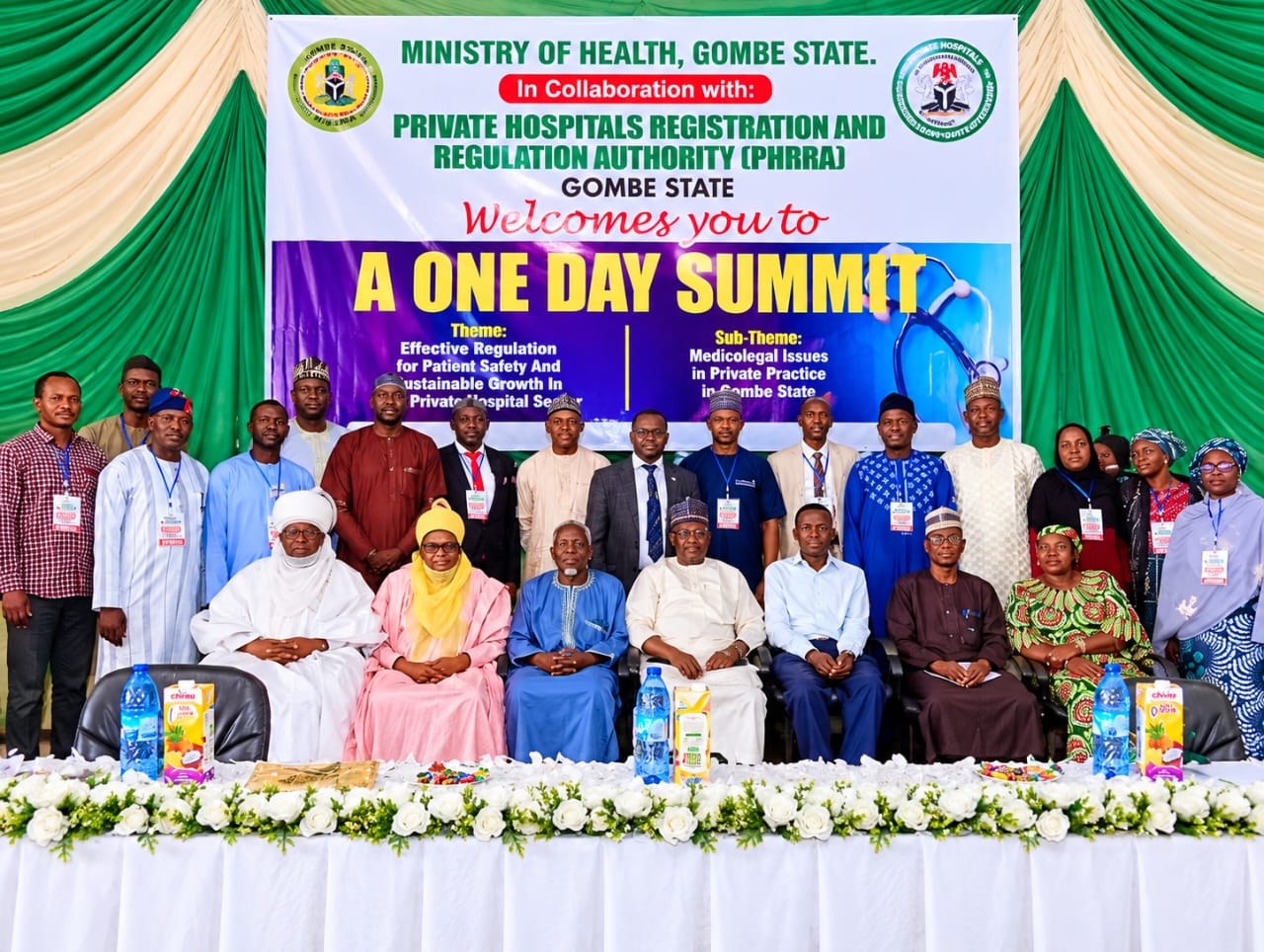
The Gombe State Government has announced plans to renovate and equip three cottage hospitals in Dukku, Billiri and Deba as part of efforts to strengthen healthcare delivery and improve access to quality medical services across the state.
The State Commissioner for Health, Dr. Adamu Danladi Bojude, disclosed this during a one-day summit organised by the Ministry of Health in collaboration with the Private Hospitals Registration and Regulation Authority (PHRRA), Gombe State Chapter.
The summit, held at the Gombe State University (GSU) Medical Students’ Lecture Theatre, brought together owners of private health facilities, former commissioners for health, traditional leaders and other key stakeholders to discuss effective regulation, patient safety and sustainable growth in the private healthcare sector.
Speaking while declaring the summit open, Dr. Bojude said the engagement was aimed at addressing operational challenges confronting private health facilities, identifying gaps in service delivery and developing practical strategies to strengthen healthcare standards, particularly at the grassroots.
He explained that the state government’s commitment to improving healthcare services was demonstrated through the massive enrolment of residents into the GoHealth Insurance Scheme, covering beneficiaries accessing services in both public and private health facilities.
The Commissioner further disclosed that the government was also undertaking the renovation of more than 300 health facilities across the state to improve healthcare infrastructure and ensure residents have access to quality medical services.
The summit, themed “Effective Regulation for Patient Safety and Sustainable Growth in the Private Hospital Sector,” with the sub-theme “Medicolegal Issues in Private Practice in Gombe State,” focused on promoting professionalism, accountability and compliance with established healthcare regulations.
Earlier, the Chairman of the Private Hospitals Registration and Regulation Authority in Gombe State, Dr. Peter Ubong, said the summit was designed to provide a platform for constructive engagement between regulators and private healthcare practitioners.
Dr. Ubong explained that the initiative would help address challenges affecting private medical practice, identify quackery and unauthorised healthcare practitioners, and encourage proper registration of private health facilities with the authority.
He disclosed that 237 private health facilities were currently operating across Gombe State, revealing that the authority had recently inspected more than 200 of them as part of efforts to monitor their activities and ensure compliance with relevant standards and regulations.
In their separate remarks, former Commissioners for Health, Dr. Ishaya Kennedy and Dr. Garba Saidu, described the summit as a welcome development, noting that effective regulation would strengthen the capacity of private healthcare providers, promote professionalism and protect patients from substandard medical services.
They also called for the organisation of similar engagements across the state’s three senatorial districts to encourage wider participation and ensure that healthcare stakeholders at the grassroots benefit from the initiative.
Speaking on behalf of the traditional institution, the Wazirin Yariman Gombe, Alhaji Yaya Hammari, stressed the importance of involving traditional rulers in healthcare-related activities, particularly in addressing challenges affecting medical facilities and healthcare delivery in rural communities.
He noted that traditional institutions remained important partners in mobilising communities, promoting public health awareness and supporting government efforts to improve healthcare services.
The summit is expected to strengthen collaboration between government regulators and private healthcare providers while promoting safe medical practices, improved service delivery and greater public confidence in the private healthcare sector in Gombe State.
Health
Radiographers Celebrate World Radiography Day in Gombe Call for Modern Equipment Improved Training
By Our Health Reporter
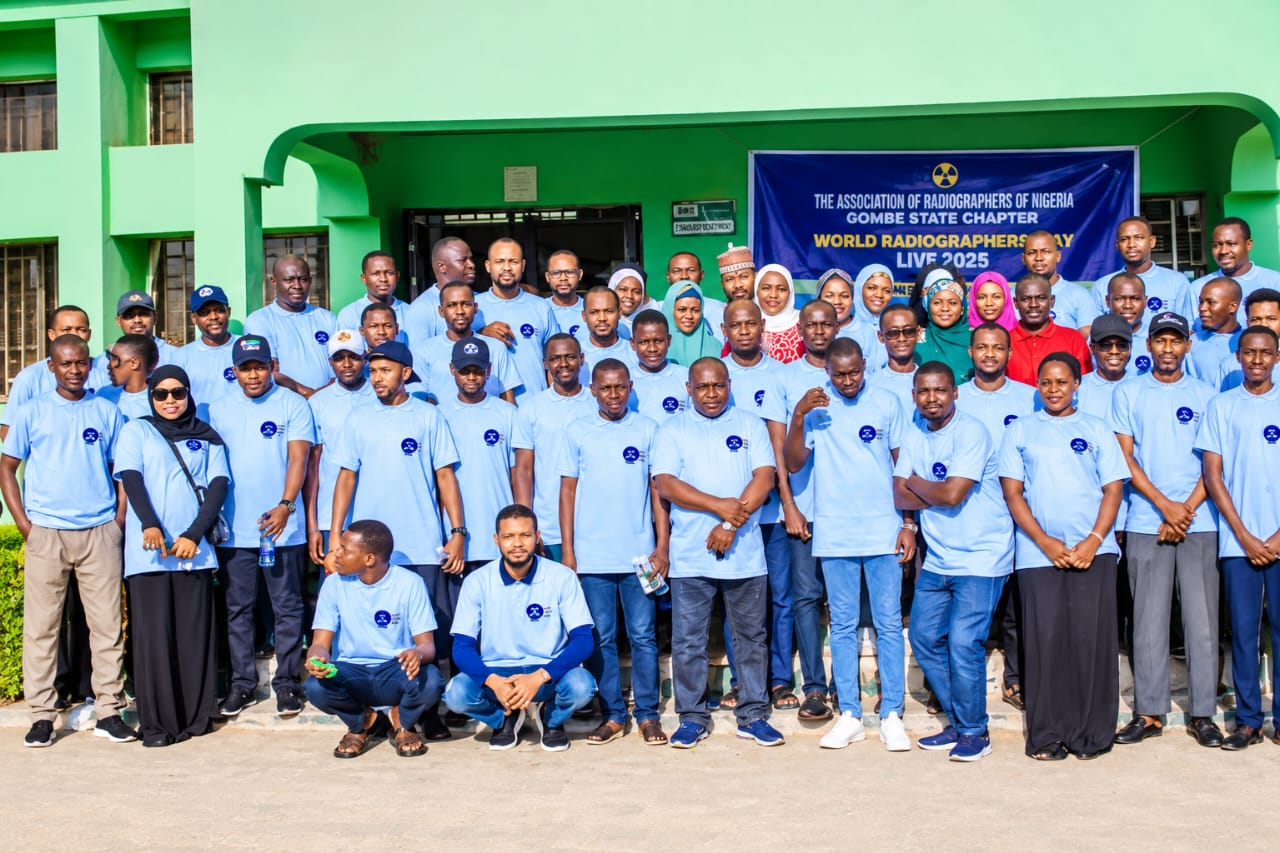
The Association of Radiographers of Nigeria (ARN), Gombe State Chapter, has celebrated World Radiography Day with a renewed call on hospital management authorities in the state to provide modern diagnostic equipment and invest in professional training to improve healthcare delivery.
The celebration, held at the Federal Medical Centre Kumo Gombe State (FMC KUMO), was organised under the theme “Upholding Patient Care,” highlighting the critical role of radiographers in accurate diagnosis, effective treatment and improved patient outcomes.
As part of activities marking the annual celebration, the association conducted visits to selected secondary schools across Gombe State to educate students on the importance and career opportunities in radiography.
Other activities included free scanning services at the Federal Medical Centre (FMC), Kumo, a football match among colleagues, and a get-together at the Specialist Hospital, Gombe.
The event attracted more than 100 participants, including radiographers and other stakeholders, who discussed the current state of radiography practice in Gombe State, particularly at the Federal Medical Centre Kumo, Gombe State.
During the discussions, participants identified inadequate professional training opportunities in both the Federal Medical Centre Kumo and other health facilities across the state as major challenges affecting the profession.
They also highlighted the shortage of modern radiological equipment in state-owned hospitals, particularly advanced diagnostic facilities such as Computerised Tomography (CT) scanners and Magnetic Resonance Imaging (MRI) machines.
The participants explained that radiography plays a vital role in modern healthcare, as it helps medical professionals make accurate diagnoses, detect diseases at their early stages, monitor patients’ responses to treatment and provide essential information for surgical planning by identifying the exact location and nature of medical conditions.
They therefore appealed to the Gombe State Hospitals Management Board and relevant authorities to equip hospitals with modern radiological facilities, including CT and MRI machines, to strengthen healthcare services.
According to them, the availability of such equipment would reduce unnecessary referrals to other health facilities outside the state, retain patients within the state’s healthcare system, generate additional revenue for hospitals and save patients and their relatives the financial burden of transportation and other related expenses.
The association also called for increased investment in training and professional development to equip young radiographers with the knowledge and skills required to meet current standards in medical imaging.
In his keynote address, the guest speaker, Dr. Bappah Yahaya Sulaiman Pindiga, a lecturer at the Federal University of Health Sciences, Azare (FUHSA), urged radiographers to remain committed to their profession, pay greater attention to their responsibilities and work collectively to overcome the challenges confronting the sector.
He emphasised the importance of upholding patient care, noting that professionalism, dedication and continuous improvement are essential to effective radiography practice.
The Chairperson of the RAN Gombe State Chapter, Rad. Aishatu Abdullahi Dukku, encouraged members to remain hardworking, committed and compassionate in discharging their responsibilities, particularly in ensuring that patients receive quality care.
She also expressed appreciation to all participants, colleagues and stakeholders who contributed to the success of this year’s celebration.
Similarly, the Vice Chairman of the association, Rad. Alhamdi Mohammad Adamu, made contributions during the programme, which featured lectures, professional discussions and interactive sessions involving radiographers.
The association also used the occasion to encourage young people to consider radiography as a rewarding professional career, highlighting its employment opportunities, attractive remuneration and the opportunity to serve humanity through healthcare delivery.
In a message to radiographers across Nigeria, the association described practitioners as the unseen heroes of healthcare who help medical professionals identify conditions that may not be visible to the naked eye.
It urged them to remain dedicated, continue advancing their professional knowledge and recognise the life-saving importance of their daily responsibilities.
The celebration ended with a renewed commitment among radiographers to strengthen professional standards, promote quality patient care and advocate improved facilities and training opportunities for the advancement of radiography practice in Gombe State and Nigeria at large.
By Ahmad Abubakar Usman
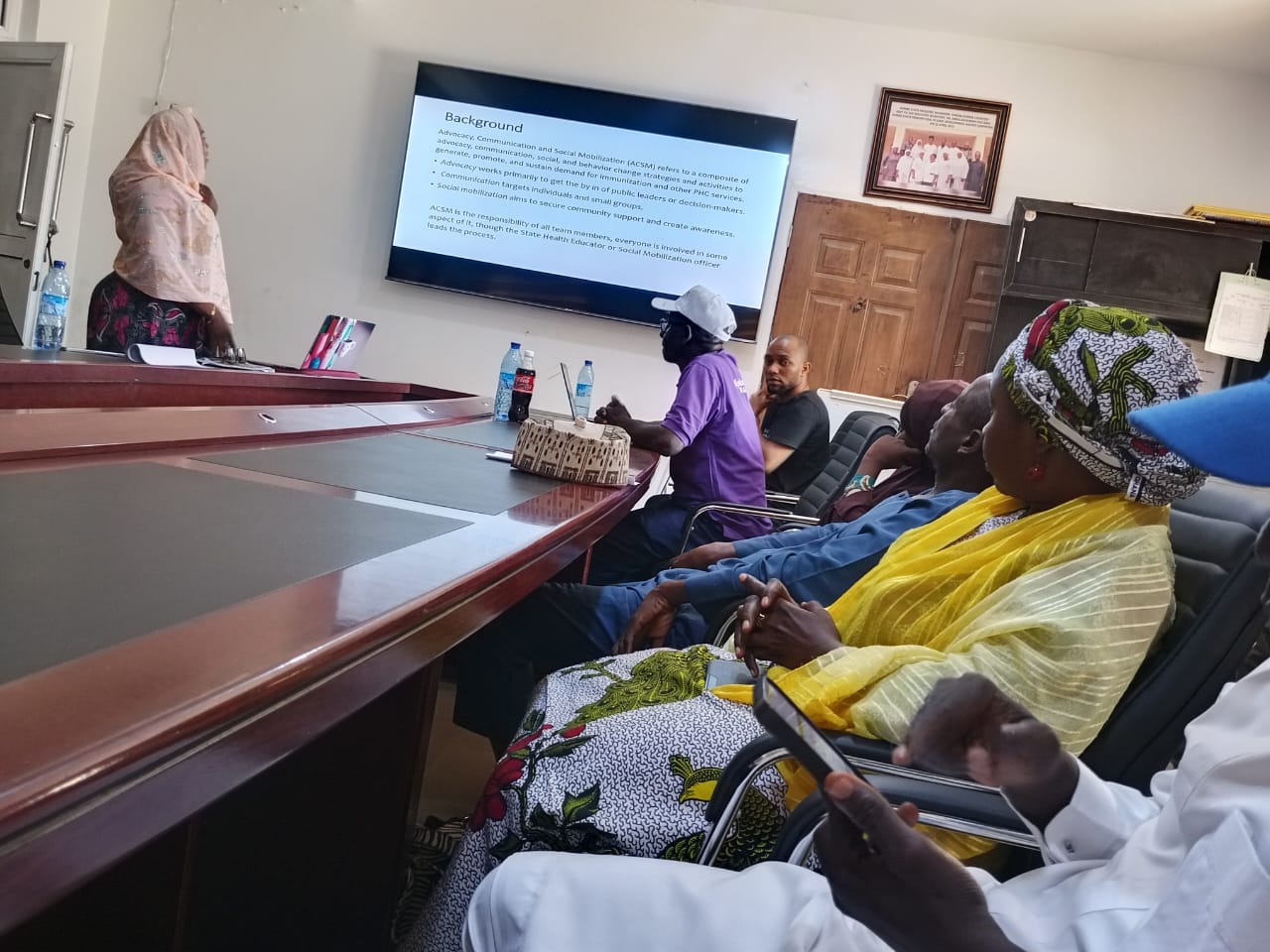
The Gombe State Primary Health Care Development Agency, in collaboration with the United Nations Children’s Fund (UNICEF), has called on media practitioners, parents and community leaders to intensify efforts towards eradicating polio through increased awareness and participation in the forthcoming November vaccination exercise.
The agency made the call during a media advocacy and awareness campaign organised ahead of the vaccination exercise scheduled to take place from November 7 to 10, 2026, across Gombe Local Government Area.
The programme, held at the agency’s office in Gombe, brought together health officials, journalists and other stakeholders to develop strategies for ensuring that every eligible child receives the polio vaccine.
Speaking at the event, Mrs Lami Tikari said trained health workers would conduct house-to-house visits to administer the vaccine to children from birth to five years of age.
She explained that the campaign was designed to strengthen public awareness about the importance of polio immunisation while equipping health workers with the necessary knowledge and skills to conduct the exercise effectively and professionally.
Mrs Tikari emphasised the importance of the media in achieving the desired success, describing journalists as critical partners in mobilising communities and shaping public attitudes towards immunisation.
She urged media organisations to utilise radio, television, newspapers and social media platforms to educate parents and caregivers on the dangers of polio, which can cause permanent paralysis and lifelong disability in children.
According to her, although there is no cure for polio, the disease is preventable through timely and repeated vaccination.
She particularly encouraged journalists to broadcast jingles, conduct interactive discussions and organise public enlightenment programmes in Hausa and other local languages to ensure that the message reaches rural communities and people with limited formal education.
The UNICEF-supported campaign also highlighted the need for the media to address rumours, misconceptions and misinformation surrounding polio vaccination, which sometimes discourage parents from allowing their children to receive the vaccine.
Mrs Tikari maintained that accurate, consistent and responsible reporting would strengthen public confidence, promote acceptance of immunisation and encourage households to cooperate with vaccination teams.
Parents and caregivers were consequently urged to ensure that children aged five years and below are available at home during the vaccination exercise and to provide the necessary cooperation to health workers.
Traditional rulers, religious leaders and other influential community members were also called upon to mobilise their followers and support the campaign, given their significant influence in promoting positive health practices at the grassroots.
The organisers reiterated that the polio vaccine is safe, effective and provided free of charge, stressing that every eligible child must receive the vaccine during each round of the exercise, irrespective of previous doses.
They expressed optimism that sustained collaboration among the health agency, UNICEF, media practitioners, community leaders and parents would increase vaccination coverage and strengthen efforts towards protecting children in Gombe State from the threat of polio.
The November exercise is expected to contribute to the broader national and global efforts to eradicate polio and secure a healthier future for children.
-

 Politics3 years ago
Former Gombe State APC Promoters Forum Chairman Attacked Following Political Commentary
-

 Leadership2 years ago
Breaking: African Union Appoints Pantami as Co-Chair of the 4th Industrial Revolution Policy Council
-

 Appointment2 years ago
Gombe State Indigene, Appointed New Vice Chancellor (ATBU)
-

 Death2 years ago
Prominent Nigerian Islamic Scholar, Sheikh Sa’idu Hassan Jingir, Passes Away
-
 Health2 years ago
Gombe State Organizes Onboarding Workshop for Private Healthcare Facilities
-
 Water3 years ago
Gombe Government Mobilizes Stakeholders to Combat Illegal Water Connections
-

 Politics2 years ago
Gombe State Inaugurates Human Capital Development Council
-

 Politics3 years ago
Gombe State Launches Presidential Palliative Program (PPP) to Aid Small Businesses
Appliance Repair Manual
July 31, 2025 at 6:30 am
Great beat ! I would like to apprentice while you amend your web site, http://www.kayswell.com how could i subscribe for a blog site? The account helped me a acceptable deal. I had been a little bit acquainted of this your broadcast provided bright clear concept
Appliance Repair Manual
October 25, 2025 at 10:08 pm
I’m really enjoying the design and layout of your website.It’s a very easy on the eyes which makes it much more pleasant for me to come here and visit more often. Did you hire out a developer to create your theme? http://www.kayswell.com
MetabolicFreedomSok
November 23, 2025 at 8:16 pm
Metabolic Freedom is your roadmap to better sleep, stable energy, and effortless weight management. https://metabolicfreedom.top/ metabolic freedom ben azadi pdf
YellowFacePDFSok
December 12, 2025 at 4:43 am
June Hayward is a villain for the digital age. Follow her story in the Yellowface PDF. It is a novel that understands the power of social media. engaging and fast-paced, the digital version is perfect for your modern lifestyle. Start reading today. https://yellowfacepdf.top/ yellowface pdf online free