
Politics
Atiku Abubakar Vows to Build Strong Opposition Coalition to Rescue Nigeria


By Our Correspondent
Former Vice President of Nigeria, Alhaji Atiku Abubakar, has declared his commitment to spearheading a united opposition coalition that will challenge what he described as the growing excesses of the current administration. In a bold and direct statement, Atiku pledged to restore accountability, uphold democratic values, and return power to the Nigerian people.
Speaking at a high-level strategy meeting with opposition leaders and civil society groups in Abuja on Tuesday, Atiku stated, “We are building a strong, united opposition coalition — one that will challenge the excesses of this administration, restore accountability, and return government to the people.”
The remarks come amid increasing public frustration over economic hardship, insecurity, and perceived erosion of democratic institutions under the current government. Atiku emphasized that the mission of the new opposition coalition goes beyond political rivalry—it is, in his words, a “national rescue operation.”
“We are here to rescue Nigeria. And we will not stop until that goal is achieved,” he said, drawing applause from the crowd of political allies, youth activists, and former officeholders who gathered in support.
Atiku, who served as Nigeria’s Vice President from 1999 to 2007 and was the presidential candidate of the People’s Democratic Party (PDP) in multiple elections, reiterated his belief in democratic governance and the people’s right to freely elect their leaders. “We will protect the right of every Nigerian to freely choose their leaders, and we will continue to fight for economic justice, political freedom, and national progress,” he affirmed.
Political analysts view Atiku’s latest remarks as a signal of renewed opposition mobilization ahead of the 2027 general elections. With the political landscape increasingly polarized, the call for unity among opposition parties may reshape the dynamics of future contests.
Already, consultations are reportedly ongoing among stakeholders from various political blocs, regional movements, and pro-democracy organizations to forge a common front. Sources close to Atiku’s camp say the coalition aims to form a “people-centered alliance” capable of defeating the ruling party at the national level.
In a country facing growing concerns over inflation, unemployment, and regional unrest, Atiku’s message is expected to resonate with many Nigerians who are eager for change. However, critics of the opposition have questioned whether past leaders can present a credible alternative to current governance structures.
As the 2027 political calendar begins to take shape, all eyes will be on the evolving alliances and whether Atiku’s envisioned coalition can truly galvanize widespread support across Nigeria’s diverse regions.
For now, one message rings clear from the former Vice President: the opposition is regrouping—and it is gearing up for a serious battle for the soul of the nation.

By Our Political Reporter
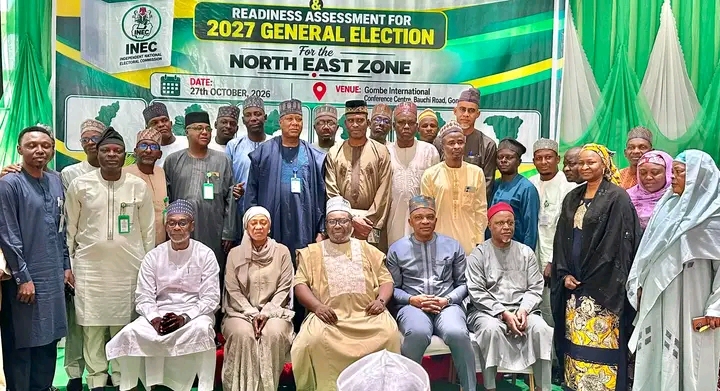
The Chairman of the Independent National Electoral Commission (INEC), Professor Joash Amupitan, SAN, has charged electoral officials to maintain strict neutrality, professionalism and integrity in the discharge of their duties ahead of the 2027 General Election.
Amupitan gave the charge in Gombe while leading a zonal readiness assessment meeting with electoral officials from the six states of the North-East geopolitical zone.
He stressed that the credibility of the 2027 elections would depend largely on the preparedness, conduct and commitment of personnel responsible for implementing the Commission’s electoral plans at the grassroots.
The INEC Chairman warned staff against political pressure, financial inducement, intimidation and ethnic bias, urging them to remain impartial and ensure that all electoral activities were properly documented.
He also emphasised the need for electoral officials to familiarise themselves with the Electoral Act 2026, the Regulations and Guidelines for the Conduct of Elections 2026, as well as relevant operational manuals guiding the electoral process.
According to him, the Commission’s nationwide readiness assessment is aimed at evaluating operational preparedness, identifying challenges and addressing gaps that could affect the successful conduct of the forthcoming elections.
Amupitan explained that the exercise began in Lagos on September 7, 2026, covering the South-West, moved to Kaduna on September 28 for the North-West, and continued in Enugu on October 20 for the South-East before the Commission arrived in Gombe on October 26 for the North-East assessment.
He noted that direct engagement with electoral personnel was essential to understanding the challenges they faced and ensuring that preparations for the elections were based on realities at the field level.
“The true integrity of an election is not determined in the air-conditioned conference rooms of Abuja; it is forged in the field,” he said.
The INEC Chairman maintained that credible elections required not only effective planning at the national level but also adequately prepared personnel, functional facilities and efficient coordination of electoral activities across the country.
He disclosed that the North-East geopolitical zone has 13,965,475 registered voters, representing 13.51 per cent of Nigeria’s total registered voter population of more than 103 million.
Amupitan said the Commission was also concluding its data-cleaning exercise following the completion of the Continuous Voter Registration (CVR) exercise.
On security, the INEC Chairman described the protection of voters, election officials and observers as fundamental to the credibility of the electoral process, particularly in areas facing security challenges.
He said the Commission would continue to collaborate with relevant security agencies through the Inter-Agency Consultative Committee on Election Security (ICCES) to ensure adequate security arrangements before, during and after the elections.
Earlier in his welcome address, the Resident Electoral Commissioner (REC) for Gombe State, Mukhtar Gajiram Umar, outlined the state’s electoral structure and ongoing preparations for the 2027 General Election.
Umar disclosed that Gombe State has three senatorial districts, six federal constituencies, 24 state constituencies, 114 registration areas and 2,988 polling units.
He put the state’s registered voter population at 1,768,566 following the recently concluded CVR exercise, subject to the completion of the Automated Biometric Identification System (ABIS) process.
The REC further revealed that recruitment of ad hoc election personnel had commenced following the activation of the INECPRES portal, while training programmes for different categories of electoral officials were also underway.
He added that the Information and Communication Technology (ICT) and Voter Registration Department had begun preliminary technical checks on equipment and infrastructure required for the elections.
According to Umar, the exercise is intended to identify possible technical challenges, assess the condition of electoral equipment and ensure that the necessary ICT infrastructure is available and functional before election day.
Also speaking, the Director of Planning and Monitoring, Helen Ajayi, said the zonal assessment was designed to determine the level of preparedness across the North-East states and identify operational challenges that could undermine the successful conduct of the 2027 elections.
Ajayi explained that the engagement would also strengthen compliance with the Commission’s Code of Conduct and ensure that electoral personnel understood their responsibilities ahead of the polls.
During the meeting, directors and representatives of the Voter Education and Publicity, Voter Registry, ICT, Human Resources, and Election and Operations departments presented updates on their respective areas of responsibility.
The presentations highlighted ongoing preparations, operational requirements and expectations for staff as INEC intensifies efforts to ensure that electoral personnel and infrastructure are ready for the 2027 General Election.
The Gombe meeting forms part of the Commission’s broader nationwide assessment aimed at strengthening institutional preparedness, addressing operational weaknesses and promoting a credible, transparent and peaceful electoral process in 2027.
By Our Political Reporter
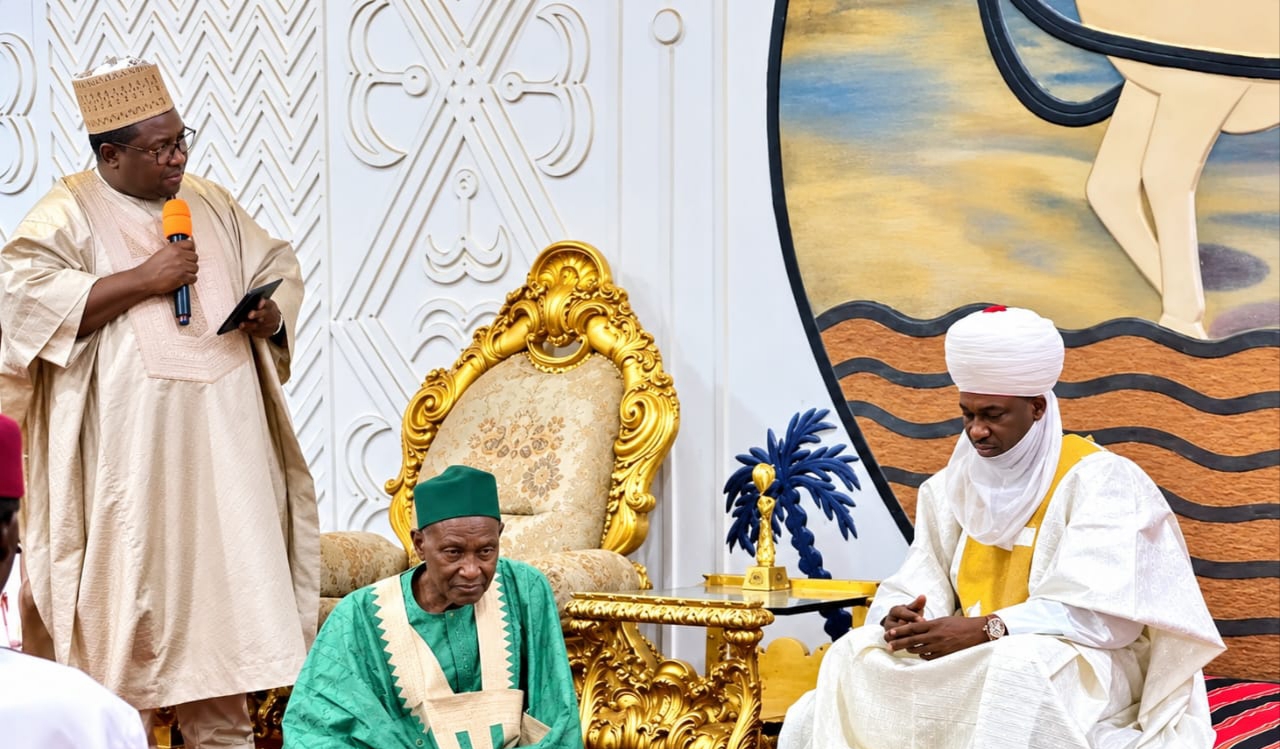
The Chairman of the Independent National Electoral Commission (INEC), Professor Joash Amupitan, SAN, has called on traditional rulers in Gombe State and the wider North-East region to support efforts towards peaceful, free, fair and credible elections in 2027.
Professor Amupitan made the appeal during a courtesy visit to the Emir of Gombe, His Royal Highness, Dr. Abubakar Shehu Abubakar III, CFR, at his palace as part of his assessment visit to Gombe State to evaluate the commission’s preparedness for the forthcoming general election.
The INEC chairman urged the Emir to use his influence to encourage eligible voters to collect their Permanent Voter Cards (PVCs), participate in the electoral process and persuade political leaders to conduct peaceful campaigns ahead of the elections.
He explained that traditional institutions had an important role to play in promoting political tolerance, peaceful participation and public confidence in the electoral process.
Professor Amupitan also acknowledged the security challenges facing some parts of the country, disclosing that INEC was collaborating with security agencies, including the Nigeria Police Force, the Office of the National Security Adviser, service chiefs and other relevant organisations, to address potential threats to voters and electoral infrastructure.
In his response, the Emir of Gombe welcomed the INEC chairman and his delegation, describing the visit as timely as preparations for the 2027 general election gathered momentum.
The monarch acknowledged the enormous responsibility entrusted to INEC in safeguarding Nigeria’s democratic process, stressing that credible elections required adequate planning, professionalism, impartiality, transparency and cooperation from the public.
He assured the commission that traditional institutions in Gombe State and the wider North-East region were prepared to support efforts towards peaceful and credible elections without partisan involvement.
The Emir also pledged support for initiatives aimed at discouraging electoral violence, inflammatory political statements and misinformation, while encouraging citizens to participate peacefully in the democratic process.
Earlier, Professor Amupitan had called on INEC officials in Gombe State to intensify preparations for the 2027 general election, emphasising the need for professionalism, neutrality, transparency and effective logistical arrangements.
The chairman made the call while leading National Commissioners, Resident Electoral Commissioners from across the North-East and other senior officials of the commission on a readiness assessment visit to the state.
Addressing staff at the INEC state office in Gombe, he said the assessment was designed to evaluate existing facilities, identify operational gaps and ensure that the commission was adequately prepared for the elections.
He stated that the presidential and National Assembly elections were scheduled for January 16, 2027, while the governorship and State Houses of Assembly elections would hold on February 6, 2027.
Professor Amupitan urged staff to demonstrate greater commitment, noting that the commission had limited time to complete preparations for the polls.
He said ongoing renovation works in Gombe and other local government areas were part of efforts to improve operational capacity and strengthen election logistics.
The INEC chairman charged electoral officers to discharge their statutory responsibilities in accordance with the Constitution, the Electoral Act and the commission’s established guidelines and regulations.
He stressed that the commission must remain impartial and committed to delivering elections that would reflect the will of the electorate.
“We are not candidates of our own, but we will do everything possible to conduct a free, fair, inclusive and credible election come 2027,” he said.
On voter participation, Professor Amupitan described the collection of Permanent Voter Cards as a fundamental right of eligible voters rather than a favour, urging electoral officials to intensify public enlightenment and mobilisation campaigns, particularly at the grassroots.
He warned against any action or situation that could discourage eligible Nigerians from participating in the electoral process, stressing that adequate voter education remained essential to the success of the elections.
The chairman further disclosed that some non-sensitive election materials had already been received, while additional Bimodal Voter Accreditation System (BVAS) machines had been ordered, with delivery expected within the week.
According to him, the commission was also making arrangements for suitable storage facilities for the equipment and had conducted a nationwide audit of existing BVAS machines following challenges experienced during the 2023 general election.
He reiterated that technology would remain central to voter accreditation and the transmission of election results, adding that the commission was taking steps to strengthen its operational processes ahead of the 2027 polls.
Professor Amupitan also directed staff to dedicate their time and resources to election preparations, urging them to work closely with Resident Electoral Commissioners, administrative secretaries, heads of departments and Electoral Officers to ensure smooth operations.
“This period, nobody goes on leave again. You should commit your time to support your REC, your administrative secretary, your heads of department and the EOs to ensure that the election is seamless and very successful,” he said.
As part of the assessment exercise, the INEC chairman and his delegation also visited the commission’s office in Gombe Local Government Area to assess its level of preparedness.
The team subsequently inspected the commission’s zonal store to evaluate its facilities, equipment storage arrangements and logistical readiness for the forthcoming elections.
The assessment visit forms part of INEC’s efforts to strengthen preparations across the country and ensure that electoral officials, facilities, technology and logistics are ready for the 2027 general election.
Former Opposition Figure Pledges Political Structure to Support Jamil Gwamna, Other APC Candidates Ahead of 2027 Elections
By Our Political Reporter
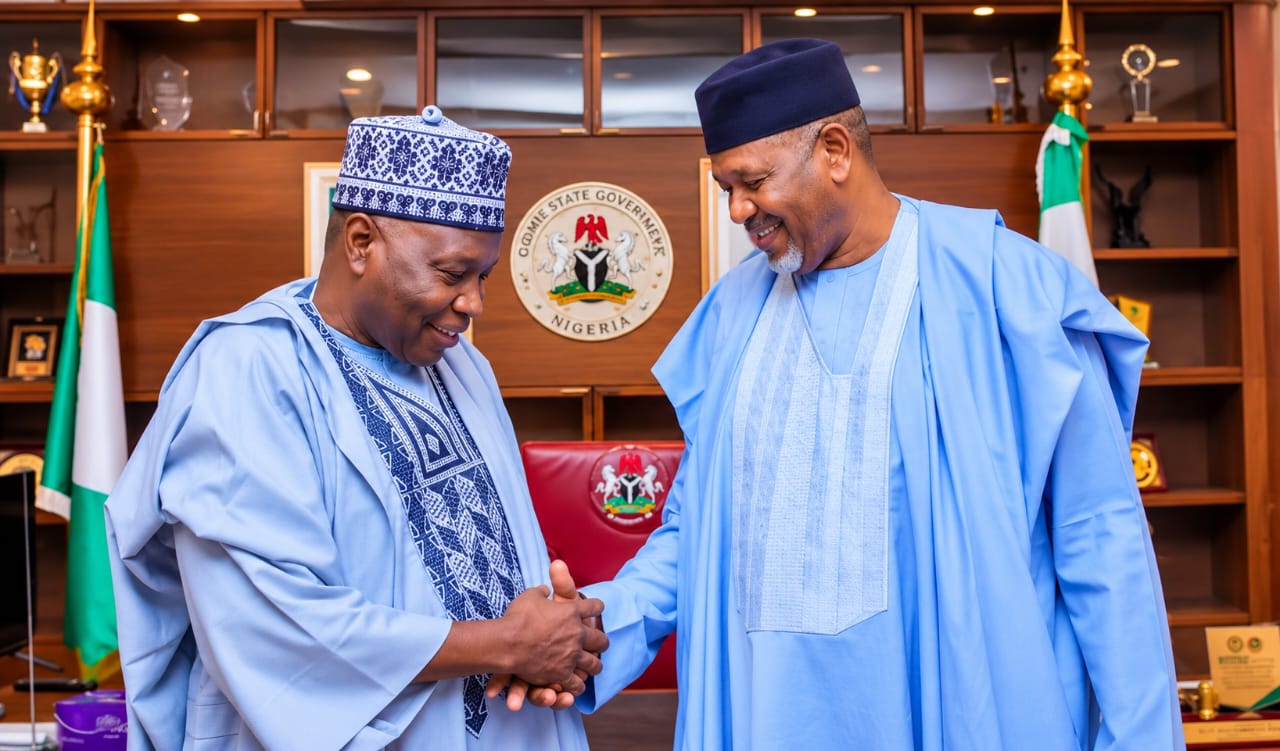
Gombe State Governor, Muhammadu Inuwa Yahaya, has received former Peoples Democratic Party (PDP) governorship aspirant, Alhaji Abdulkadir Hamma-Saleh, into the ruling All Progressives Congress (APC), in a move that could reshape political alignments ahead of the 2027 general elections.
Hamma-Saleh, who previously contested for the PDP governorship ticket against former Minister of Communications and Digital Economy, Professor Isa Ali Ibrahim Pantami, announced his decision to leave the opposition party and join the APC in a press statement made available to journalists in Gombe.
The former governorship aspirant also called on his supporters across Gombe State to join him in the APC and support the party’s candidates at all levels of government.
His defection comes amid increasing political realignments in the state as political parties and aspirants intensify efforts to consolidate their support bases ahead of the 2027 elections.
Hamma-Saleh’s move is considered a significant development in Gombe’s political landscape, given his previous involvement in the PDP’s governorship contest and his role among the party’s political stakeholders.
The development also comes against the backdrop of internal disputes surrounding the PDP governorship ticket, following the emergence of Professor Pantami as the party’s candidate and subsequent legal challenges over the primary election.
By joining the APC, Hamma-Saleh has signalled his intention to align with the ruling party as political activities gather momentum ahead of the next electoral cycle.
His call for supporters to rally behind the APC could provide an opportunity for the party to strengthen its grassroots mobilisation and expand its political base across the state’s 11 local government areas.
Meanwhile, Governor Inuwa Yahaya and other APC stakeholders are expected to continue engaging political actors as the party prepares for the 2027 general elections.
The defection adds to the evolving political dynamics in Gombe State, where party loyalty, strategic alliances and grassroots mobilisation are expected to play important roles in determining the outcome of the forthcoming elections.
However, the number of thousands Hamma-Saleh’s supporters already join him in the APC.
As the 2027 elections approach, political observers will be watching how the development affects the strength of the APC and the PDP, as well as the broader contest for political influence in Gombe State.
-

 Politics3 years ago
Former Gombe State APC Promoters Forum Chairman Attacked Following Political Commentary
-

 Appointment2 years ago
Gombe State Indigene, Appointed New Vice Chancellor (ATBU)
-

 Leadership2 years ago
Breaking: African Union Appoints Pantami as Co-Chair of the 4th Industrial Revolution Policy Council
-
 Death2 years ago
Prominent Nigerian Islamic Scholar, Sheikh Sa’idu Hassan Jingir, Passes Away
-
 Health2 years ago
Gombe State Organizes Onboarding Workshop for Private Healthcare Facilities
-
 Water3 years ago
Gombe Government Mobilizes Stakeholders to Combat Illegal Water Connections
-
 Politics2 years ago
Gombe State Inaugurates Human Capital Development Council
-

 Politics3 years ago
Gombe State Launches Presidential Palliative Program (PPP) to Aid Small Businesses