
Security
Gombe State Hosts Crucial Town Hall Meeting to Resolve Farmers-Herders Conflicts

By Abubakar Abdullahi
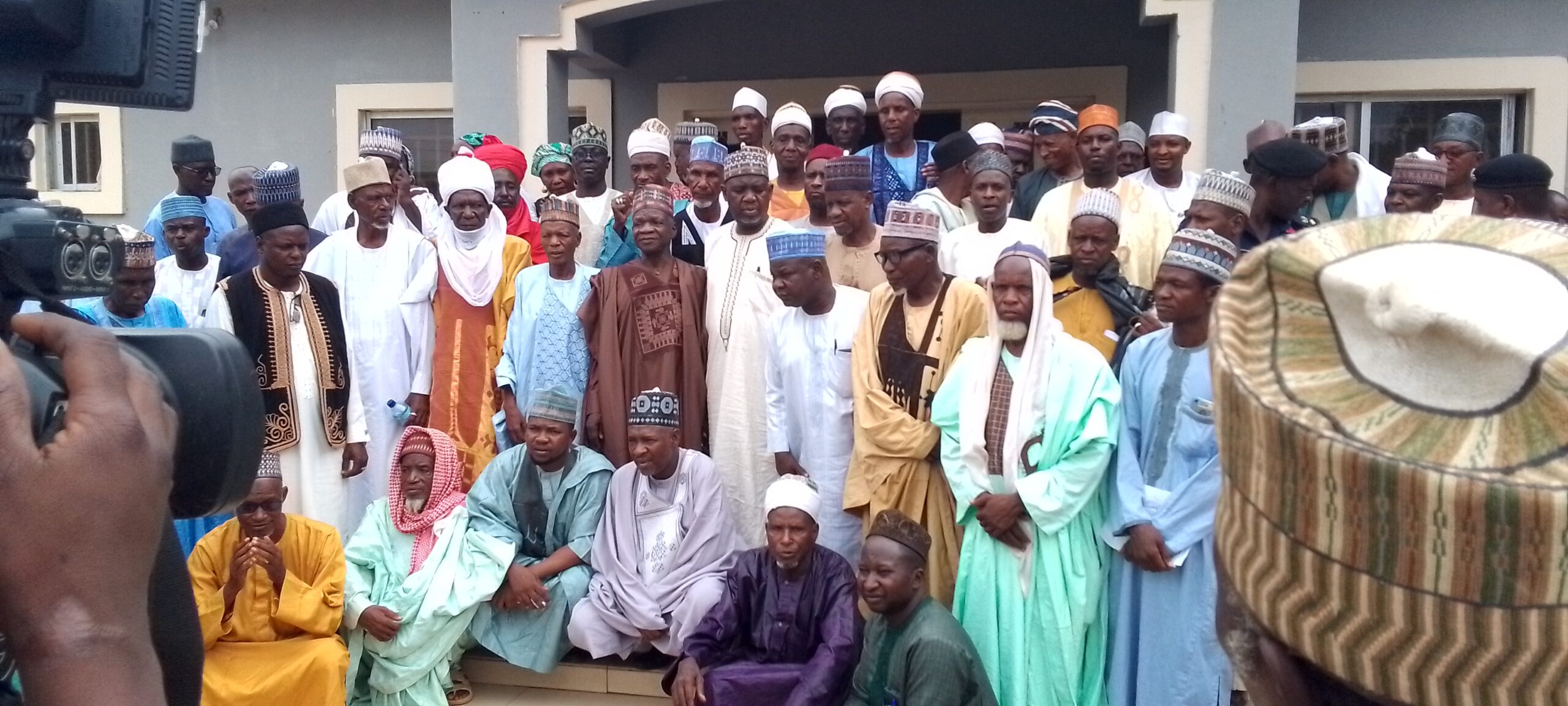
 On Saturday, 25th May 2024, key stakeholders gathered at the Hajiya Amina Inuwa Memorial Hall in Gombe for a pivotal town hall meeting aimed at addressing and resolving the persistent conflicts between farmers and herders in the state. The event was organized by the Farmers/Herders Prevention and Settlement of Dispute Committee, led by Dr. Barnabas M. Malle, Honourable Commissioner for Agriculture, Animals Husbandry, and Cooperatives, also known as Magayakin Kamo.

Dr. Ibrahim Yakubu, the Permanent Secretary of the Ministry, opened the meeting with remarks highlighting the ministry’s dedicated efforts to mediate between the conflicting parties. He called for increased cooperation from both farmers and herders to ensure lasting peace in Gombe State.

Alhaji Usman Shetima, the District Head of Nasarawo and Oversea Senior District Head of Gombe, emphasized the vital role of traditional rulers in supporting the policies and programs of Governor Muhammadu Inuwa Yahaya’s administration. He committed to raising awareness among their communities about the importance of peaceful coexistence between farmers and herders.

Representing the Fulani cattle rearers, Alhaji Modibbo Yahaya, Chairman of the Miyetti Allah Cattle Rearers Gombe State Chapter, reaffirmed the Fulani community’s commitment to working alongside the state government. He stressed the significance of maintaining peace during the farming, harvesting, and post-harvest periods, noting that peace is essential for any meaningful development. Yahaya also urged all Fulani groups in Gombe State to abide by the law and expressed gratitude to the Ministry of Agriculture for organizing the gathering.

Alhaji Babangida Jigawa Nafada, Chairman of Nafada Local Government Council, spoke on behalf of the chairmen of the 11 LGAs in Gombe State. He outlined the proactive measures being taken to ensure a peaceful farming season, as directed by Governor Yahaya. Nafada thanked the governor for his financial support for security across the LGAs, emphasizing the importance of these measures for maintaining peace.

Dr. Barnabas Malle, who also chairs the Farmers/Herders Prevention and Settlement of Dispute Committee, concluded the meeting with an optimistic message. He praised Governor Yahaya’s leadership for ensuring a clash-free farming season the previous year and called on the people of Gombe State to continue supporting the administration’s development projects, particularly in agriculture. Dr. Malle announced that in June 2024, the government would provide farmers with subsidized fertilizer to promote a bountiful harvest.

The town hall meeting underscored the Gombe State government’s commitment to fostering peaceful coexistence between farmers and herders, crucial for the state’s agricultural and economic growth. Participants left the meeting with a renewed sense of purpose and cooperation, hopeful for a peaceful and productive year ahead.


By Our Correspondent
Residents of Gombe have received a boost ahead of the holy month of Ramadan as the Gombe State Police Command announced the extension of the relaxation of motorcycle movement restrictions from 7:00 p.m. to 11:00 p.m., effective throughout Ramadan and continuing until after the fasting period.
The announcement was contained in a press statement issued on Wednesday by the Police Public Relations Officer, DSP Buhari Abdullahi, on behalf of the Commissioner of Police.
According to the Command, the decision followed extensive security consultations and is aimed at accommodating the heightened religious, social, and communal activities that characterize Ramadan, as well as the post-Ramadan festivities when community engagements remain high.
The Commissioner of Police, CP Umar Ahmed Chuso, reassured residents of the Command’s unwavering commitment to maintaining peace and protecting lives and property across the state. He emphasized that while the movement window has been relaxed, adequate security measures have been put in place to ensure that public safety is not compromised.
He noted that security personnel would remain on high alert to safeguard worshippers attending night prayers, commuters returning from evening engagements, and other residents moving within the approved hours.
The Command, however, cautioned motorcyclists to strictly adhere to traffic regulations and avoid reckless riding. Riders are also required to ensure proper registration of their motorcycles and carry valid identification at all times.
In addition, residents were urged to remain vigilant and promptly report any suspicious activities to the nearest police station as part of collective efforts to sustain peace during and after Ramadan.
The Police Command expressed appreciation to religious leaders, community elders, and residents for their cooperation during the consultation process, reaffirming its resolve to balance security enforcement with respect for cultural and religious values.
The extension is expected to ease transportation challenges during the fasting period, particularly for those attending Tafsir sessions, Tarawih prayers, and other late-evening engagements across the state.

By Our Correspondent
The Gombe State Government has rolled out a sweeping set of security directives that critics say could deepen public hardship, restrict livelihoods and raise fresh concerns about civil liberties, all under the banner of strengthening internal security.
The measures, announced after an expanded State Security Council meeting chaired by Governor Muhammadu Inuwa Yahaya, CON, include an outright ban on the scrap metal trade popularly known as Bola Jari, compulsory profiling of new tenants across the state, and the forceful reclamation of grazing reserves and cattle routes.
The decisions were made public by the Attorney-General and Commissioner for Justice, Barrister Zubair Muhammad Umar, who said the government acted in response to rising security challenges and vandalism of public infrastructure.
Scrap Metal Ban Hits Informal Economy
One of the most controversial decisions is the immediate statewide ban on scrap metal trading, a business that serves as a major source of daily income for hundreds of unemployed youths and low-income earners.
According to the Attorney-General, the Security Council linked scrap metal activities to the vandalisation of schools and other public assets, arguing that stolen government property often ends up in scrap markets.
He said the government viewed the sector as “unorganised and unregulated,” lacking identifiable leadership or a framework that would make monitoring possible.
As a result, all Bola Jari activities have been suspended indefinitely, pending the organisation of dealers under a recognised leadership structure and the creation of a government-controlled operating centre under tight security supervision.
The move, however, leaves many families without a clear alternative means of survival, raising fears of increased poverty and social tension.
Mandatory Tenant Profiling Raises Privacy Concerns
In another far-reaching directive, the government ordered compulsory profiling of all new residents and tenants seeking accommodation anywhere in Gombe State.
Barrister Zubair said landlords and communities will now be required to document personal details of individuals relocating into the state, a measure he described as critical for intelligence gathering and crime prevention.
Security agencies, he said, will have access to such records whenever the need arises.
While government officials insist the policy is purely for security purposes, civil rights advocates warn it could open the door to abuse, discrimination and unwarranted surveillance of law-abiding citizens.
Forceful Reclamation of Grazing Routes
On the long-running issue of farmer-herder conflicts, the Security Council approved the constitution of an enforcement committee to implement the White Paper on Grazing Reserves and Cattle Routes.
The White Paper followed an earlier report by a committee led by retired Assistant Inspector-General of Police, AIG Zubairu Muazu (rtd), which reviewed the status of gazetted grazing areas across the state.
The Attorney-General said the enforcement team has been mandated to fully reclaim all encroached grazing reserves and cattle routes, signalling tougher action that could reignite tensions in affected communities.
Security Crackdown After Pindiga Killings
Meanwhile, the Commissioner of Police, CP Umar Ahmad Chuso, confirmed that security agencies have intensified operations following recent abductions and killings in Pindiga, Akko Local Government Area.
He assured residents that efforts are ongoing to rescue abducted victims and apprehend those responsible, adding that the Governor has demanded a detailed report on the investigations.
Vigilantes, Hunters to Join Security Operations
Adding another layer to the security overhaul, the Emir of Yamaltu, Alhaji Abubakar Aliyu, revealed that the Council approved the expanded deployment of local vigilante groups and hunters to work alongside conventional security agencies.
According to him, the move is aimed at boosting grassroots surveillance and ensuring quicker response to security threats.
Governor Inuwa Yahaya also directed Local Government Chairmen and Traditional Rulers to hold weekly security meetings to review developments and take preventive action.
Security or Silent Suffering?
While the government maintains that the measures are necessary to protect lives and property, many residents fear the policies may worsen economic hardship, increase state control over private lives and push vulnerable groups further to the margins.
As Gombe tightens security, the big question remains: will safety improve—or will ordinary citizens pay the heaviest price?
By Staff Reporter
The Gombe State Government has rolled out a sweeping set of security directives that critics say could deepen public hardship, restrict livelihoods and raise fresh concerns about civil liberties, all under the banner of strengthening internal security.
The measures, announced after an expanded State Security Council meeting chaired by Governor Muhammadu Inuwa Yahaya, CON, include an outright ban on the scrap metal trade popularly known as Bola Jari, compulsory profiling of new tenants across the state, and the forceful reclamation of grazing reserves and cattle routes.
The decisions were made public by the Attorney-General and Commissioner for Justice, Barrister Zubair Muhammad Umar, who said the government acted in response to rising security challenges and vandalism of public infrastructure.
Scrap Metal Ban Hits Informal Economy
One of the most controversial decisions is the immediate statewide ban on scrap metal trading, a business that serves as a major source of daily income for hundreds of unemployed youths and low-income earners.
According to the Attorney-General, the Security Council linked scrap metal activities to the vandalisation of schools and other public assets, arguing that stolen government property often ends up in scrap markets.
He said the government viewed the sector as “unorganised and unregulated,” lacking identifiable leadership or a framework that would make monitoring possible.
As a result, all Bola Jari activities have been suspended indefinitely, pending the organisation of dealers under a recognised leadership structure and the creation of a government-controlled operating centre under tight security supervision.
The move, however, leaves many families without a clear alternative means of survival, raising fears of increased poverty and social tension.
Mandatory Tenant Profiling Raises Privacy Concerns
In another far-reaching directive, the government ordered compulsory profiling of all new residents and tenants seeking accommodation anywhere in Gombe State.
Barrister Zubair said landlords and communities will now be required to document personal details of individuals relocating into the state, a measure he described as critical for intelligence gathering and crime prevention.
Security agencies, he said, will have access to such records whenever the need arises.
While government officials insist the policy is purely for security purposes, civil rights advocates warn it could open the door to abuse, discrimination and unwarranted surveillance of law-abiding citizens.
Forceful Reclamation of Grazing Routes
On the long-running issue of farmer-herder conflicts, the Security Council approved the constitution of an enforcement committee to implement the White Paper on Grazing Reserves and Cattle Routes.
The White Paper followed an earlier report by a committee led by retired Assistant Inspector-General of Police, AIG Zubairu Muazu (rtd), which reviewed the status of gazetted grazing areas across the state.
The Attorney-General said the enforcement team has been mandated to fully reclaim all encroached grazing reserves and cattle routes, signalling tougher action that could reignite tensions in affected communities.
Security Crackdown After Pindiga Killings
Meanwhile, the Commissioner of Police, CP Umar Ahmad Chuso, confirmed that security agencies have intensified operations following recent abductions and killings in Pindiga, Akko Local Government Area.
He assured residents that efforts are ongoing to rescue abducted victims and apprehend those responsible, adding that the Governor has demanded a detailed report on the investigations.
Vigilantes, Hunters to Join Security Operations
Adding another layer to the security overhaul, the Emir of Yamaltu, Alhaji Abubakar Aliyu, revealed that the Council approved the expanded deployment of local vigilante groups and hunters to work alongside conventional security agencies.
According to him, the move is aimed at boosting grassroots surveillance and ensuring quicker response to security threats.
Governor Inuwa Yahaya also directed Local Government Chairmen and Traditional Rulers to hold weekly security meetings to review developments and take preventive action.
Security or Silent Suffering?
While the government maintains that the measures are necessary to protect lives and property, many residents fear the policies may worsen economic hardship, increase state control over private lives and push vulnerable groups further to the margins.
As Gombe tightens security, the big question remains: will safety improve—or will ordinary citizens pay the heaviest price?
-

 Politics3 years ago
Former Gombe State APC Promoters Forum Chairman Attacked Following Political Commentary
-

 Appointment2 years ago
Gombe State Indigene, Appointed New Vice Chancellor (ATBU)
-

 Leadership2 years ago
Breaking: African Union Appoints Pantami as Co-Chair of the 4th Industrial Revolution Policy Council
-

 Death2 years ago
Prominent Nigerian Islamic Scholar, Sheikh Sa’idu Hassan Jingir, Passes Away
-
 Health2 years ago
Gombe State Organizes Onboarding Workshop for Private Healthcare Facilities
-
 Water2 years ago
Gombe Government Mobilizes Stakeholders to Combat Illegal Water Connections
-

 Politics2 years ago
Gombe State Inaugurates Human Capital Development Council
-

 Politics2 years ago
Gombe State Launches Presidential Palliative Program (PPP) to Aid Small Businesses