
Politics
US House Of Reps Passes Bill That Would Ban TikTok


The United States House of representatives has voted to in favor of the bill seeking to ban social media platform TikTok) in the country.Unless Its Parent Sells Ownership Stake.
The measure, which only gained momentum in the past few days, requires TikTok’s parent company ByteDance to sell the app within 180 days or see it barred from the Apple and Google app stores in the United States.
The US House of Representatives overwhelmingly approved a bill on Wednesday that would force TikTok to divest from its Chinese owner or get banned from the United States.
The lawmakers voted 352 in favour of the proposed law and 65 against, in a rare moment of bipartisan unity in politically divided Washington.
The legislation threatens to be a major setback for the video-sharing app, which has surged in popularity across the world while causing nervousness about its Chinese ownership and its potential subservience to the Communist Party in Beijing.
The fate of the bill is uncertain in the Senate, where some key figures are apprehensive of making such a drastic move against an app that has 170 million US users.
President Joe Biden will sign the bill, known officially as the “Protecting Americans from Foreign Adversary Controlled Applications Act,” into law if it came to his desk, the White House has said.
The measure, which only gained momentum in the past few days, requires TikTok’s parent company ByteDance to sell the app within 180 days or see it barred from the Apple and Google app stores in the United States.
It also gives the president power to designate other applications to be a national security threat if under the control of a country considered adversarial to the US.
The resurgent campaign by Washington against TikTok came as a surprise to the company, the Wall Street Journal reported, with TikTok executives reassured when Biden joined the app last month as part of his campaign for a second term.
TikTok CEO Shou Zi Chew is in Washington, trying to shore up support to stop the bill.
“This latest legislation being rushed through at unprecedented speed without even the benefit of a public hearing, poses serious Constitutional concerns,” wrote Michael Beckerman, TikTok’s vice president for public policy.
– The Trump factor –to
The co-sponsors, House Republican Mike Gallagher and House Democrat Raja Krishnamoorthi, as well as the White House, argue that the bill is not a ban of TikTok, as long as the company divests from ByteDance.
China warned on Wednesday that the move will “inevitably come back to bite the United States.”
“Although the United States has never found evidence that TikTok threatens US national security, it has not stopped suppressing TikTok,” foreign ministry spokesperson Wang Wenbin said, condemning it as “bullying behavior.”
Republican lawmakers approved the bill, in an unusual act of defiance against Donald Trump.
In a turnaround from his earlier stance, Trump on Monday said he was against a ban, mainly because it would strengthen Meta, the owner of Instagram and Facebook, which he called an “enemy of the people.”
When Trump was president, he attempted to wrest control of Tiktok from ByteDance, but was blocked by US courts.
Trump denied accusations that he changed his tune because a major investor in TikTok, hedge funder Jeff Yass, is donating to his 2024 election campaign.
“I think it will die in the Senate,” said representative Nancy Mace, a Trump ally. “This is not our job to this.”
Other efforts to ban TikTok have failed with a bill proposed a year ago getting nowhere largely over free speech concerns.
Similarly, a state law passed in Montana banning the platform was suspended by a federal court on the suspicion that it violated constitutional free speech rights.
TikTok staunchly denies any ties to the Chinese government and has restructured the company so the data of US users stays in the country, the company says.
Channels.
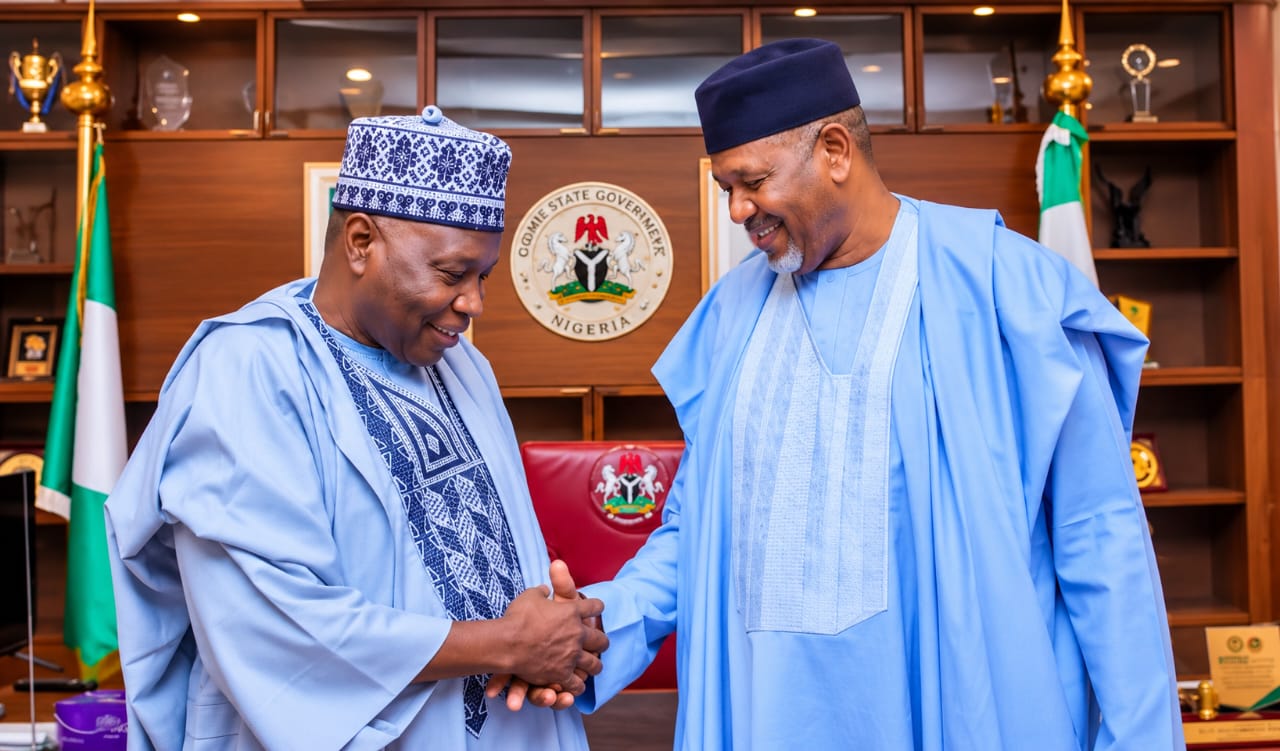
Former Opposition Figure Pledges Political Structure to Support Jamil Gwamna, Other APC Candidates Ahead of 2027 Elections
By Our Political Reporter
Gombe State Governor, Muhammadu Inuwa Yahaya, has received former Peoples Democratic Party (PDP) governorship aspirant, Alhaji Abdulkadir Hamma-Saleh, into the ruling All Progressives Congress (APC), in a move that could reshape political alignments ahead of the 2027 general elections.
Hamma-Saleh, who previously contested for the PDP governorship ticket against former Minister of Communications and Digital Economy, Professor Isa Ali Ibrahim Pantami, announced his decision to leave the opposition party and join the APC in a press statement made available to journalists in Gombe.
The former governorship aspirant also called on his supporters across Gombe State to join him in the APC and support the party’s candidates at all levels of government.
His defection comes amid increasing political realignments in the state as political parties and aspirants intensify efforts to consolidate their support bases ahead of the 2027 elections.
Hamma-Saleh’s move is considered a significant development in Gombe’s political landscape, given his previous involvement in the PDP’s governorship contest and his role among the party’s political stakeholders.
The development also comes against the backdrop of internal disputes surrounding the PDP governorship ticket, following the emergence of Professor Pantami as the party’s candidate and subsequent legal challenges over the primary election.
By joining the APC, Hamma-Saleh has signalled his intention to align with the ruling party as political activities gather momentum ahead of the next electoral cycle.
His call for supporters to rally behind the APC could provide an opportunity for the party to strengthen its grassroots mobilisation and expand its political base across the state’s 11 local government areas.
Meanwhile, Governor Inuwa Yahaya and other APC stakeholders are expected to continue engaging political actors as the party prepares for the 2027 general elections.
The defection adds to the evolving political dynamics in Gombe State, where party loyalty, strategic alliances and grassroots mobilisation are expected to play important roles in determining the outcome of the forthcoming elections.
However, the number of thousands Hamma-Saleh’s supporters already join him in the APC.
As the 2027 elections approach, political observers will be watching how the development affects the strength of the APC and the PDP, as well as the broader contest for political influence in Gombe State.
Politics
2027: Ex-PDP Governorship Aspirant Hamma Saleh Collects APC Membership Card, Mobilises Support for APC at all levels

By Our Political Reporter
A former governorship aspirant of the Peoples Democratic Party (PDP) in Gombe State, Alhaji Abdulkadir Hamma Saleh, has officially collected his membership card of the All Progressives Congress (APC) in Nafada West Ward, Nafada Local Government Area, pledging to work for the party’s success at all levels in the 2027 general elections.
Hamma Saleh, also known as Dokajin Nafada, collected his APC membership card on Sunday, October 18, 2026, following his defection from the PDP to the ruling party.
The event attracted a large gathering of APC supporters, party leaders and other stakeholders who welcomed him into the party at the Nafada Local Government Secretariat.
The reception was led by the Chairman of Nafada Local Government Area, Hon. Dr. Babangida Adamu Jigawa, Danmasanin Nafada, alongside other APC leaders and stakeholders in the area.
The Commissioner for Livestock Development, Alhaji Salisu Baba Alkali, was also present to welcome Hamma Saleh into the APC.
Speaking after receiving his membership card, Hamma Saleh expressed his commitment to strengthening the APC in Nafada Local Government Area and across Gombe State.
He urged his supporters to rally behind the party and vote for its candidates in the 2027 general elections.
The former PDP governorship aspirant specifically called on his supporters to vote for President Bola Ahmed Tinubu, the APC governorship candidate in Gombe State, Dr. Jamilu Isyaku Gwamna, and the party’s senatorial candidate for Gombe North, Governor Muhammadu Inuwa Yahaya, alongside other APC candidates.
He emphasised the need for unity and collective commitment among party members to ensure the APC’s success in the forthcoming elections.
Hamma Saleh also expressed appreciation to the Nafada Local Government Chairman, Hon. Dr. Babangida Adamu Jigawa, party leaders and supporters for the warm reception accorded him.
As part of his activities during the visit, Hamma Saleh paid a courtesy visit to the palace of the Emir of Nafada, Alhaji Muhammad Dadum Hamza, to pay homage to the traditional institution.
His defection marks another political development in Gombe State as political parties and their stakeholders continue to position themselves ahead of the 2027 general elections.
The move is expected to attract attention within the state’s political landscape, particularly in Nafada Local Government Area and the remaining 10 LGAs of Gombe, where Hamma Saleh is seeking to mobilise his supporters behind the APC.

By Our Political Reporter
Former Peoples Democratic Party (PDP) governorship aspirant in Gombe State, Alhaji Abdulkadir Hamma Saleh, has formally joined the All Progressives Congress (APC), weeks after resigning from the opposition party, in a political development that could reshape alliances ahead of the 2027 general elections.
Hamma Saleh announced his defection in a press release made available to journalists in Gombe on Friday, calling on his supporters across the state to join him in supporting the APC and its candidates at all levels.
The move marks a new chapter in the political career of Hamma Saleh, who is regarded by his supporters as one of the longstanding political stakeholders in the PDP in Gombe State.
His defection is expected to generate discussions within the state’s political circles, particularly given his experience in party politics, grassroots mobilisation and his relationships with political stakeholders across the state.
Hamma Saleh is believed to have established a considerable support base across Gombe State’s 11 local government areas and 114 wards, a factor that could make his entry into the APC significant as the party prepares for the 2027 elections.
His supporters maintain that his political experience, personal integrity and longstanding engagement with grassroots communities could strengthen the APC’s mobilisation efforts ahead of the polls.
The development could also have implications for the PDP, particularly if some of his loyalists decide to follow him into the ruling party. However, the number of supporters likely to move with him has not been independently established.
Hamma Saleh’s political realignment comes amid growing manoeuvres by political parties and aspirants seeking to consolidate their support bases, build alliances and position themselves for electoral contests in 2027.
His previous resignation from the PDP had already generated interest among political observers, with his subsequent decision to join the APC providing further insight into the changing political alignments in Gombe State.
For the APC, his arrival could offer an opportunity to strengthen its grassroots structures and expand its reach among voters, particularly in communities where he enjoys political influence.
As political activities intensify across Gombe State, attention will increasingly focus on whether Hamma Saleh can translate his political experience and claimed grassroots influence into tangible electoral support for the APC.
His defection adds another dimension to the evolving political contest in Gombe State, where party loyalty, grassroots mobilisation and strategic alliances are expected to play crucial roles in the battle for political dominance in 2027.
-

 Politics3 years ago
Former Gombe State APC Promoters Forum Chairman Attacked Following Political Commentary
-

 Appointment2 years ago
Gombe State Indigene, Appointed New Vice Chancellor (ATBU)
-

 Leadership2 years ago
Breaking: African Union Appoints Pantami as Co-Chair of the 4th Industrial Revolution Policy Council
-

 Death2 years ago
Prominent Nigerian Islamic Scholar, Sheikh Sa’idu Hassan Jingir, Passes Away
-
 Health2 years ago
Gombe State Organizes Onboarding Workshop for Private Healthcare Facilities
-
 Water3 years ago
Gombe Government Mobilizes Stakeholders to Combat Illegal Water Connections
-

 Politics2 years ago
Gombe State Inaugurates Human Capital Development Council
-

 Politics3 years ago
Gombe State Launches Presidential Palliative Program (PPP) to Aid Small Businesses