
Education
Open Governance reporting: Centre trains stakeholders in Gombe

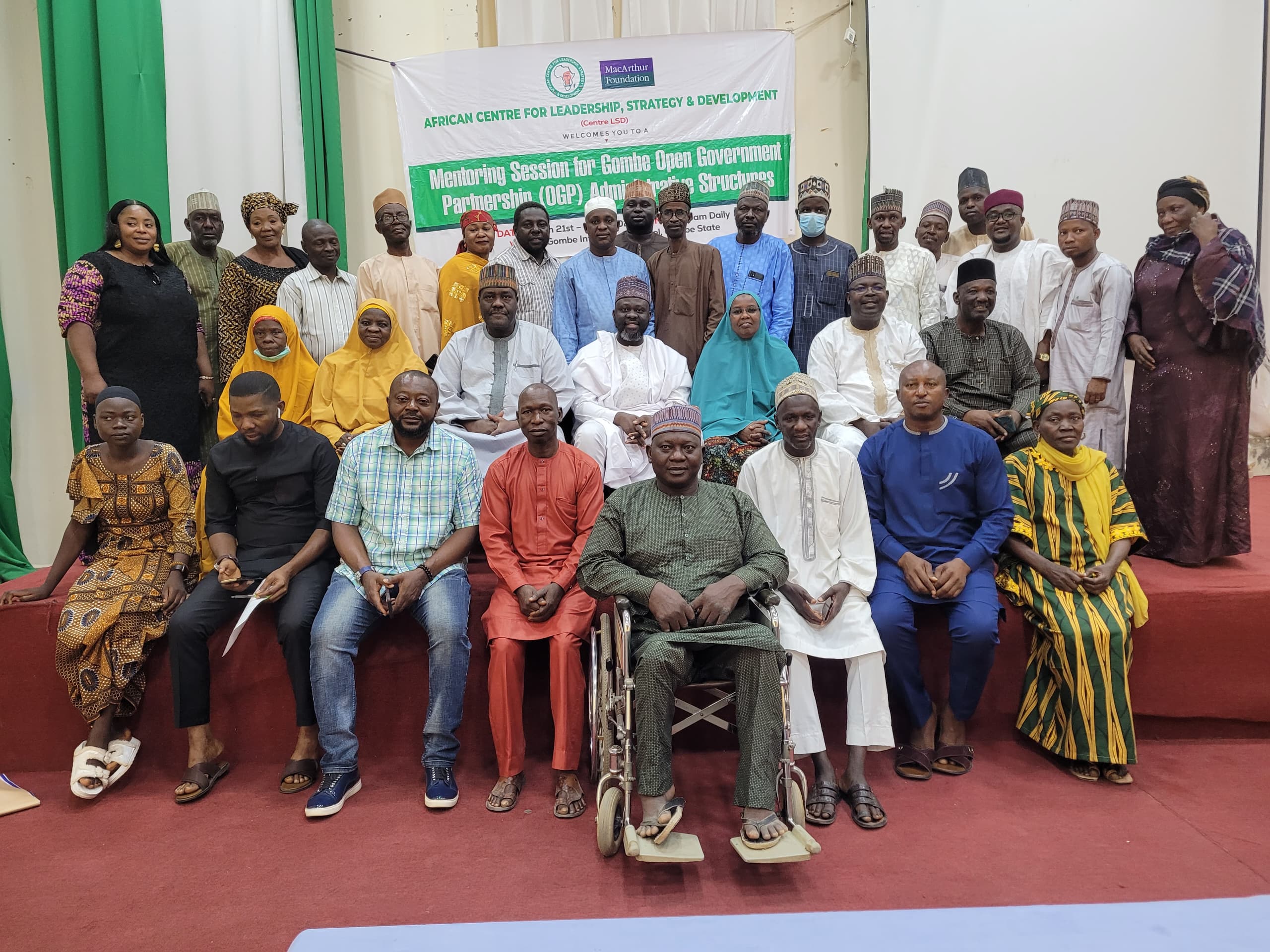
African Centre for Leadership, Strategy and Development (Centre LSD) has trained no fewer than 35 state and non-state actors in Gombe State on effective reportage on Open Governance activities in the state.
Speaking at the closing ceremony of the two-meeting in Gombe on Friday, Mr Lawal Amodu, the Programme Coordinator and the OGP focal person, Centre LSD said the training was to strengthen OGP structure in the state.
Amodu said since there was already an OGP structure in the state, his team’s visit was to build the capacity of members of the thematic group to know their roles, functions, what to do and when to report.
According to him, reporting on OGP is key for all stakeholders in Gombe State to track progress reports on the development and implementation of the OGP action plans when signed for implementation to in the state.
“Based on engagement with our partners in Gombe State, we discovered that one of the gaps needed to be filled is how to report on OGP.
“Now, there are several activities in the state action plan that need to be carried out so if you carry out those activities, there is need for a report.
“When you generate those reports from the level of thematic working group to the OGP steering committee in the state, you need to do the reportage into the steering committee.
“And the steering committee including the MDAs that are in charge of the thematic area: physical transparency, citizens engagement and improved service delivery has the duty to report back to the OGP.
“That this is what they have done at the level of OGP secretariat in the state.
“They report back to them and the secretariat takes that report also and report to OGP national secretariat.
“ If this is not done, reporting on the OGP has not been done and if reporting has not been done, it is as good as nothing has been done on the OGP.” he said.
He said for any state implementing OGP state action plan, it was important for the key actors to prioritise reportage on their activities and the level of progress or challenges as the case may be.
He commended the OGP administrative structure in the state for working to develop a State’s Action Plan (SAP), while urging Gov. Inuwa Yahaya of Gombe State to sign the SAP document for implementation.
For his part, Dr Ishiyaku Babayo, Special Adviser to Gov Yahaya on Development Partners Coordination said open governance had long been embraced in Gombe under the leadership of Yahaya.
He said that the Gombe State Government is passionate about openness, and that is why the state is encouraging OGP.
Babayo stated that the state government had signed a letter for the inauguration and establishment of Open Government Policy to show the state government’s commitment to transparency and accountability in governance.
According to him, open governance and transparency are now the order of the day and a must for any government with the interest of the people at heart.
He said it was in view of the contribution of development partners to the developing of Gombe State, that it became imperative to sustain the OGP efforts for the wellbeing of citizens.
“Gombe State is at the top of ease of doing business and has become attractive to global partners in view of its open governance policy.”
He said that the state had developed an OGP Action Plan, which he expressed optimism that Gov. Yahaya would soon sign.
He commended Centre LSD for coming to empower the state and to entrench OGP in the state to improve transparency in governance as well as tackle corruption in the system.
For Malam Umar Ali-Goro, the Executive Director of Hope Foundation for the Disable, Gombe State said he had benefitted maximally from the meeting, stressing that it was eye-opening for him.
Ali-Goro said with the kind of knowledge he had acquired, he is now more empowered on how to effectively report issues on Open Governance as well as demand accountability from government on the wellbeing of his members across the state.
He thanked the Centre LSD and MacArthur Foundation for incorporating the disabled persons into their training, this he said had empowered his members in the state.
“All development partners who have been coming to engage the state government have really helped to improve the welfare of persons with disabilities.
“Today, many things like ramps and other facilities have been provided in public buildings because of these interventions with development partners.
“We are now being consulted during budget preparation to reflect our needs; so we are making progress and I thank Centre LSD, MacArthur Foundation and all development partners in Gombe State,” he said.
The News Agency of Nigeria (NAN) reports that the training was organised by African Centre for Leadership Strategy and Development with funding from MacArthur Foundation.
By Mukhtar Sani Saulawa,Gombe
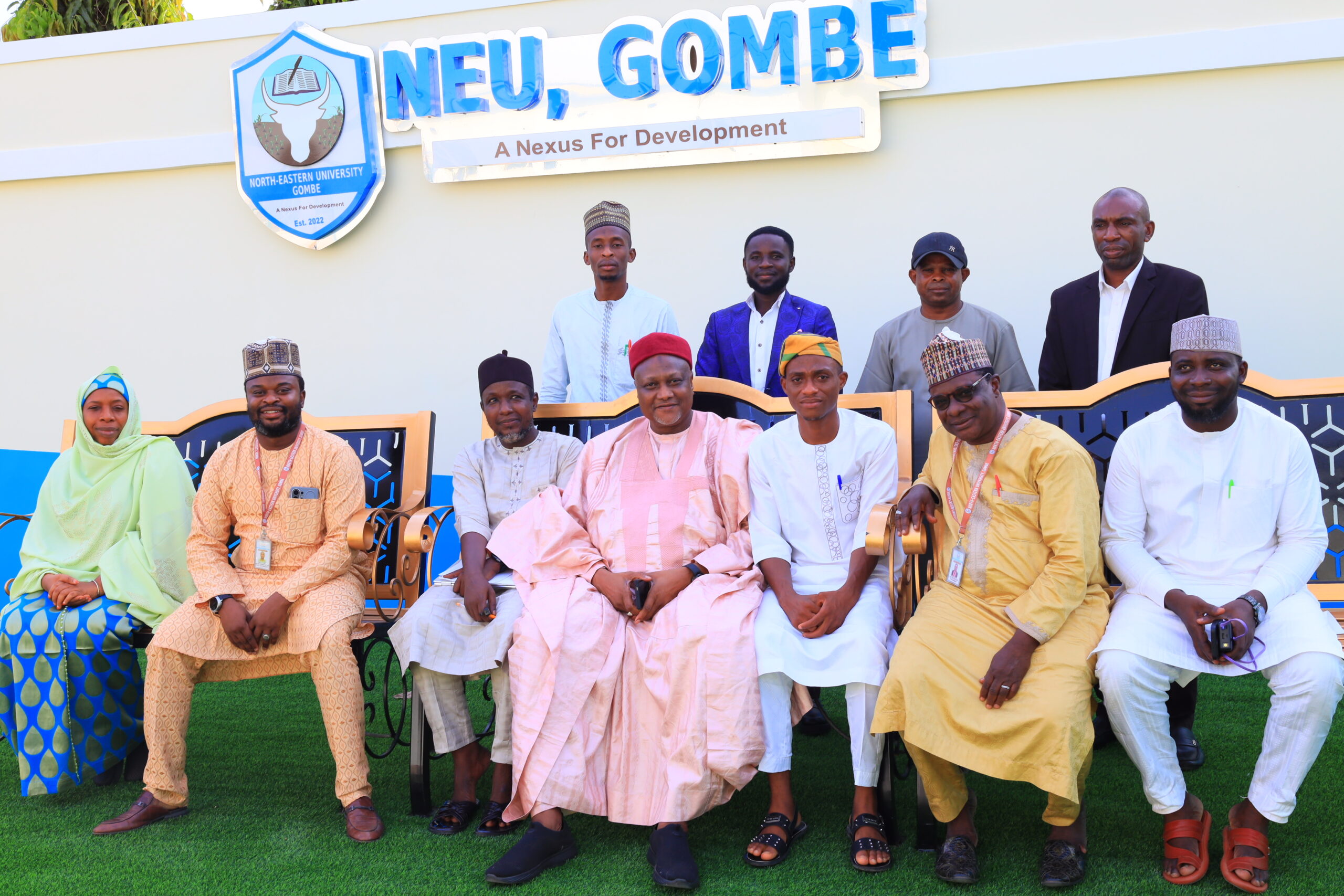
The National Universities Commission (NUC) has assessed the Student Industrial Work Experience Scheme (SIWES) facilities and operations at North-Eastern University, Gombe, with the Commission verifying the university’s human, material and institutional readiness for effective implementation of the programme.
The assessment was conducted by officials from the NUC Directorate of Accreditation and Directorate of Skills Development and Entrepreneurship to evaluate the university’s SIWES structures, staffing, facilities, ICT infrastructure, student placement systems and financial administration.
Presenting the outcome of the exercise, the NUC Team Leader, Mr. Bashir Ibrahim Isa, said the team verified evidence of Senate approval, relevant NUC documentation, adequate staffing and facilities, as well as operational systems for student placement and monitoring.
Isa said the university’s SIWES Directorate has seven staff members and is headed by a qualified Professor of Plant Science. He also disclosed that the team verified evidence of partnerships with 242 industries for SIWES student placement, while students are monitored and supervised during their industrial attachments.
“We have gone round, we have checked all the available files, and here is the brief of our exercise. We are here to assess the human, material, and institutional readiness for the effectiveness of the SIWES Directorate.”
Responding to the assessment, the Founder and Pro-Chancellor of North-Eastern University, Dr. Sani Jauro, expressed satisfaction with the findings, saying they confirmed that the university was progressing in line with its vision.
“I have always said that this is a 21st-century university. A digital university. A university that does not compromise on anything. We are not a university that has come to make money. We are a university that has come to make a name, to make a difference in our society, to fertilize our environment, and to give an example of what a university should be so that others will copy from us. We are a flagship university.”
Jauro described SIWES as central to the university’s goal of producing professionally competent graduates who can connect classroom knowledge with practical experience. He also assured the NUC that the university would address the observations raised during the assessment and continue to comply with regulatory requirements.
«“The Student Industrial Work Experience Scheme puts the students on the right trajectory of becoming the professionals that they should be after graduation, so that they can bring what they have learned in theory to practice and they can even stand on their feet.”»
The Pro-Chancellor said the university’s commitment to practical education extends beyond SIWES to entrepreneurship, skills acquisition, research and community development, noting that the institution provides practical training and support to people in surrounding communities.
He further highlighted the university’s Centre for African Medicinal Plants Research, where researchers work with traditional medicine practitioners to scientifically investigate medicinal plants and their potential applications.
The assessment, according to the university, provides an opportunity to consolidate existing structures while addressing the areas identified by the Commission as North-Eastern University continues to strengthen its academic, practical training and industry-engagement systems.
With verified partnerships involving 242 industries, the university says its SIWES programme remains an important part of its commitment to producing graduates equipped with practical skills and professional experience.
Education
Kolmani Oil: NEU Gombe Introduces 50% Founder’s Scholarship for Petroleum Chemistry and Five Other Degree Programmes


The Pro-Chancellor and Founder of North-Eastern University Gombe (NEU Gombe), Dr. Sani Jauro (Dan Lawan of Gombe), has announced a 50% Founder’s Scholarship for students seeking admission into six science-based degree programmes at the University.


Dr. Jauro made the announcement during the 2026 Graduation Ceremony of Pen Resource Academy, where he encouraged graduating students and other prospective candidates to take advantage of the scholarship opportunity as part of the University’s commitment to producing highly skilled professionals for Nigeria’s growing science, technology and energy sectors.
The scholarship covers the following undergraduate programmes:
B.Sc. Petroleum Chemistry
B.Sc. Environmental Management and Toxicology
B.Sc. Industrial Chemistry
B.Sc. Microbiology
B.Sc. Biotechnology
B.Sc. Urban and Regional Planning
According to the Pro-Chancellor, the introduction of these programmes and the scholarship initiative is in line with the emerging opportunities created by the Kolmani oil exploration project in Bauchi and Gombe States, as well as the increasing demand for qualified professionals in the oil and gas industry and other science-related fields.
He explained that the University is committed to equipping students with the knowledge, practical skills and professional competence required to excel in their chosen careers while contributing to national development.
Dr. Jauro further disclosed that the University is working towards establishing an Oil and Gas Competency Development Centre, which will collaborate with internationally recognised certification organisations to provide specialised training and globally recognised certifications for students and professionals.
The 50% Founder’s Scholarship is expected to ease the financial burden on students and parents while encouraging more young Nigerians to pursue careers in science and technology. The initiative also reflects North-Eastern University Gombe’s continued commitment to expanding access to quality higher education and developing the skilled workforce needed to drive the country’s economic growth.
Education
NEU Founder Commends NYSC, Pledges Strong Collaboration and Opportunities for Corps Members
By Mukhtar Sani Saulawa ,Gombe
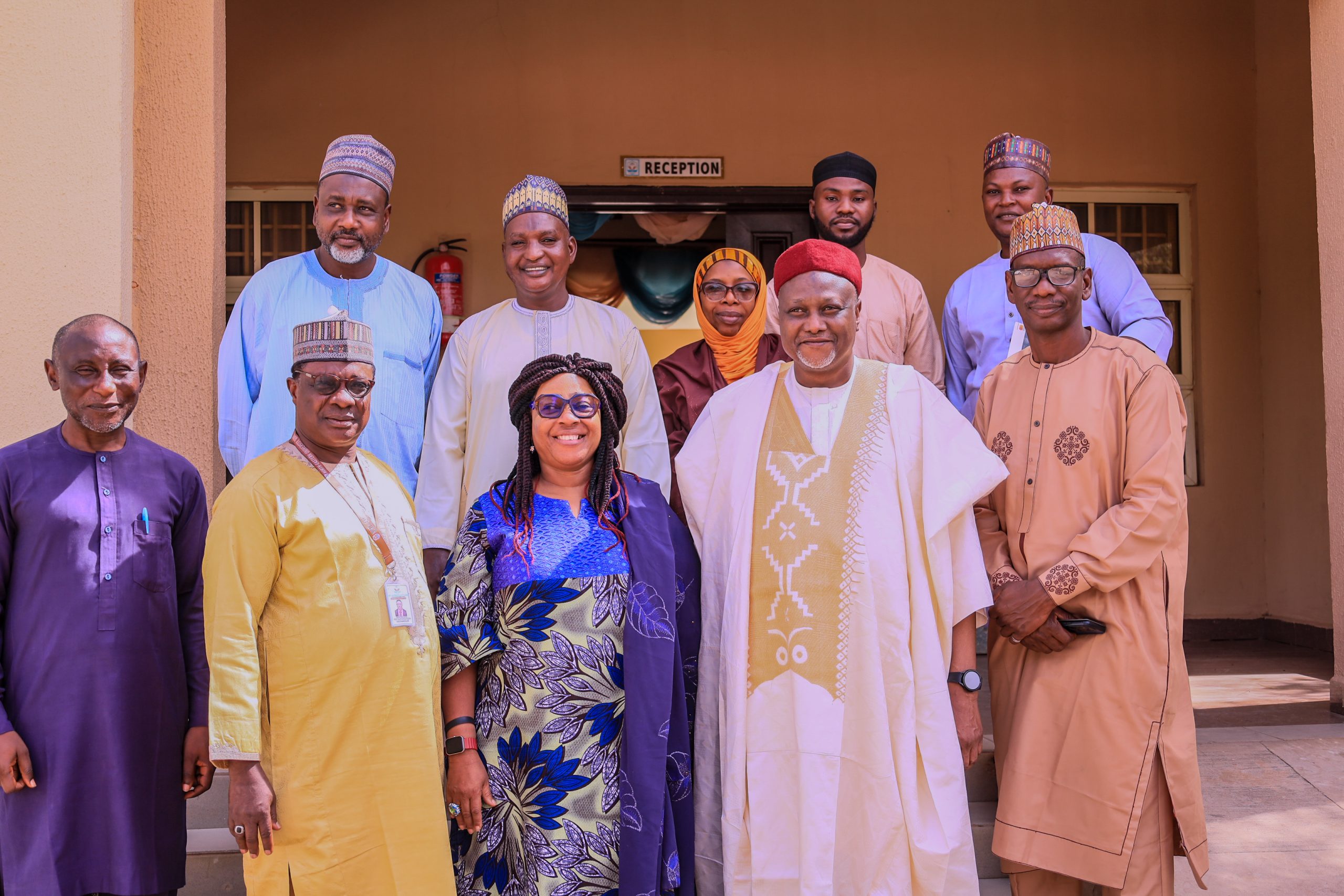
Northeastern University, Gombe, has reaffirmed its commitment to strengthening collaboration with the National Youth Service Corps (NYSC) following a courtesy visit by the Gombe State NYSC Coordinator, Chinwe Nnenna Nwachuku, and her delegation to the institution.

Speaking during the visit, the Dalawan of Gombe Pro-Chancellor and Founder of Northeastern University, Sani Jauro, described the NYSC scheme as one of the most important national programmes in Nigeria, noting that it has played a significant role in promoting unity among Nigerians from different ethnic, cultural, and religious backgrounds.

Dr.Sani Jauro( Danlawan Of Gombe, Pro-Chancellor and Founder of North-Eastern University Gombe.
Dr. Jauro expressed appreciation to the NYSC Coordinator for her support to the university, particularly for responding promptly to an earlier request to post a medical doctor to the institution, a request which he said was granted within a short period of time.
The Founder noted that Northeastern University is ready to deepen its collaboration with the NYSC, especially in the area of entrepreneurship development. According to him, the university operates a Directorate of Entrepreneurship where students are trained to acquire practical skills that will enable them to become self-reliant and create wealth for national development.
He explained that the proximity of the NYSC Skills Acquisition and Entrepreneurship Development Centre to the university presents an opportunity for both institutions to work together in empowering students and corps members through practical training and skills development.
Dr. Jauro further revealed that the university has a long tradition of retaining outstanding corps members who serve in its institutions. According to him, several corps members who demonstrated commitment and professionalism during their service year had been retained and employed by the institution.
He added that the university also supports the academic advancement of such young professionals by providing opportunities for them to pursue postgraduate studies, including master’s and doctoral degrees, with the aim of developing future academics who can rise to the rank of professors and contribute to national development.
The Founder also highlighted the university’s sports facilities, noting that Northeastern University possesses an Olympic-standard football field, a 400-meter athletics track, and facilities for various sporting activities including volleyball, basketball, badminton, table tennis, and other field events. He said the university is ready to make these facilities available for NYSC sporting activities and competitions.
In his remarks, the Vice-Chancellor of the university, Yusuph Amuda Yahaya, welcomed the NYSC delegation and emphasized the importance of the partnership as the institution prepares to graduate its first set of students. He noted that the collaboration would help guide final-year students through the NYSC mobilization process and ensure they participate successfully in the national service programme.
Responding, the NYSC State Coordinator, Chinwe Nnenna Nwachuku, commended the management of Northeastern University for its commitment to youth development and for providing opportunities for corps members to grow professionally. She assured the university that the NYSC would continue to deploy competent and dedicated corps members to serve in the institution while strengthening cooperation in areas such as skills acquisition, entrepreneurship, and community development.
-

 Politics3 years ago
Former Gombe State APC Promoters Forum Chairman Attacked Following Political Commentary
-

 Appointment2 years ago
Gombe State Indigene, Appointed New Vice Chancellor (ATBU)
-

 Leadership2 years ago
Breaking: African Union Appoints Pantami as Co-Chair of the 4th Industrial Revolution Policy Council
-

 Death2 years ago
Prominent Nigerian Islamic Scholar, Sheikh Sa’idu Hassan Jingir, Passes Away
-
 Health2 years ago
Gombe State Organizes Onboarding Workshop for Private Healthcare Facilities
-

 Water2 years ago
Gombe Government Mobilizes Stakeholders to Combat Illegal Water Connections
-

 Politics2 years ago
Gombe State Inaugurates Human Capital Development Council
-

 Politics2 years ago
Gombe State Launches Presidential Palliative Program (PPP) to Aid Small Businesses