
Education
State2State trains USAID IPs in Gombe


The USAID Nigeria – State Accountability, Transparency and Effectiveness (State2State) Activity has conducted a two-day workshop for USAID Implementing Partners working in priority sectors in Gombe State.
The workshop, which was concluded in Gombe on Friday is themed: “Governance Orientation for States’ Implementing Partners in Core/Priority Sectors (Health, Education and Water, Sanitation and Hygiene) in Gombe State.”
The training was to ensure alignment of the activities of IPs with the State2State’s purpose and objectives, enhance collaboration, and promote effective service delivery in Gombe State.
The orientation for the IPs was also to avoid duplication, miscommunication, misaligned priorities, and inefficiencies, thus threatening the success of the development initiatives of State2State.
In addition, the orientation was aimed at exposing the IPs to the governance intricacies and power-play at state and local government levels among the key governance stakeholders that can affect the implementation of IPs interventions in Gombe State.
In the course of the exercise, no fewer than 23 participants learned about State2State interventions from inception in 2020 to date as the training helped the participants in deepening their understanding of Governance, political economy analysis, PFM, GESI, and the Conflict Assessment Framework.
Declaring the workshop open on Thursday, Dr Ishiyaku Babayo, the Special Adviser to Gov. Inuwa Yahaya of Gombe State on Development Partner Coordination (SA,DPC) commemded USAID State2State Activity for the capacity building.
Babayo called for effective coordination, integration, and alignment of IP activities, adding that such would drive more achievements for all stakeholders implementing USAID programmes in the state.
On his part, Mr Muhammad Abubakar, State Team Lead, USAID State2State Activity in Gombe State in his welcoming remarks reiterated the importance of all programmes being implemented by USAID to work together through collaboration, coordination, and cooperation to maximize the impact of all the various intervention.
Abubakar who made a presentation entitled Overview of Good Governance: Principles and Applications: Implications for USAID Partners said the orientation would guide IPs to build up sustainability from their various projects’ key outcome, impact results and lessons that would allow Gombe State to take ownership in delivering inclusive quality service to their citizens.
The event was attended by USAID Activities in the State that include, USAID Learn to Read Activity, Mercy Corps’ Rural Resilience Activity, and the activity being implemented by the International Institute of Tropical Agriculture.
A representation of CSOs funded by USAID’s Strengthening Civic Advocacy and Local Engagement (SCALE) among others.
Our Correspondent reports that the USAID Nigeria State Accountability, and Effectiveness (State2State) Activity is designed to assist the Government of Nigeria in six partner states (Adamawa, Akwa Ibom, Bauchi, Ebonyi, Gombe, and Sokoto) to strengthen accountability, transparency, and effectiveness in increasing service delivery and access to basic education, primary health care, and water, sanitation, and hygiene (WASH).
State2State does this in Gombe by working with the Gombe State government’s ministries, departments, and agencies (MDAs), the private sector, communities, and civil society organizations (CSOs) to deliver interventions and technical assistance aimed at strengthening the governance systems (particularly public financial management systems and processes) of the state and four target LGAs.
Because State2State interventions are initiated on needs’ basis in response to outcomes of systems and process’s assessments carried out on priority MDAs in the states, the Activity works in collaboration with, or enhances the work of other development partners, sometimes called Implementing Partners (IPs) as they relate to the objectives of State2State across partners states.
Education
NEU Founder Commends NYSC, Pledges Strong Collaboration and Opportunities for Corps Members

By Mukhtar Sani Saulawa ,Gombe
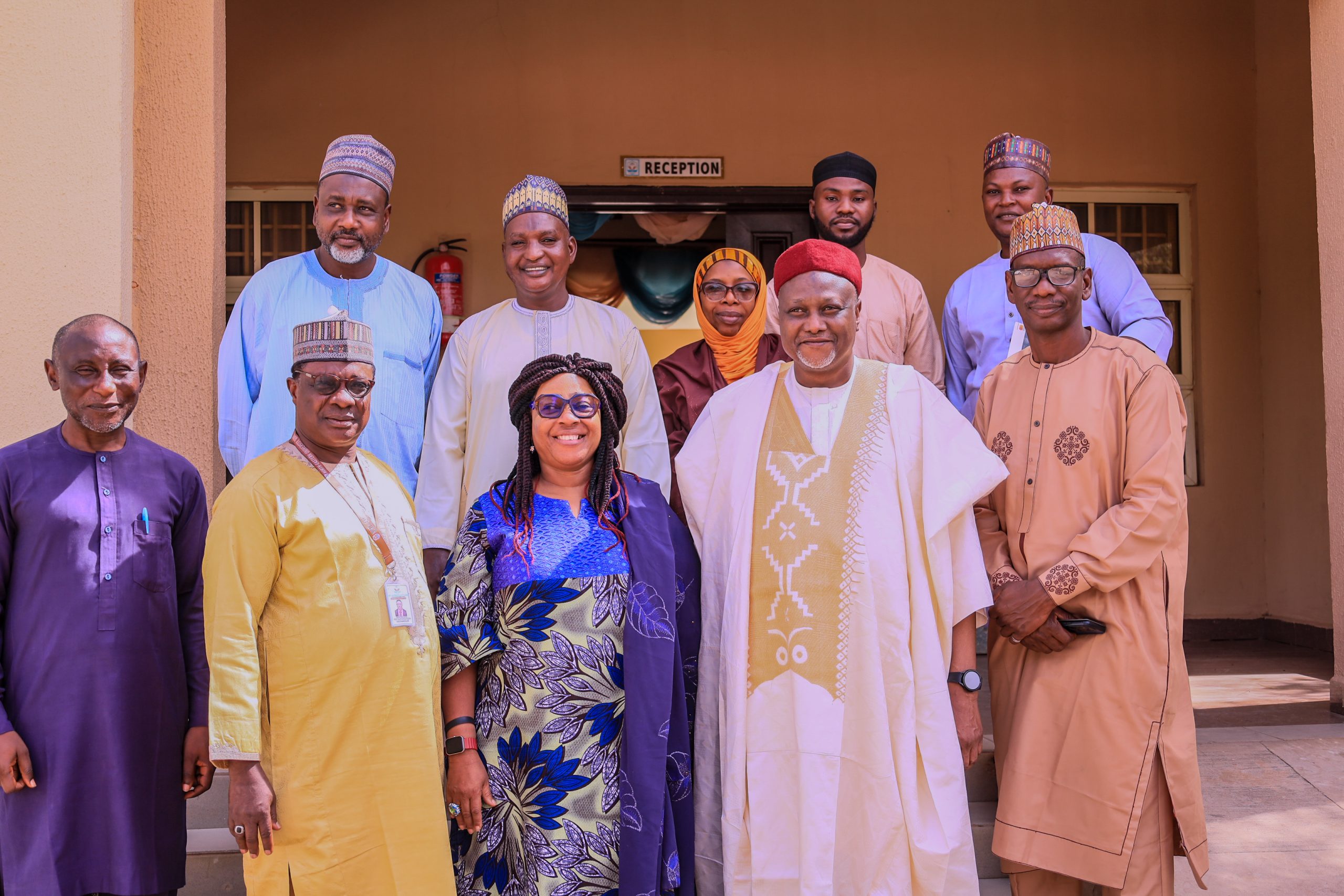
Northeastern University, Gombe, has reaffirmed its commitment to strengthening collaboration with the National Youth Service Corps (NYSC) following a courtesy visit by the Gombe State NYSC Coordinator, Chinwe Nnenna Nwachuku, and her delegation to the institution.

Speaking during the visit, the Dalawan of Gombe Pro-Chancellor and Founder of Northeastern University, Sani Jauro, described the NYSC scheme as one of the most important national programmes in Nigeria, noting that it has played a significant role in promoting unity among Nigerians from different ethnic, cultural, and religious backgrounds.

Dr.Sani Jauro( Danlawan Of Gombe, Pro-Chancellor and Founder of North-Eastern University Gombe.
Dr. Jauro expressed appreciation to the NYSC Coordinator for her support to the university, particularly for responding promptly to an earlier request to post a medical doctor to the institution, a request which he said was granted within a short period of time.
The Founder noted that Northeastern University is ready to deepen its collaboration with the NYSC, especially in the area of entrepreneurship development. According to him, the university operates a Directorate of Entrepreneurship where students are trained to acquire practical skills that will enable them to become self-reliant and create wealth for national development.
He explained that the proximity of the NYSC Skills Acquisition and Entrepreneurship Development Centre to the university presents an opportunity for both institutions to work together in empowering students and corps members through practical training and skills development.
Dr. Jauro further revealed that the university has a long tradition of retaining outstanding corps members who serve in its institutions. According to him, several corps members who demonstrated commitment and professionalism during their service year had been retained and employed by the institution.
He added that the university also supports the academic advancement of such young professionals by providing opportunities for them to pursue postgraduate studies, including master’s and doctoral degrees, with the aim of developing future academics who can rise to the rank of professors and contribute to national development.
The Founder also highlighted the university’s sports facilities, noting that Northeastern University possesses an Olympic-standard football field, a 400-meter athletics track, and facilities for various sporting activities including volleyball, basketball, badminton, table tennis, and other field events. He said the university is ready to make these facilities available for NYSC sporting activities and competitions.
In his remarks, the Vice-Chancellor of the university, Yusuph Amuda Yahaya, welcomed the NYSC delegation and emphasized the importance of the partnership as the institution prepares to graduate its first set of students. He noted that the collaboration would help guide final-year students through the NYSC mobilization process and ensure they participate successfully in the national service programme.
Responding, the NYSC State Coordinator, Chinwe Nnenna Nwachuku, commended the management of Northeastern University for its commitment to youth development and for providing opportunities for corps members to grow professionally. She assured the university that the NYSC would continue to deploy competent and dedicated corps members to serve in the institution while strengthening cooperation in areas such as skills acquisition, entrepreneurship, and community development.

By Our Correspondent
Gombe State University (GSU) has concluded plans to commence the construction of a modern library and a veterinary clinic at its newly established Faculty of Agriculture, located at Malamsidi, the headquarters of Kwami Local Government Area of Gombe State.
Recall that the University, under the leadership of its Vice-Chancellor, Professor Sani Ahmed Yauta, recently established the Faculty of Agriculture with a satellite campus at Malamsidi. The faculty is scheduled to commence academic activities in the 2025/2026 academic session, following approval by the Gombe State Government.
The initiative is aimed at strengthening manpower development in agriculture and allied disciplines, especially as Gombe State remains a predominantly agrarian state strategically located in the North-East sub-region of Nigeria.
To fast-track the development of the new faculty, the North East Development Commission (NEDC) has officially handed over the project site to the University for the construction of the proposed modern library and veterinary clinic, facilities expected to enhance teaching, learning, research, and practical skills acquisition for students.
Speaking during the site handover ceremony, the Vice-Chancellor, Professor Sani Ahmed Yauta, expressed gratitude to the NEDC for legalising and handing over the plot of land for the project. He assured that the University would ensure optimal utilisation of the site and complete the projects within the shortest possible time.
Professor Yauta further stated that the facilities would be developed in line with the standards and criteria set by the National Universities Commission (NUC), noting that the administration remains committed to quality education and infrastructural development.
The Vice-Chancellor also reiterated the commitment of his administration, as well as that of Governor Muhammadu Inuwa Yahaya, to making the Faculty of Agriculture one of the best in the North-East region and beyond.
The handover ceremony, which took place at the faculty’s temporary campus located at the former Government Secondary School, Malamsidi, was led by Arc. Usman, an official of the NEDC. He was accompanied by officials from the Gombe State Ministry of Education and the Ministry of Higher Education.
The construction of the library and veterinary clinic is expected to significantly boost academic excellence, research output, and practical training for students of the Faculty of Agriculture.
Education
Private University Students Are Nigerians Too — NEU Founder Challenges Student Loan Policy

By Mukhtar Sani Saulawa, Gombe.
The Pro-Chancellor and Founder of North-Eastern University, Gombe, Dr. Sani Jauro, has criticised the exclusion of private university students from the Nigerian Student Loan Programme introduced by the administration of President Bola Ahmed Tinubu, describing the policy as discriminatory and unjust.
Dr. Jauro, speaking in an interview with journalists, said students of private universities are Nigerians whose parents pay taxes that fund the student loan scheme, yet are denied access to it solely because of the type of institution they attend.
“There is a wrong assumption that private universities exist solely for profit, and that is not the reality,” he said. “Government can support private universities in many ways without putting money in the pockets of owners. It can build access roads, provide water, equip libraries, grant access to online academic resources, and provide reliable internet services.”
He argued that public universities alone cannot absorb all qualified candidates seeking admission, making private universities an essential part of Nigeria’s higher education system. According to him, denying their students access to the federal student loan programme unfairly limits educational opportunities for many young Nigerians.
Dr. Jauro also pointed out what he described as a broader structural imbalance in education funding, noting that private universities pay education tax, which forms the core funding source of the Tertiary Education Trust Fund (TETFund), yet neither the institutions nor their students benefit from it.
“Why should private institutions be made to pay into a fund they cannot benefit from? That is like robbing Peter to pay Paul,” he stated.
According to him, the real objective of government policy should be to strengthen Nigeria’s entire education system rather than create divisions between public and private institutions.
“What matters is that Nigerian universities meet minimum standards so that Nigerian students receive quality education,” Dr. Jauro said. “If you starve private universities, you are starving Nigerian children studying there.”
He added that the exclusion of private institutions and their students from the federal student loan programme is contributing to the persistent challenges in the education sector. He urged the federal government to review the policy framework governing the scheme and adopt a more inclusive approach.
Dr. Jauro suggested that government could develop clear criteria to distinguish serious, quality-driven universities from purely profit-oriented ones, stressing that institutions that meet such standards should benefit from interventions, including access to low-interest loans.
“Universities should not be forced to borrow from commercial banks at 25 to 30 percent interest,” he said. “Access to intervention loans, possibly at one percent interest, would help strengthen institutions and improve learning outcomes.”
He called on the federal government to ensure that all Nigerian students, regardless of whether they attend public or private universities, have fair access to support that guarantees a minimum standard of education nationwide.
-

 Politics2 years ago
Former Gombe State APC Promoters Forum Chairman Attacked Following Political Commentary
-

 Appointment1 year ago
Gombe State Indigene, Appointed New Vice Chancellor (ATBU)
-

 Leadership2 years ago
Breaking: African Union Appoints Pantami as Co-Chair of the 4th Industrial Revolution Policy Council
-

 Death1 year ago
Prominent Nigerian Islamic Scholar, Sheikh Sa’idu Hassan Jingir, Passes Away
-
 Health2 years ago
Gombe State Organizes Onboarding Workshop for Private Healthcare Facilities
-
 Water2 years ago
Gombe Government Mobilizes Stakeholders to Combat Illegal Water Connections
-

 Politics2 years ago
Gombe State Inaugurates Human Capital Development Council
-

 Politics2 years ago
Gombe State Launches Presidential Palliative Program (PPP) to Aid Small Businesses