
Politics
Political Witch-Hunt or Genuine Probe? The Battle Over Bauchi Governor Bala Mohammed

By Joy Musa
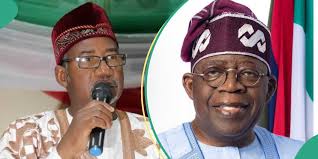
Nigeria’s political landscape has once again been rocked by allegations and counter-allegations, with Bauchi State Governor Bala Mohammed at the center of a growing controversy. The accusations of corruption, particularly the claim that the Accountant General of Bauchi State was involved in a fraudulent ₦70 billion scheme, have fueled heated debates.
Supporters of the governor, particularly within the People’s Democratic Party (PDP), argue that this is a politically motivated attack orchestrated by President Bola Tinubu’s All Progressives Congress (APC) to weaken the opposition in northern Nigeria. The PDP Northern Minority Consultative Forum has accused key figures like Nyesom Wike and Tinubu of using state institutions to discredit Governor Bala Mohammed ahead of future elections.
The Allegations: Political Tactic or Genuine Investigation?
The claim that Bauchi’s Accountant General embezzled ₦70 billion has been widely reported, but many observers have questioned the timing of these allegations. With Nigeria’s highly polarized political environment, opposition leaders frequently face corruption accusations, often perceived as tactics to suppress dissent.
Governor Bala Mohammed has been an outspoken critic of the Tinubu-led administration, making the PDP question whether this probe is a genuine anti-corruption effort or a calculated move to destabilize the party in a region where it maintains significant influence.
PDP’s Defense and Allegations Against APC
The PDP has strongly rejected the allegations, calling them a smear campaign designed to damage Governor Mohammed’s credibility. Party officials insist that while corruption must be addressed, accusations should be based on concrete evidence rather than political vendettas.
Governor Mohammed has denied any wrongdoing, with his supporters arguing that the APC-led government is systematically targeting opposition strongholds like Bauchi, Kano, and Kaduna to weaken the PDP ahead of the 2027 elections.
The PDP Northern Minority Consultative Forum has urged its members to stand firm, arguing that this is not just an attack on one individual but an attempt to dismantle the party’s influence in the north.
The Role of the Media: Reporting Facts or Fueling Political Games?
As the controversy unfolds, the media’s role in shaping public perception has come under scrutiny. While corruption allegations must be investigated, there is growing concern that biased reporting could be used to manipulate public opinion and discredit political figures unfairly.
The PDP insists that Nigerians should question the motives behind these claims: Are they based on genuine evidence, or are they part of a larger strategy to silence opposition voices?
Accountability vs. Political Persecution
While corruption investigations are essential for good governance, the Nigerian public has seen too many politically motivated probes aimed at silencing opposition leaders. If the allegations against Governor Bala Mohammed are legitimate, they should be investigated transparently and fairly, free from political interference.
However, if these claims are merely a tactic to settle political scores, Nigerians must remain vigilant against such maneuvers. The fight against corruption should serve the interests of the people, not be weaponized to suppress political opponents.
As tensions rise, the battle over Governor Bala Mohammed’s reputation is shaping up to be another defining moment in Nigeria’s political power struggle. Whether this is a genuine anti-corruption effort or a calculated witch-hunt, one thing is certain—Nigeria’s democracy remains deeply entangled in the politics of survival.
By Our Political Reporter
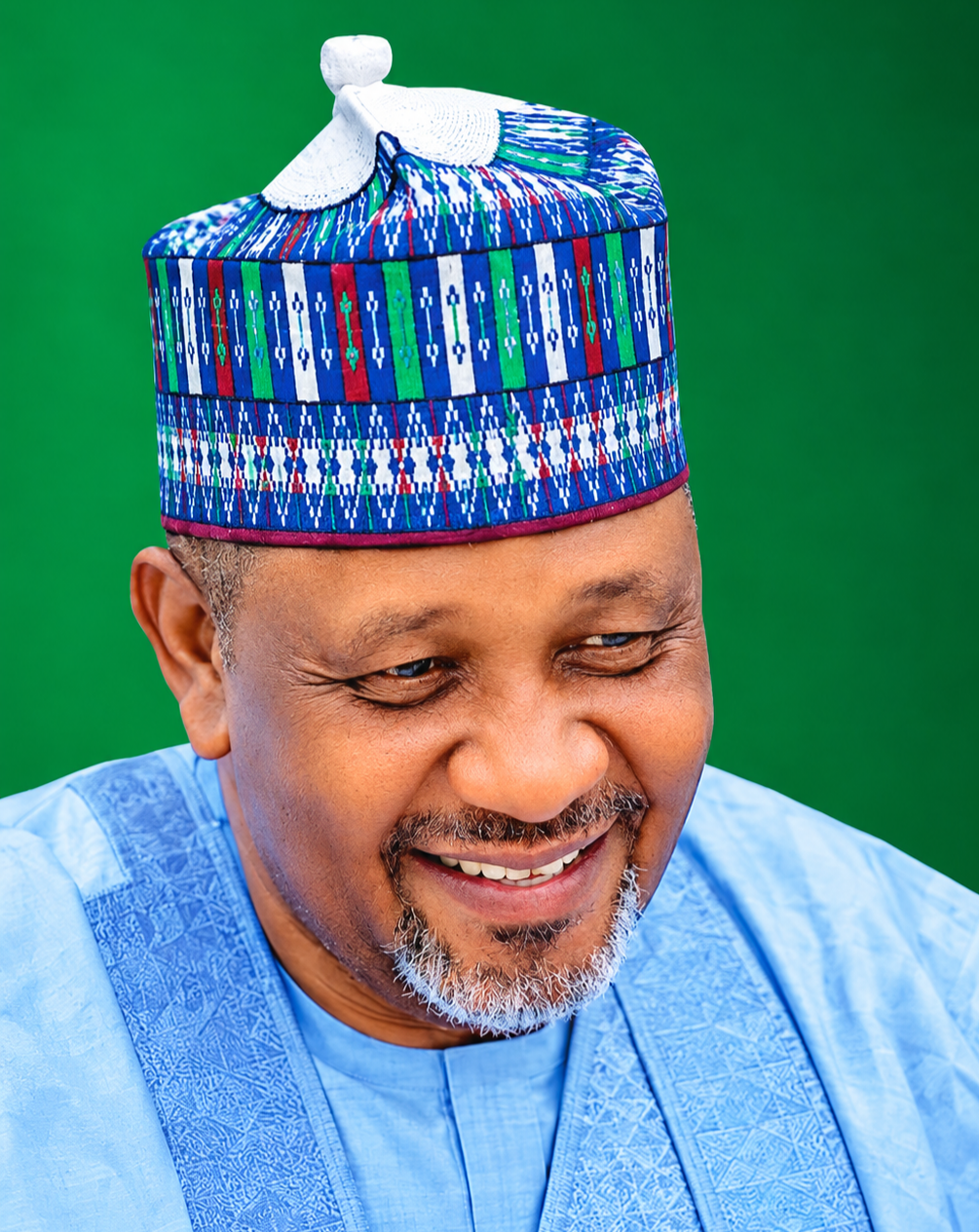
Former Peoples Democratic Party (PDP) governorship aspirant in Gombe State, Alhaji Abdulkadir Hamma Saleh, has formally joined the All Progressives Congress (APC), weeks after resigning from the opposition party, in a political development that could reshape alliances ahead of the 2027 general elections.
Hamma Saleh announced his defection in a press release made available to journalists in Gombe on Friday, calling on his supporters across the state to join him in supporting the APC and its candidates at all levels.
The move marks a new chapter in the political career of Hamma Saleh, who is regarded by his supporters as one of the longstanding political stakeholders in the PDP in Gombe State.
His defection is expected to generate discussions within the state’s political circles, particularly given his experience in party politics, grassroots mobilisation and his relationships with political stakeholders across the state.
Hamma Saleh is believed to have established a considerable support base across Gombe State’s 11 local government areas and 114 wards, a factor that could make his entry into the APC significant as the party prepares for the 2027 elections.
His supporters maintain that his political experience, personal integrity and longstanding engagement with grassroots communities could strengthen the APC’s mobilisation efforts ahead of the polls.
The development could also have implications for the PDP, particularly if some of his loyalists decide to follow him into the ruling party. However, the number of supporters likely to move with him has not been independently established.
Hamma Saleh’s political realignment comes amid growing manoeuvres by political parties and aspirants seeking to consolidate their support bases, build alliances and position themselves for electoral contests in 2027.
His previous resignation from the PDP had already generated interest among political observers, with his subsequent decision to join the APC providing further insight into the changing political alignments in Gombe State.
For the APC, his arrival could offer an opportunity to strengthen its grassroots structures and expand its reach among voters, particularly in communities where he enjoys political influence.
As political activities intensify across Gombe State, attention will increasingly focus on whether Hamma Saleh can translate his political experience and claimed grassroots influence into tangible electoral support for the APC.
His defection adds another dimension to the evolving political contest in Gombe State, where party loyalty, grassroots mobilisation and strategic alliances are expected to play crucial roles in the battle for political dominance in 2027.
By Our Political Reporter
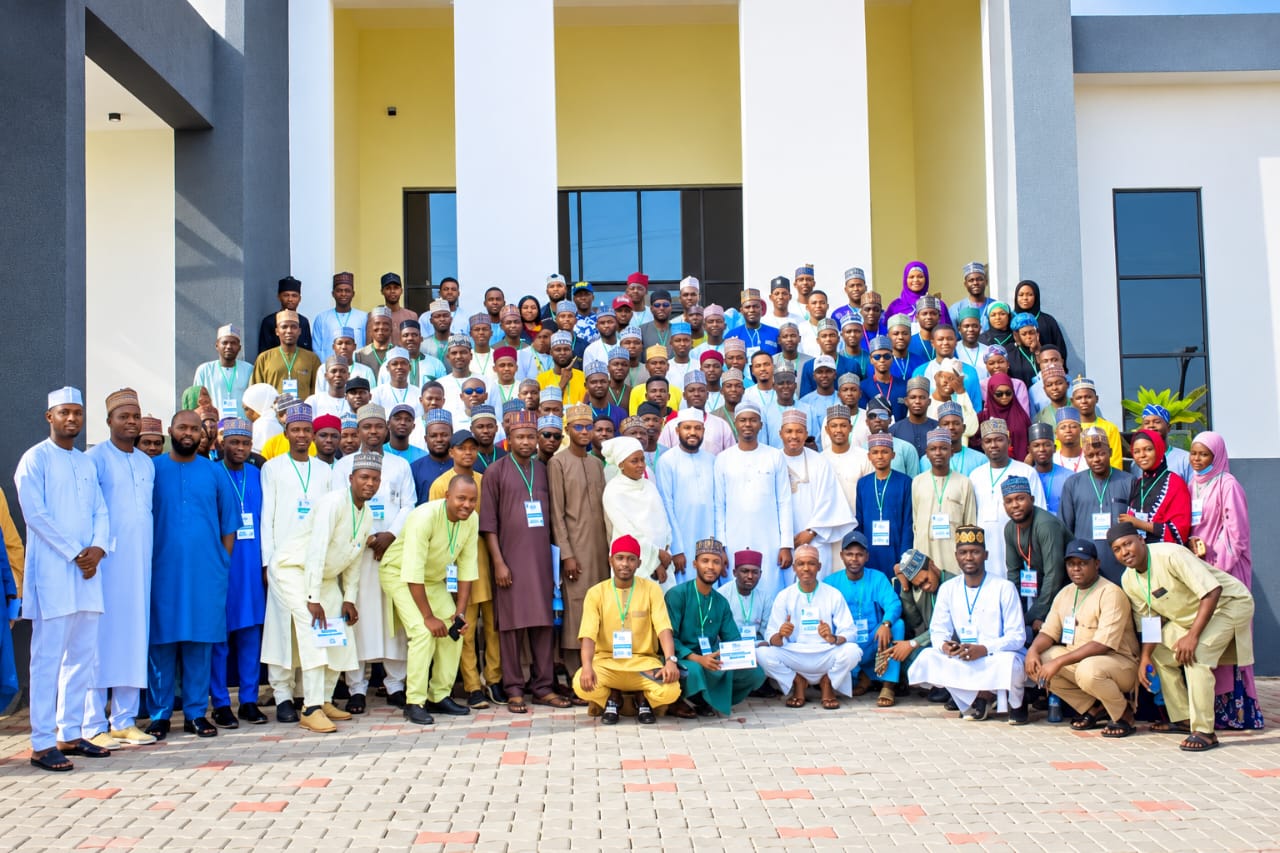
The Sardauna Strategic Group (SSG) has intensified its grassroots mobilisation drive for the Gombe State APC governorship candidate, Dr. Jamilu Isyaku Gwamna, ahead of the 2027 general elections, vowing to deliver at least 500,000 votes through a tightly coordinated statewide network.
This resolute commitment was announced during the group’s flagship strategic meeting with Local Government and Ward coordinators in Gombe, an event that also featured the distribution of welfare packages to bolster grassroots leadership.
Initiated by Alhaji Kawu Adamu and steered by its Director-General, Hon. Haruna Usman, the SSG is designed to deepen political engagement and strengthen community-level support across the state.
Outlining the group’s vision during the gathering, Alhaji Adamu emphasized that a well-structured framework has been established to turn political ambitions into concrete electoral victories.
“Through strategic grassroots mobilisation, this initiative is ready to contribute 500,000 solid votes or even more, by the grace of God,” he declared, assuring stakeholders that the group possesses the operational capacity required to translate its vision into measurable results.
Representing the governorship candidate, Alhaji Tanko Isyaku Gwamna praised the conveners for their proactive approach to political coordination, noting that robust grassroots participation remains vital to the party’s success.
He expressed total confidence in the group’s capacity, urged coordinators to remain united and focused, and assured attendees that a youth-inclusive agenda awaits the incoming administration, where hard work and dedication will be duly recognized.
Goodwill messages from other prominent guests further underscored the importance of unity, collective responsibility, and sustained stakeholder engagement as preparations for 2027 gather momentum.
The high-profile gathering attracted key figures within the Gombe State APC and government officials, including Dr. Ahmed Gana, Alhaji Ahmed Ustaz, GOSUPDA Executive Chairman Dr. Kabir Usman, and Alhaji Jamilu Ali Kalshingi.
A central highlight of the event was the presentation of welfare packages to local government and ward coordinators, a gesture aimed at energizing the grassroots framework driving the group’s campaign.
The gathering concluded with a renewed, collective call for harmonious collaboration and tireless dedication as the Sardauna Strategic Group solidifies its role in shaping Gombe’s political future.
By Our Political Reporter
The Gombe APC Councillor Aspirants Forum has announced plans to hold a gathering aimed at demonstrating its support and solidarity with a candidate ahead of the forthcoming political activities in the state.
The event, scheduled for Sunday, October 4, 2026, at 3:30 p.m., will take place at the Educational Resources Centre, Tashan Dukku, Gombe State.
According to the invitation notice issued by the Gombe APC Councillor Aspirants Forum (GOCAF-2020/2026), the gathering is being organised to demonstrate the forum’s support and unity among APC councillor aspirants.
The organisers said the event will also provide an opportunity to present the activities, contributions and plans of the forum towards strengthening the All Progressives Congress (APC) and contributing to what they described as the success of the party.
The invitation specifically describes the programme as “A Gathering in Support of Candidate”, although the name of the candidate is obscured on the copy of the invitation available for publication.
The forum said the gathering is expected to bring together members and stakeholders associated with the APC councillorship aspirants’ platform to discuss issues concerning the party and its grassroots structures.
The development comes as political activities and preparations for the 2027 general elections continue to intensify across Gombe State and other parts of Nigeria. Recent reporting has also documented increased political activity involving major parties in Gombe ahead of the 2027 elections.
The organisers invited members, supporters and other relevant stakeholders to attend the gathering, which they said would provide an avenue to showcase the forum’s activities and its contribution to the development of the APC.
The invitation listed the contact numbers 08062863525, 09116706265 and 08031107293 for further enquiries.
Date: Sunday, October 4, 2026
Time: 3:30 p.m.
Venue: Educational Resources Centre, Tashan Dukku, Gombe State.
-

 Politics3 years ago
Former Gombe State APC Promoters Forum Chairman Attacked Following Political Commentary
-

 Appointment2 years ago
Gombe State Indigene, Appointed New Vice Chancellor (ATBU)
-

 Leadership2 years ago
Breaking: African Union Appoints Pantami as Co-Chair of the 4th Industrial Revolution Policy Council
-
 Death2 years ago
Prominent Nigerian Islamic Scholar, Sheikh Sa’idu Hassan Jingir, Passes Away
-
 Health2 years ago
Gombe State Organizes Onboarding Workshop for Private Healthcare Facilities
-
 Water3 years ago
Gombe Government Mobilizes Stakeholders to Combat Illegal Water Connections
-
 Politics2 years ago
Gombe State Inaugurates Human Capital Development Council
-
 Politics3 years ago
Gombe State Launches Presidential Palliative Program (PPP) to Aid Small Businesses