
Education
Dukku/Nafada Rep Commends Tinubu for Signing Bill Establishing Special Needs College in Dukku

By Our Correspondent
President Bola Ahmed Tinubu has signed into law a bill establishing a Federal College of Education (Special) in Dukku Local Government Area of Gombe State, signaling a major leap in the federal government’s commitment to inclusive education and academic advancement in the North-East.
The Senate President, Godswill Akpabio, made the announcement during a plenary session of the National Assembly held on Wednesday. He stated that President Tinubu had assented to the amended Federal College of Education Act, 2025, which provides for the creation of a Special Federal College of Education in Dukku.
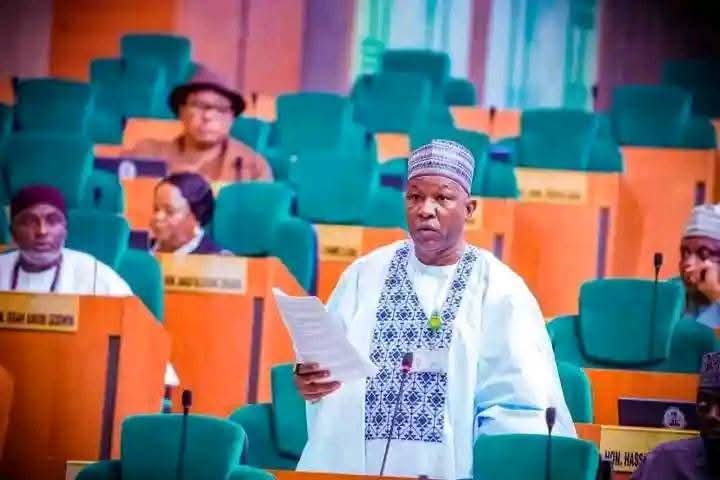
The bill was sponsored by Hon. Abdullahi El-Rasheed Bala Kelly, the House of Representatives member representing Dukku/Nafada Federal Constituency. He championed the motion on the floor of the National Assembly, emphasizing the need for a specialized institution that caters to the educational development of students with special needs, as well as the general education of future teachers.
Hon. El-Rasheed expressed gratitude to President Tinubu for signing the bill, and appreciated the unwavering support from key stakeholders who played a significant role in the passage of the legislation. These include the Governor of Gombe State, Muhammadu Inuwa Yahaya, and Senators Ibrahim Hassan Dankwambo, Danjuma Goje, and Anthony Yaro, along with other members of the National Assembly.
He described the establishment of the Federal College of Education (Special) in Dukku as a strategic move that will not only boost educational opportunities in Gombe State but also strengthen Nigeria’s efforts toward inclusive education for persons with special needs.
In an interview with journalists, Hon. El-Rasheed called on the people of Dukku to embrace the college and offer it maximum cooperation to ensure its smooth takeoff and sustainable development.
“The establishment of this institution is a dream come true for our constituency. It will create academic and employment opportunities for our people and provide a center for excellence in training teachers, especially those skilled in handling special needs education,” he added.
The college is expected to play a transformative role in bridging educational gaps in the region and reaffirm the federal government’s dedication to equitable access to quality education for all Nigerians.
Education
NEU Founder Commends NYSC, Pledges Strong Collaboration and Opportunities for Corps Members

By Mukhtar Sani Saulawa ,Gombe
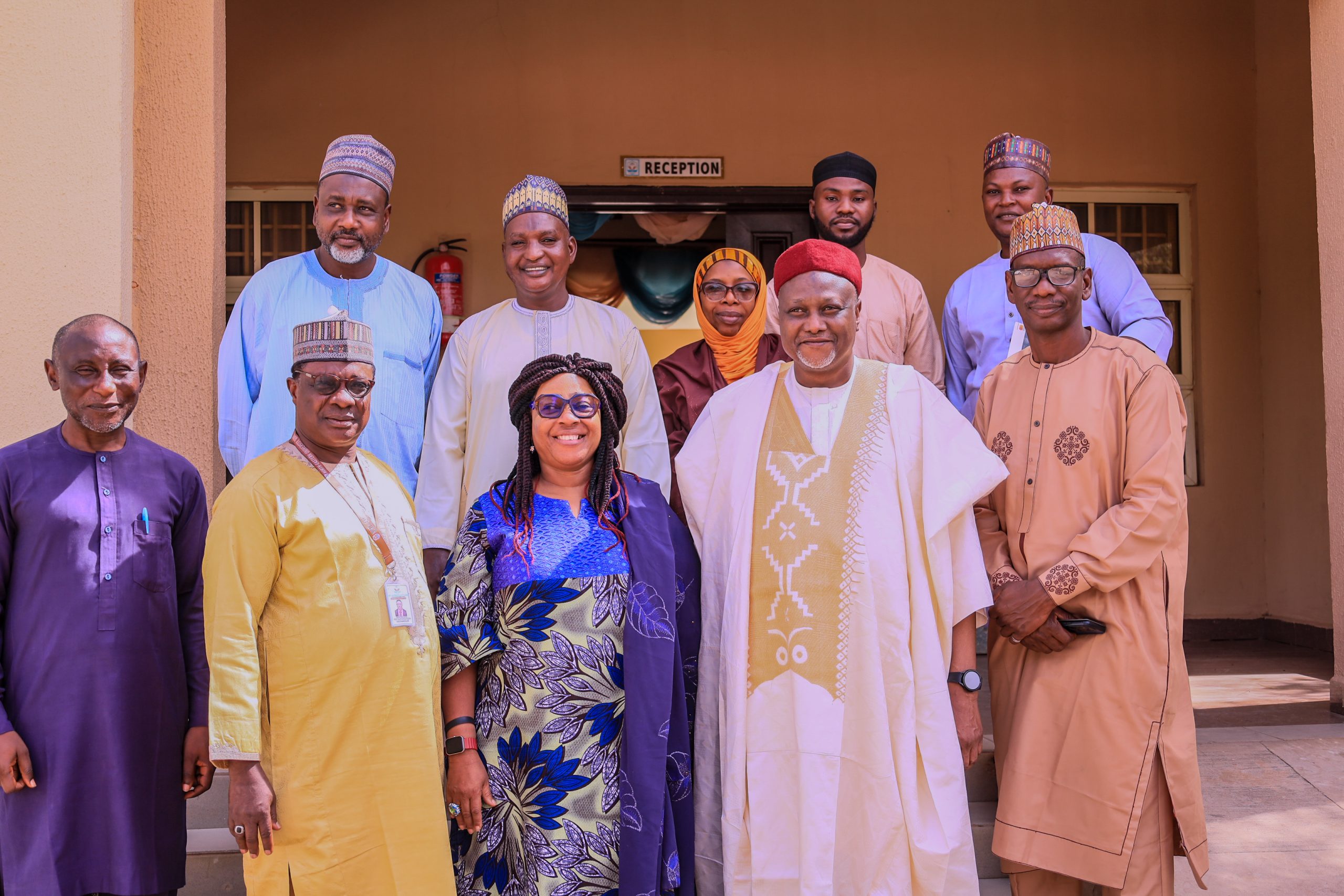
Northeastern University, Gombe, has reaffirmed its commitment to strengthening collaboration with the National Youth Service Corps (NYSC) following a courtesy visit by the Gombe State NYSC Coordinator, Chinwe Nnenna Nwachuku, and her delegation to the institution.
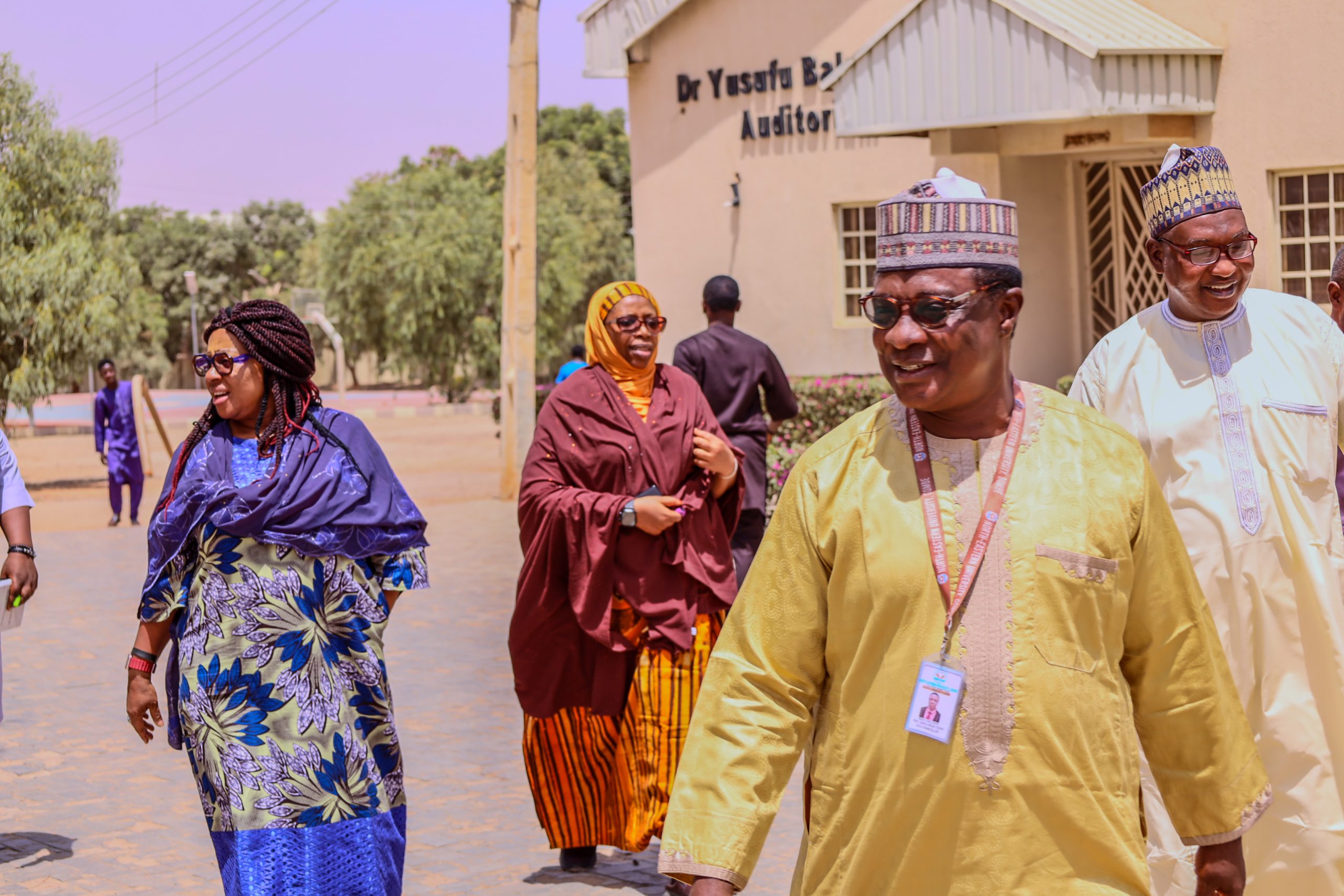
Speaking during the visit, the Dalawan of Gombe Pro-Chancellor and Founder of Northeastern University, Sani Jauro, described the NYSC scheme as one of the most important national programmes in Nigeria, noting that it has played a significant role in promoting unity among Nigerians from different ethnic, cultural, and religious backgrounds.

Dr.Sani Jauro( Danlawan Of Gombe, Pro-Chancellor and Founder of North-Eastern University Gombe.
Dr. Jauro expressed appreciation to the NYSC Coordinator for her support to the university, particularly for responding promptly to an earlier request to post a medical doctor to the institution, a request which he said was granted within a short period of time.
The Founder noted that Northeastern University is ready to deepen its collaboration with the NYSC, especially in the area of entrepreneurship development. According to him, the university operates a Directorate of Entrepreneurship where students are trained to acquire practical skills that will enable them to become self-reliant and create wealth for national development.
He explained that the proximity of the NYSC Skills Acquisition and Entrepreneurship Development Centre to the university presents an opportunity for both institutions to work together in empowering students and corps members through practical training and skills development.
Dr. Jauro further revealed that the university has a long tradition of retaining outstanding corps members who serve in its institutions. According to him, several corps members who demonstrated commitment and professionalism during their service year had been retained and employed by the institution.
He added that the university also supports the academic advancement of such young professionals by providing opportunities for them to pursue postgraduate studies, including master’s and doctoral degrees, with the aim of developing future academics who can rise to the rank of professors and contribute to national development.
The Founder also highlighted the university’s sports facilities, noting that Northeastern University possesses an Olympic-standard football field, a 400-meter athletics track, and facilities for various sporting activities including volleyball, basketball, badminton, table tennis, and other field events. He said the university is ready to make these facilities available for NYSC sporting activities and competitions.
In his remarks, the Vice-Chancellor of the university, Yusuph Amuda Yahaya, welcomed the NYSC delegation and emphasized the importance of the partnership as the institution prepares to graduate its first set of students. He noted that the collaboration would help guide final-year students through the NYSC mobilization process and ensure they participate successfully in the national service programme.
Responding, the NYSC State Coordinator, Chinwe Nnenna Nwachuku, commended the management of Northeastern University for its commitment to youth development and for providing opportunities for corps members to grow professionally. She assured the university that the NYSC would continue to deploy competent and dedicated corps members to serve in the institution while strengthening cooperation in areas such as skills acquisition, entrepreneurship, and community development.

By Our Correspondent
Gombe State University (GSU) has concluded plans to commence the construction of a modern library and a veterinary clinic at its newly established Faculty of Agriculture, located at Malamsidi, the headquarters of Kwami Local Government Area of Gombe State.
Recall that the University, under the leadership of its Vice-Chancellor, Professor Sani Ahmed Yauta, recently established the Faculty of Agriculture with a satellite campus at Malamsidi. The faculty is scheduled to commence academic activities in the 2025/2026 academic session, following approval by the Gombe State Government.
The initiative is aimed at strengthening manpower development in agriculture and allied disciplines, especially as Gombe State remains a predominantly agrarian state strategically located in the North-East sub-region of Nigeria.
To fast-track the development of the new faculty, the North East Development Commission (NEDC) has officially handed over the project site to the University for the construction of the proposed modern library and veterinary clinic, facilities expected to enhance teaching, learning, research, and practical skills acquisition for students.
Speaking during the site handover ceremony, the Vice-Chancellor, Professor Sani Ahmed Yauta, expressed gratitude to the NEDC for legalising and handing over the plot of land for the project. He assured that the University would ensure optimal utilisation of the site and complete the projects within the shortest possible time.
Professor Yauta further stated that the facilities would be developed in line with the standards and criteria set by the National Universities Commission (NUC), noting that the administration remains committed to quality education and infrastructural development.
The Vice-Chancellor also reiterated the commitment of his administration, as well as that of Governor Muhammadu Inuwa Yahaya, to making the Faculty of Agriculture one of the best in the North-East region and beyond.
The handover ceremony, which took place at the faculty’s temporary campus located at the former Government Secondary School, Malamsidi, was led by Arc. Usman, an official of the NEDC. He was accompanied by officials from the Gombe State Ministry of Education and the Ministry of Higher Education.
The construction of the library and veterinary clinic is expected to significantly boost academic excellence, research output, and practical training for students of the Faculty of Agriculture.
Education
Private University Students Are Nigerians Too — NEU Founder Challenges Student Loan Policy

By Mukhtar Sani Saulawa, Gombe.
The Pro-Chancellor and Founder of North-Eastern University, Gombe, Dr. Sani Jauro, has criticised the exclusion of private university students from the Nigerian Student Loan Programme introduced by the administration of President Bola Ahmed Tinubu, describing the policy as discriminatory and unjust.
Dr. Jauro, speaking in an interview with journalists, said students of private universities are Nigerians whose parents pay taxes that fund the student loan scheme, yet are denied access to it solely because of the type of institution they attend.
“There is a wrong assumption that private universities exist solely for profit, and that is not the reality,” he said. “Government can support private universities in many ways without putting money in the pockets of owners. It can build access roads, provide water, equip libraries, grant access to online academic resources, and provide reliable internet services.”
He argued that public universities alone cannot absorb all qualified candidates seeking admission, making private universities an essential part of Nigeria’s higher education system. According to him, denying their students access to the federal student loan programme unfairly limits educational opportunities for many young Nigerians.
Dr. Jauro also pointed out what he described as a broader structural imbalance in education funding, noting that private universities pay education tax, which forms the core funding source of the Tertiary Education Trust Fund (TETFund), yet neither the institutions nor their students benefit from it.
“Why should private institutions be made to pay into a fund they cannot benefit from? That is like robbing Peter to pay Paul,” he stated.
According to him, the real objective of government policy should be to strengthen Nigeria’s entire education system rather than create divisions between public and private institutions.
“What matters is that Nigerian universities meet minimum standards so that Nigerian students receive quality education,” Dr. Jauro said. “If you starve private universities, you are starving Nigerian children studying there.”
He added that the exclusion of private institutions and their students from the federal student loan programme is contributing to the persistent challenges in the education sector. He urged the federal government to review the policy framework governing the scheme and adopt a more inclusive approach.
Dr. Jauro suggested that government could develop clear criteria to distinguish serious, quality-driven universities from purely profit-oriented ones, stressing that institutions that meet such standards should benefit from interventions, including access to low-interest loans.
“Universities should not be forced to borrow from commercial banks at 25 to 30 percent interest,” he said. “Access to intervention loans, possibly at one percent interest, would help strengthen institutions and improve learning outcomes.”
He called on the federal government to ensure that all Nigerian students, regardless of whether they attend public or private universities, have fair access to support that guarantees a minimum standard of education nationwide.
-

 Politics2 years ago
Former Gombe State APC Promoters Forum Chairman Attacked Following Political Commentary
-

 Appointment2 years ago
Gombe State Indigene, Appointed New Vice Chancellor (ATBU)
-

 Leadership2 years ago
Breaking: African Union Appoints Pantami as Co-Chair of the 4th Industrial Revolution Policy Council
-

 Death1 year ago
Prominent Nigerian Islamic Scholar, Sheikh Sa’idu Hassan Jingir, Passes Away
-
 Health2 years ago
Gombe State Organizes Onboarding Workshop for Private Healthcare Facilities
-
 Water2 years ago
Gombe Government Mobilizes Stakeholders to Combat Illegal Water Connections
-

 Politics2 years ago
Gombe State Inaugurates Human Capital Development Council
-

 Politics2 years ago
Gombe State Launches Presidential Palliative Program (PPP) to Aid Small Businesses