Workshop
Gombe University Workshop Moves to Professionalise Islamic Ruqyah, Prophetic Medicine

By Our Correspondent
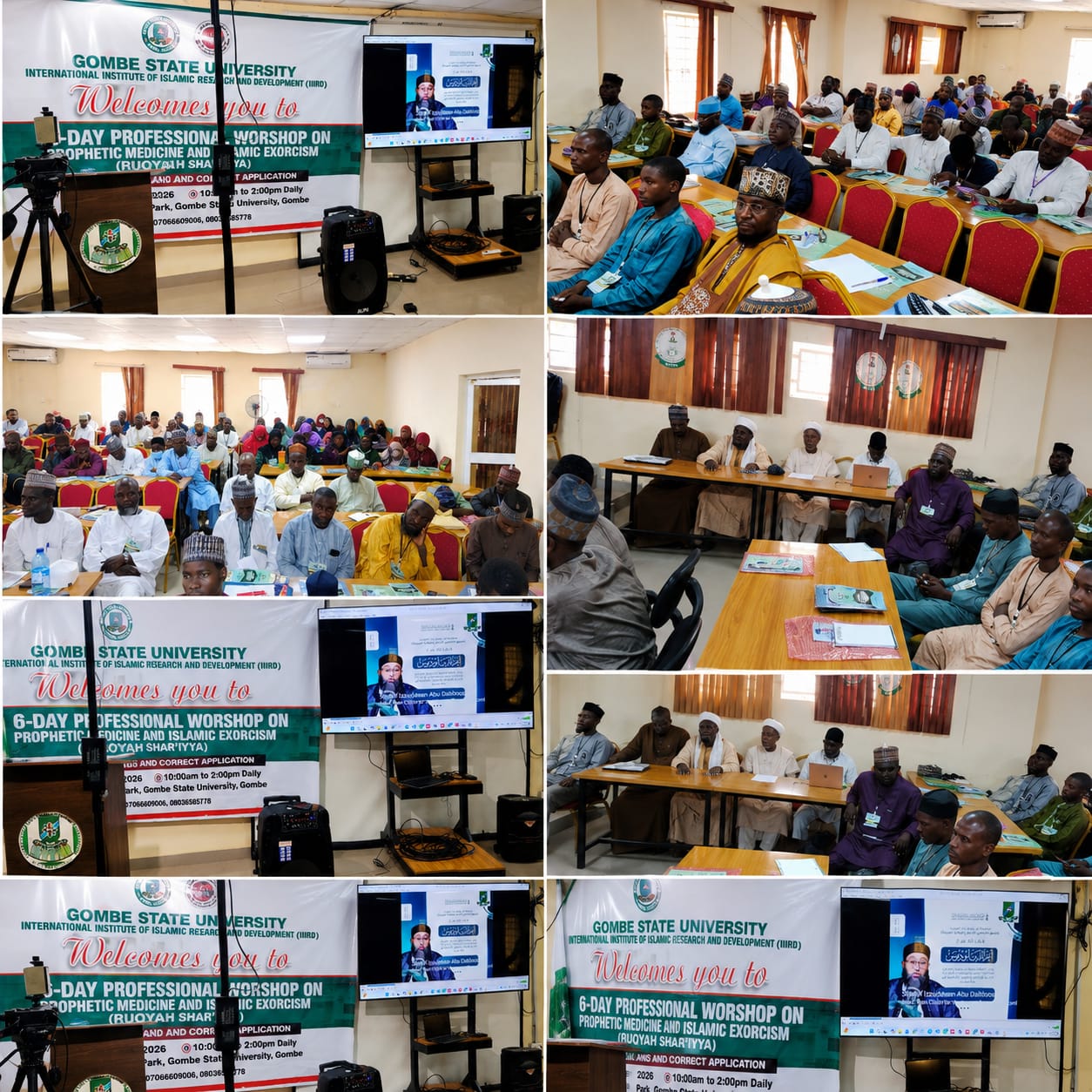
The International Institute of Islamic Research and Development (IIIRD), Gombe State University, in collaboration with the Islamic and Prophetic Medicine Practitioners Association of Nigeria (IPMPAN), has called for greater professionalism, regulation, research and ethical standards in the practice of Islamic Ruqyah and Prophetic Medicine in Nigeria.
The call was made at the conclusion of a professional workshop on Prophetic Medicine and Islamic Ruqyah (Ruqyah Shar‘iyyah) organised by the Institute for Islamic medicine practitioners, scholars, healthcare professionals, researchers and other stakeholders.
The five-day workshop, held from 7th to 11th August 2026 at the NITDA Incubation Park Hall of Gombe State University, attracted participants from different parts of the country.
The programme, themed “Prophetic Medicine and Islamic Exorcism (Ruqyah Shar‘iyyah): Concept, Guidelines, and Correct Application,” featured scholarly presentations, practical demonstrations, interactive discussions and question-and-answer sessions.
In a communiqué issued at the end of the workshop, participants emphasised the need for practitioners to ensure that Ruqyah Shar‘iyyah is conducted strictly in accordance with the Qur’an, authentic Sunnah, sound Islamic principles and recognised scholarly guidance.
They cautioned practitioners against superstition, talismans, divination, prohibited practices, exploitation and unsupported claims relating to magic, possession and the evil eye.
The workshop also stressed that Islamic spiritual care should not be used as a substitute for conventional medical treatment.
Participants recommended that people suffering from physical or psychological conditions should, where necessary, be referred to qualified healthcare professionals, particularly in cases beyond the competence of Ruqyah or traditional medicine practitioners.
Speaking during the programme, the Director of IIIRD and Chairman of the Local Organising Committee, Professor Shamsuddeen Umar Ilyas, said the workshop formed part of the Institute’s broader responsibility of engaging the community on Islamic affairs and promoting knowledge that could benefit society.
He explained that the Institute’s activities extend to areas including the training of Imams, Mu’azzins and Du’at, the Almajiri education system, Islamic affairs and Ruqyah.
Professor Shamsuddeen said experts from Kano, Jigawa and Bauchi States were invited to share their knowledge and experience on the appropriate practice of Islamic medicine and Ruqyah in accordance with Islamic teachings.
He urged participants to take the training seriously and apply the knowledge acquired responsibly in their respective communities.
A member of the Local Organising Committee, Muhammad Ajuji, said the programme was designed to sensitise, educate and enlighten practitioners of Prophetic Medicine on research, medicine preparation, identification of diseases and appropriate approaches to treatment.
He added that medical consultants from the Federal Medical Centre, Gombe, were invited to expose participants to relevant medical knowledge and encourage collaboration between Islamic medicine practitioners and conventional healthcare professionals.
Participants at the workshop, including Dr. Asma’u Mai Gada from Katsina and Adamu Sunusi Walid from Kano, described the programme as an important opportunity to broaden their knowledge and improve their understanding of responsible Islamic medicine practice.
At the closing ceremony, the Vice-Chancellor of Gombe State University, Professor Sani Ahmed Yauta, said the programme was consistent with the responsibilities of the Institute to engage communities within and outside the university on religious and educational matters.
Professor Yauta encouraged participants to put the knowledge acquired into practical use for the benefit of society.
Workshop Calls for Regulation and NAFDAC Compliance
One of the major recommendations contained in the communiqué was a call for stronger regulation, registration, professional training and capacity building for traditional and Prophetic Medicine practitioners.
Participants urged practitioners and facilities to obtain all relevant registrations, certifications, licences and recognition required by competent authorities.
They further called on producers, manufacturers, distributors and vendors of herbal medicines and other regulated health products to comply with applicable NAFDAC requirements covering registration or listing, labelling, advertising, distribution and sale.
The workshop also advocated greater government support for capacity building, documentation, standardisation and quality assurance in traditional and Prophetic Medicine.
Gombe University Urged to Establish Medicinal Plants Research Garden
The participants also recommended that Gombe State University consider establishing a Medicinal Plants Research Garden to complement the university’s existing botanical garden.
According to the communiqué, the proposed garden would support the cultivation, identification, conservation and preservation of medicinal trees, herbs and other useful plants.
It would also provide opportunities for teaching, practical training and interdisciplinary research involving Prophetic Medicine, botany, pharmacology, pharmacognosy, agriculture, medicine and environmental science.
The recommendation builds on the legacy of medicinal plantations associated with Professor Abdullahi Mahdi at the university.
More Research on Islamic and Traditional Medicine
The workshop called for increased interdisciplinary research into Prophetic Medicine, Islamic Ruqyah, traditional medicine and medicinal plants, particularly their relationship with contemporary healthcare.
IIIRD was encouraged to organise more research projects, publications, conferences, seminars and programmes aimed at documenting indigenous knowledge and disseminating credible research findings.
Participants also advocated regular professional workshops and public enlightenment campaigns to tackle misinformation concerning Ruqyah, Prophetic Medicine, magic, sorcery, traditional healing and unverified health claims, particularly on social media.
The communiqué further urged Muslims to maintain authentic morning and evening Adhkar, established in the Qur’an and authentic Sunnah, as part of their daily remembrance of Allah and seeking His protection.
Proposed Academic Programmes
In another major recommendation, participants called on IIIRD to introduce appropriate certificate and diploma programmes and, subject to university requirements and regulatory approvals, work towards dedicated degree programmes in relevant fields.
Suggested areas include Prophetic Medicine and Islamic Healthcare, Islamic Ruqyah and Spiritual Care, Islamic Psychology and Mental Health, Anthropology and Sociology, Islamisation of Knowledge, and Islamic Political Thought.
The workshop also recommended consideration of Arabic, English and Hausa in curriculum development, instruction, terminology, translation, documentation and public engagement.
Protection of Patients and Vulnerable Persons
The communiqué stressed the importance of institutional guidelines for the teaching, research, training and responsible practice of Prophetic Medicine, Islamic Ruqyah and Herbal Medicine.
Such guidelines, participants said, should promote authentic Islamic knowledge, ethical conduct, respect for medical expertise, appropriate referral procedures, protection of vulnerable persons, patient dignity and privacy, hygiene, regulatory compliance and avoidance of exploitation.
They also warned against fraudulent practices, misleading therapeutic claims and the use or sale of unregistered regulated medicinal products.
Workshop to Become Annual Programme
The participants recommended that the professional workshop be institutionalised as a regular academic and professional programme of IIIRD.
Future editions, they said, should provide platforms for research presentations, professional training, policy dialogue, community engagement and networking among Islamic scholars, healthcare professionals, researchers, universities, regulators and traditional medicine practitioners.
The participants expressed appreciation to the management of Gombe State University, under the leadership of Professor Sani Ahmed Yauta, IIIRD, IPMPAN, the Local Organising Committee, invited scholars, facilitators, healthcare professionals and other stakeholders for contributing to the success of the programme.
They expressed hope that the recommendations would receive the attention and support of Gombe State University, the Gombe State Government, the Federal Government, relevant ministries, departments and agencies, professional bodies and research institutions.
The communiqué was adopted at the conclusion of the workshop on 11th August 2026 and issued by the Local Organising Committee of the Professional Workshop on Prophetic Medicine and Islamic Ruqyah.
END

-

 Politics3 years ago
Former Gombe State APC Promoters Forum Chairman Attacked Following Political Commentary
-
 Appointment2 years ago
Gombe State Indigene, Appointed New Vice Chancellor (ATBU)
-

 Leadership2 years ago
Breaking: African Union Appoints Pantami as Co-Chair of the 4th Industrial Revolution Policy Council
-
 Death2 years ago
Prominent Nigerian Islamic Scholar, Sheikh Sa’idu Hassan Jingir, Passes Away
-
 Health2 years ago
Gombe State Organizes Onboarding Workshop for Private Healthcare Facilities
-
 Water3 years ago
Gombe Government Mobilizes Stakeholders to Combat Illegal Water Connections
-
 Politics2 years ago
Gombe State Inaugurates Human Capital Development Council
-
 Politics3 years ago
Gombe State Launches Presidential Palliative Program (PPP) to Aid Small Businesses