
Development
EU, UNIDO Build Capacity for Small Hydropower Projects Supporting Nigeria’s Agro-Industry

By Our Correspondent
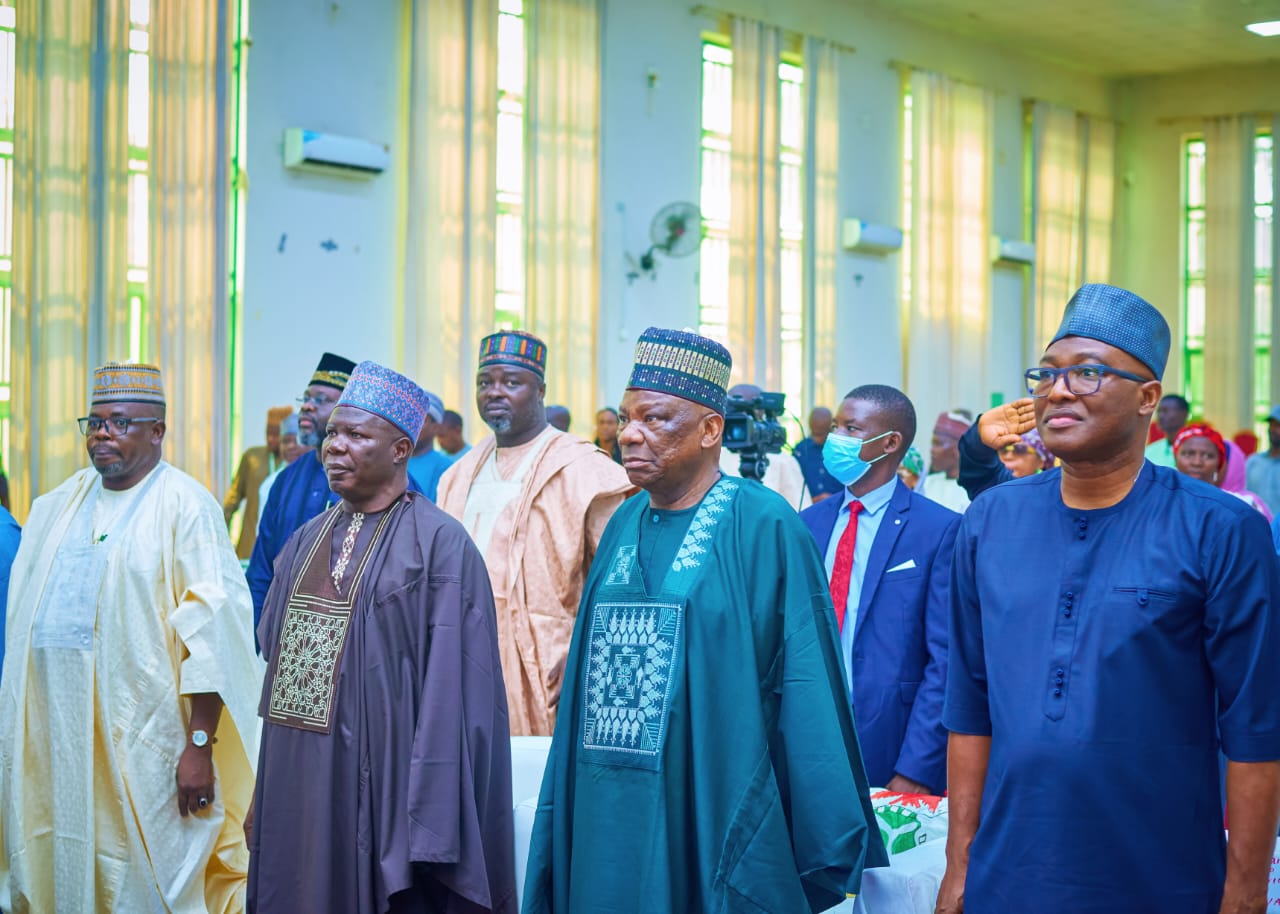
As part of ongoing efforts to strengthen Nigeria’s capacity to develop and implement Small Hydropower (SHP) projects, the United Nations Industrial Development Organization (UNIDO), with funding support from the European Union (EU), organised a capacity-building workshop on SHP development.
The workshop, which featured the Balanga Dam SHP project in Gombe State as a case study, brought together stakeholders from the public and private sectors in the renewable energy space. It aimed to raise awareness of the viability of SHP as a reliable means of generating electricity and driving economic growth, while promoting the exchange of experiences and knowledge in SHP project development.
Participants also examined the strategic importance of small hydropower in advancing rural development and supporting agro-industrial activities.
Speaking in Gombe State on Monday, UNIDO’s Representative and Sub-regional Director, Amb. Philbert Johnson, highlighted Nigeria’s significant renewable energy potential, including hydropower, wind, solar and biomass. “Among these renewable energy sources, SHP holds great potential towards providing access to electricity and addressing climate change,” he said.
He noted that recent government estimates place Nigeria’s total hydropower potential at approximately 24,000 MW, of which small hydropower accounts for about 3,500 MW.
Amb. Johnson stressed the need to develop effective strategies that bridge existing gaps and incorporate international best practices.
“The project is being implemented by UNIDO in collaboration with the Federal Ministry of Power, the Federal Ministry of Water Resources and Sanitation, Rural Electrification Agency as well as key States where the power plants will be located, such as Gombe,” he added.
Highlighting the critical importance of energy for economic growth and sustainable development, he said, “Fortunately, Nigeria is endowed with a tremendous amount of renewable energy resources such as hydropower, solar, biomass and wind. Among these energy sources, Small Hydropower (SHP) holds great potential towards increasing access to electricity and addressing climate change.
“Recent government estimates indicate a hydropower potential of approximately 24,000MW, of which SHP accounts for about 15 percent. However, in spite of this great potential, electricity access in Nigeria is still less than 60 percent, resulting in a significant gap between supply and demand.
“It is in this context that UNIDO with funding support of the European Union (EU) is organising this workshop, focused on raising awareness among policy makers, project developers and financial institutions on the viability of small hydropower as an effective means of generating electricity and enhancing economic development.”
Amb. Johnson explained that the choice of this event in Gombe state clearly highlights the commitment of Gombe state to advancing clean technologies to generate energy that will boost economic development for residents of the state. “The choice of this event in Gombe is also to practically enhance participant knowledge and skills for the effective development and implementation of small hydropower projects, using the 620kW Balanga Dam SHP project as a case study,” he added.
“The Balanga Dam Small Hydropower Project is more than a mere energy infrastructure initiative. It provides us with a hands-on opportunity to examine how our water resources can be optimally harnessed to support economic transformation, improve livelihoods and strengthen energy security,” he said.
In his remarks, the Deputy Governor of Gombe State, His Excellency Dr. Manassah Daniel Jatau, thanked the European Union Delegation, UNIDO, the Global Environment Facility and the Rural Electrification Agency for their generous contributions, without which this vital Project would not have been possible.
Speaking on the importance of the workshop and the SHP Balanga Dam project, he said “It is a great honor for us to host this important Capacity Building Workshop on Small Hydropower Development, and to also host the 4th Meeting of the Project Steering Committee. By choosing Balanga Dam SHP as a case study, you have put Gombe State on the national map for renewable energy and sustainable water management. We do not take this lightly.
“The Balanga Dam Small Hydropower Project is extremely strategic to us. Beyond generating clean electricity, it supports irrigation, water supply, flood control, and livelihoods for our people.”
Dr. Jatau expressed the continued commitment of the Gombe State Government to the successful completion of the project.
He said, “We will provide the enabling environment for the speedy completion of the Balanga Small Hydro Project (SHP) as well as the agro-processing cluster which will serve as the primary off taker of the electricity generated.
“We will integrate SHP development into our rural electrification and irrigation master plan. We will ensure community ownership so that the project is protected, sustained, and delivers benefits to the host communities.”
By Our Correspondent
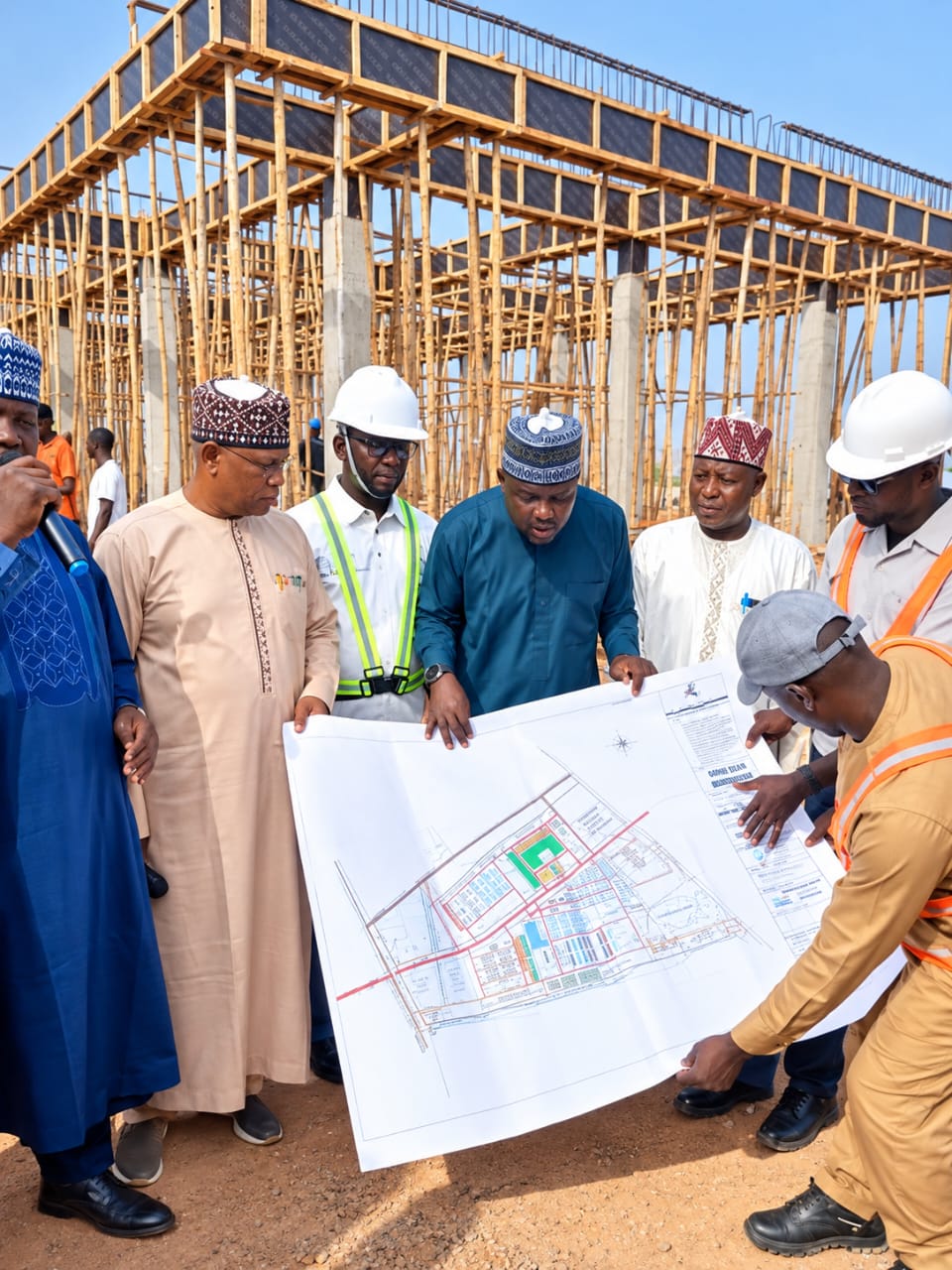
The Gombe State Government has assured grain merchants of improved business facilities as construction progresses on the new Gombe Modern Grains Market along Bajoga Road in the state capital.
The assurance was given during an inspection tour of the ongoing project by the Commissioners for Trade, Commerce and Industry, Nasiru Mohammed Aliyu, and Housing and Urban Development, Mohammed Sa’idu Fawu.
The visit was aimed at familiarising members of the Gombe Grains Sellers Association, popularly known as Tudun Hatsi, with the progress of work and addressing concerns over their temporary relocation to pave the way for the development of a museum at their current trading location, a site of historical significance.
Speaking during the inspection, the Commissioner for Trade, Commerce and Industry, Nasiru Mohammed Aliyu, commended Governor Muhammadu Inuwa Yahaya for initiating the project, describing it as an investment aimed at improving grain trading and creating a more conducive business environment for merchants.
He explained that the temporary relocation was necessary to facilitate the development of the historic site, which includes a mosque believed to be more than 200 years old.
The commissioner disclosed that the state government had approved approximately ₦200 million to support the traders’ relocation and provide essential facilities at the temporary market located at the Abubakar Umar Memorial Stadium along Dukku Road, Gombe.
He said the temporary market was expected to be ready within two weeks, allowing the traders to continue their businesses while construction of the permanent market was underway.
Aliyu added that the inspection was also intended to enable the traders to understand the government’s plans and appreciate the facilities being provided under the project.
In his remarks, the Commissioner for Housing and Urban Development, Mohammed Sa’idu Fawu, disclosed that the contract for the modern grains market was awarded on February 27, 2026.
He said the project was expected to be completed within 56 weeks, assuring the traders that the government would maintain the required construction standards while working to ensure timely delivery.
According to him, the market will accommodate more than 640 shops and include warehouses, a mosque, toilets, a canteen and an improved road network to facilitate the movement of traders, customers and goods.
Fawu noted that the facilities were designed to provide a more organised and functional trading environment, strengthen commercial activities and support the growth of grain trading in Gombe State.
Responding on behalf of the traders, the Chairman of Tudun Hatsi, Alhaji Sirajo Musa, expressed appreciation to Governor Muhammadu Inuwa Yahaya for providing the new market.
He pledged the association’s support for the initiative and promised to inform other traders about the proposed facilities and the reasons for the temporary relocation.
The inspection tour was attended by executives of Tudun Hatsi, officials from the two ministries and other members of the government delegation.
The new Gombe Modern Grains Market is expected to provide improved trading facilities, enhance the organisation of grain commerce and contribute to the development of Gombe State’s agricultural economy.

By Jamilu Abubakar
Gombe State Government says it is targeting 200,000 out-of-school children for enrolment between 2026 and 2027, while introducing digital literacy programmes to make learning more attractive and relevant to children.
The Chairman of the Gombe State Universal Basic Education Board (SUBEB), Professor Hassan Bello, disclosed this while speaking on the state’s collaboration with the United Nations Children’s Fund (UNICEF) on digital literacy and improved learning outcomes.
Bello said the state had, in collaboration with UNICEF, established 10 digital literacy centres across different Local Government Areas, with more than 1,000 learners targeted for training in computer appreciation and robotics skills.
He said the initiative was part of efforts to “catch children young” and expose them to digital skills that would prepare them for the future.
According to him, the availability of computers and other digital learning opportunities in schools could encourage out-of-school children to return to the classroom.
Bello said the state government would expand the number of digital literacy centres to accommodate more learners and increase access to technology-based education.
He commended UNICEF for its support and collaboration, saying the partnership had contributed to improving learning outcomes among pupils and students in the state.
The UNICEF Education Specialist, Bauchi Field Office, Abdulrahman Ado, said the initiative was introduced under the “Catch Them Young” approach to bridge learning gaps during school holidays.
Ado said many children were left without structured learning activities when schools closed, making the digital literacy programme an opportunity to keep them engaged while developing their skills.
He said UNICEF had identified facilitators in schools and provided them with extensive training to enable them to train learners in computer appreciation and robotics.
Ado explained that digital literacy was particularly important as examinations were increasingly becoming computer-based.
He said UNICEF was also supporting Gombe State in artificial intelligence, stressing that children needed basic digital knowledge to take advantage of emerging technologies.
Ado added that digital literacy had been embedded into the school curriculum and that training would continue during every summer holiday.
He said the 10 centres could be expanded in the future to accommodate more learners across the state.
Professor Bello further commended Governor Muhammadu Inuwa Yahaya for supporting SUBEB through the provision of learning materials, infrastructure and a conducive environment for teaching and learning.
He said combining efforts to bring children back to school with access to digital skills would strengthen basic education and better prepare children for future technological advancement.
Development
Gombe South Assembly Campaign DG Mourns Bolari District Head, Postpones Mega Empowerment

By Our Political Reporter
The Director-General of the Gombe South State House of Assembly Campaign Organisation in Gombe Local Government Area, Alhaji Lawan Yusuf, has condoled with the people of Bolari over the death of their District Head, Alhaji Ahmadu Abubakar.
Alhaji Lawan Yusuf described the death of the traditional ruler as a painful loss to the people of Bolari, Gombe Local Government Area and the traditional institution, urging the community to remain united and pray for the repose of the deceased’s soul.
He expressed sympathy to the family of the late District Head, as well as relatives, community leaders and residents who are mourning his passing.
According to him, the late Alhaji Ahmadu Abubakar played an important role in maintaining peace, unity and community development during his lifetime.
The campaign Director-General also announced the postponement of the planned Mega Empowerment Programme being organised by the Gombe South State House of Assembly aspirant, Hon. Jabiru Saleh Kilawa, following the death of the Bolari District Head.
He explained that the empowerment programme, which was initially scheduled to take place soon, has been postponed until further notice out of respect for the deceased and the mourning community.
Alhaji Lawan Yusuf said a new date and time for the programme would be communicated to members of the public once a fresh arrangement has been concluded.
He appealed to supporters, beneficiaries and members of the public who were expected to attend the empowerment programme to remain patient and await the official announcement of the new date.
The Director-General prayed to Almighty Allah to forgive the shortcomings of the late District Head, grant him eternal rest and give his family and the people of Bolari the strength to bear the loss.
A new date for the Mega Empowerment Programme will be communicated to the public in due course.
-

 Politics3 years ago
Former Gombe State APC Promoters Forum Chairman Attacked Following Political Commentary
-

 Appointment2 years ago
Gombe State Indigene, Appointed New Vice Chancellor (ATBU)
-

 Leadership2 years ago
Breaking: African Union Appoints Pantami as Co-Chair of the 4th Industrial Revolution Policy Council
-
 Death2 years ago
Prominent Nigerian Islamic Scholar, Sheikh Sa’idu Hassan Jingir, Passes Away
-
 Health2 years ago
Gombe State Organizes Onboarding Workshop for Private Healthcare Facilities
-
 Water3 years ago
Gombe Government Mobilizes Stakeholders to Combat Illegal Water Connections
-
 Politics2 years ago
Gombe State Inaugurates Human Capital Development Council
-

 Politics3 years ago
Gombe State Launches Presidential Palliative Program (PPP) to Aid Small Businesses