
Judgement
INEC Gives Update on Candidates Affected by Supreme Court Ruling.

By Our Political Reporter
The Independent National Electoral Commission (INEC) has said it will determine the fate of candidates potentially affected by the recent Supreme Court judgment after obtaining and reviewing the certified true copy of the ruling.
The development has created uncertainty among political parties and candidates ahead of the commission’s planned publication of the final list of governorship and State Houses of Assembly candidates for the 2027 general elections.
INEC is expected to engage political parties and other stakeholders on Tuesday, October 6, as part of its preparations for the 2027 elections. The commission is also scheduled to hold a World Press Conference on the same day.
The electoral body, however, has yet to give a definite position on how the Supreme Court judgment will affect candidates whose party primaries or membership status could come under scrutiny following the restoration of certain provisions of the Electoral Act 2026.
The National Commissioner and Chairman of INEC’s Information and Voter Education Committee, Mohammed Kudu Haruna, said the commission was waiting for the certified true copy of the judgment before taking a position.
Speaking on the matter, Haruna said INEC had applied for the document and expected to receive it before the commission’s stakeholder engagement.
“The commission is yet to receive the certified true copy of the Supreme Court judgement. Hopefully we will do so tomorrow, (Monday). Until we do so and deliberate on it we cannot make any pronouncement on the issue,” he said.
The Director of Voter Education and Publicity at INEC, Victoria Eta-Messi, also confirmed that the commission had formally requested the certified document.
“The Commission had applied for the CTC and an opinion will be offered on the import of the latest Judgment of the Supreme Court,” she said.
The position means political parties and candidates whose nominations could be affected by the judgment may have to wait for INEC’s formal interpretation before knowing what happens to their candidacies.
The Supreme Court judgment, delivered on September 24, reversed an earlier decision of the Court of Appeal which had struck down provisions of the Electoral Act 2026 relating to political party membership registers and the nomination of candidates.
A seven-member panel of the apex court, led by Justice Adamu Jauro, upheld INEC’s appeal and restored the earlier decision of the Federal High Court.
The judgment affirmed Sections 77(5), 77(6), 77(7) and 84(2) of the Electoral Act 2026. The provisions have significant implications for political parties because they set out requirements for membership registers and candidate nomination processes.
Under the restored provisions, only members whose names are contained in a party’s membership register submitted to INEC within the prescribed period can participate in the party’s primaries, congresses or conventions.
The law also prevents political parties from using a different register during such exercises.
Another provision provides consequences for parties that fail to submit their membership registers within the required period.
Section 84(2), meanwhile, deals with the methods political parties can use to nominate candidates, including direct primaries or consensus.
The legal dispute began when the Zenith Labour Party challenged the provisions at the Federal High Court in Abuja.
The Federal High Court dismissed the case on May 5, 2026. ZLP subsequently appealed to the Court of Appeal.
On July 16, the Court of Appeal partly allowed the party’s appeal and voided the disputed provisions, leading INEC to approach the Supreme Court.
The apex court later reversed that decision and restored the position of the Federal High Court.
The judgment has now raised questions because several political parties conducted their primaries and other internal processes while the Court of Appeal judgment was still in force.
Some of the affected parties had therefore operated under the understanding that the disputed provisions were no longer applicable.
The Supreme Court’s decision has effectively restored the provisions and brought renewed attention to the membership registers submitted by political parties before their primaries.
One of the major issues now before INEC is whether candidates produced from exercises conducted during the period when the provisions had been nullified will be affected by the apex court’s decision.
The question is particularly important for candidates whose membership of a political party began close to the date of their party’s primary.
The controversy has already surfaced in different states.
In Rivers State, for instance, questions have been raised over the candidacy of APC governorship candidate Kingsley Chinda following the Supreme Court judgment.
Chinda was reported to have registered with the APC on April 27, 2026, before emerging as the party’s governorship candidate at its May 21 primary.
The Rivers APC has argued that he satisfied the 21-day requirement because the period between his registration and the primary was more than three weeks.
Similar questions have also emerged in other states involving candidates who changed political parties before securing tickets for the 2027 elections.
In Gombe State, the issue of membership register compliance has also featured in a recent court decision.
The Federal High Court in Gombe nullified an APC primary for the Balanga/Billiri Federal Constituency after finding that the party’s candidate was not listed on the membership register submitted to INEC within the required period.
These developments have increased pressure on INEC to clarify how it intends to apply the Supreme Court judgment to the ongoing electoral process.
The commission had earlier fixed October 10 for the publication of the final list of governorship and State Assembly candidates.
The final list is expected to reflect the candidates who remain valid after the completion of the nomination, withdrawal, substitution and other statutory processes.
The governorship and State Assembly elections are scheduled for February 6, 2027.
INEC had already published the particulars of nominated candidates earlier in the electoral timetable.
However, political parties were still allowed to withdraw or replace candidates before the relevant deadline.
The final publication is therefore expected to provide the official list of candidates recognised by the commission for the state-level elections.
By Our Court Reporter
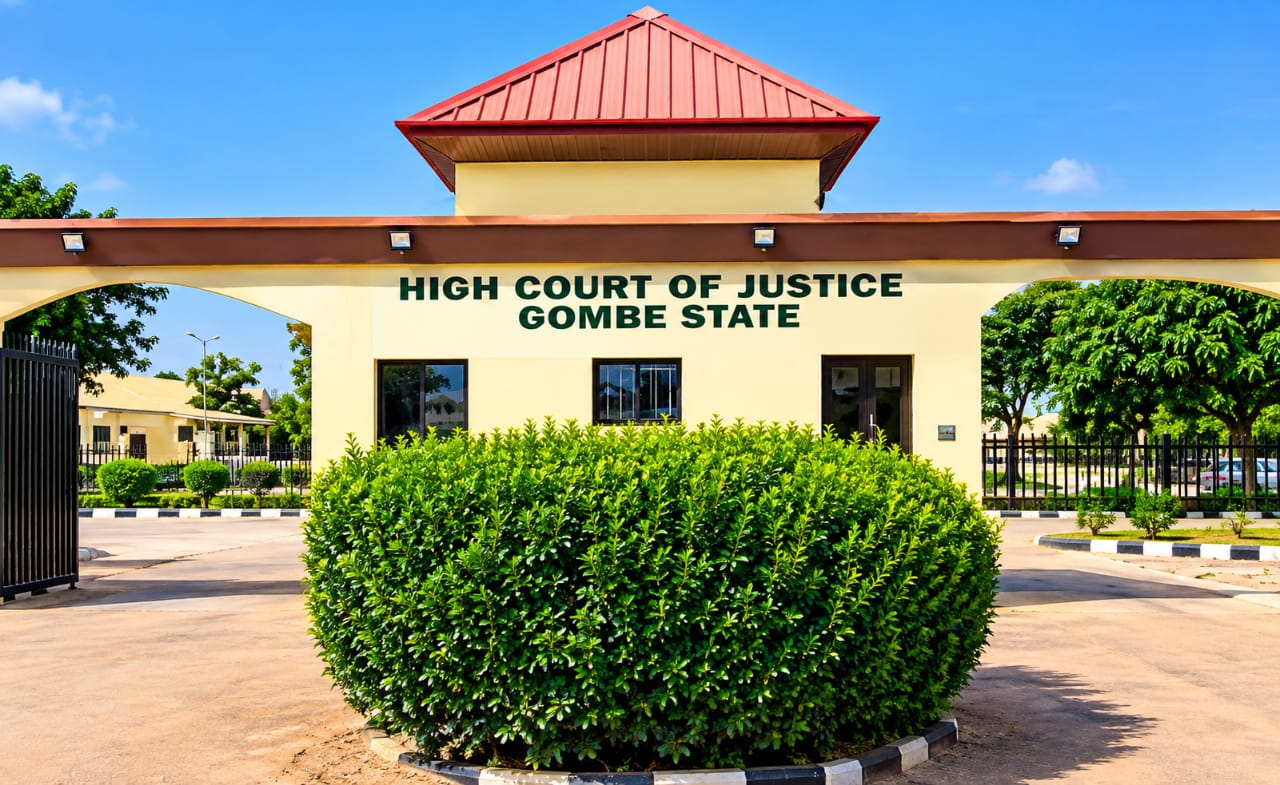
The Gombe State High Court No. 5, presided over by Hon. Justice Muhammad Auwal Haruna, has convicted and sentenced two men, Buhari Sule and Muktari Ali Hilami, to death by hanging for armed robbery and culpable homicide.
The court ordered that the two convicts be hanged by the neck until they are dead, following its finding that the prosecution had proved the charges against them beyond reasonable doubt.
The defendants were earlier arraigned on charges of criminal conspiracy, armed robbery and culpable homicide in connection with the death of one Murtala Rabi’u, a 35-year-old resident of Garin Galadima village, via Pindiga, in Akko Local Government Area of Gombe State.
According to the prosecution, the incident occurred on September 18, 2025, at about 4:00 p.m., when the two defendants allegedly conspired and armed themselves with dangerous weapons, including sticks and hoes.
The prosecution alleged that the defendants attacked and robbed the deceased, taking his Itel keypad mobile phone without a SIM card and the sum of ₦7,400 in cash.
The court heard that after the alleged attack, the defendants shared the stolen money among themselves and dumped the deceased’s body in a maize farm after inflicting severe injuries on him.
Presenting the case before the court, the State Counsel, Barrister Abdulkadir Umar Ibrahim, told the court that the offences were contrary to Sections 97, 297 and 221 of the Penal Code Law.
When the charges were read and explained to them, both defendants pleaded not guilty.
In an effort to establish its case, the prosecution called two witnesses. The witnesses gave evidence before the court and were cross-examined by counsel to the defendants, Barrister A. B. Dan-Mamman.
The defence subsequently presented one witness, who also gave evidence and was cross-examined by the prosecution counsel.
In its judgment, the court said it carefully considered the evidence presented by both the prosecution and the defence, including the testimonies of the witnesses.
Justice Muhammad Auwal Haruna held that the prosecution had established its case beyond reasonable doubt, relying particularly on the testimony of Prosecution Witness One (PW1).
The court further held that the defence failed to discredit the prosecution’s evidence or establish facts sufficient to defeat the charges against the defendants.
Consequently, the court found Buhari Sule and Muktari Ali Hilami guilty of the offences for which they were charged.
The court thereafter convicted and sentenced both men to death by hanging by the neck until they are dead.
The judgment brings to a close the trial arising from the September 2025 attack in which Murtala Rabi’u lost his life.
May Allah have mercy on the soul of the deceased.
Judgement
Gombe Federal High Court Nullifies Ali Isa JC’s APC Ticket, Orders Fresh Balanga/Billiri Primary

By Our Court Reporter
The Federal High Court No. 2 sitting in Gombe has nullified the emergence of Hon. Ali Isa J.C. as the All Progressives Congress (APC) candidate for the Balanga/Billiri Federal Constituency in the 2027 House of Representatives election.
The court, presided over by Justice Vera E. Ibrahim, reportedly held that the participation of Hon. Ali Isa J.C. in the APC primary election was invalid, unlawful, null and void, citing non-compliance with the provisions of Section 77 of the Electoral Act 2026.
The judgment followed a suit challenging the validity of the APC primary election and the emergence of Hon. Ali Isa J.C. as the party’s candidate for the federal constituency.
Before the judgment, the case had attracted considerable attention within political circles in Balanga and Billiri, with the plaintiff challenging the validity of the process through which Hon. Ali Isa J.C. emerged as the APC candidate. Earlier court proceedings showed that the defence had maintained that the primary was validly conducted, while the plaintiff alleged substantial violations of the applicable electoral and party requirements.
In its judgment, the court was said to have ruled that Hon. Ali Isa J.C. was not eligible to participate in the primary election.
The court further held that the primary election was conducted without strict compliance with the relevant statutory requirements, thereby rendering the process invalid.
Consequently, the court nullified the emergence of Hon. Ali Isa J.C. and ordered that his Certificate of Return be withdrawn.
The court also directed the APC to conduct a fresh primary election within 30 days to select its candidate for the Balanga/Billiri Federal Constituency.
Importantly, the judgment reportedly specified that Hon. Ali Isa J.C. should not participate in the fresh primary election.
Hon. Ali Isa J.C. had emerged as the APC candidate following the party’s 2026 primary exercise. Reports from the time showed that he was declared winner after polling 23,362 votes against Alfred John and Saratu Hamman Jauro.
His emergence had also previously been announced as part of the APC’s selection of candidates for the 2027 elections in Gombe State.
The latest ruling now places the APC before another primary election in the Balanga/Billiri Federal Constituency, with the party expected to comply with the court’s directive within the stipulated 30-day period.
The development is likely to generate renewed political activity among aspirants and supporters in the two local government areas as the party prepares to conduct the fresh exercise.
The court’s order effectively means that the earlier primary result producing Hon. Ali Isa J.C. cannot stand, subject to any appeal or further orders from a higher court.
As at the time of this report, the full certified text of the judgment was not independently available in the public sources reviewed; the specific findings above are therefore reported based on the details of the judgment supplied for this report.
By Our Court Reporter
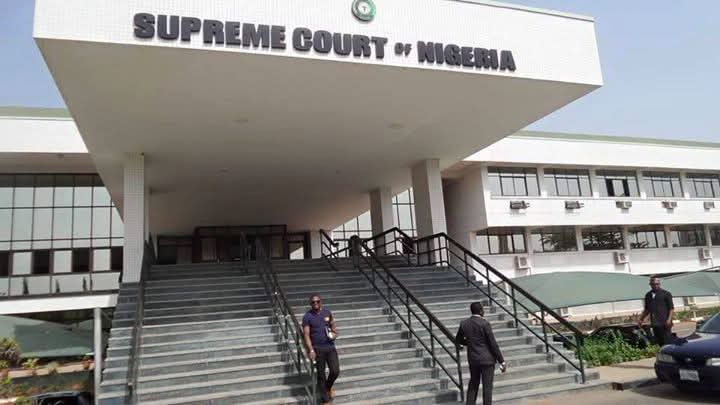
The Supreme Court of Nigeria has upheld an appeal filed by the Independent National Electoral Commission (INEC) against a judgment of the Court of Appeal which had voided key provisions of the Electoral Act 2026 relating to political party membership registers and the conduct of party primaries.
In a unanimous decision delivered on Thursday, September 24, 2026, a seven-member panel of the apex court, led by Justice Adamu Jauro, set aside the decision of the Court of Appeal and restored the disputed provisions of the Electoral Act.
The case arose from a legal challenge instituted by the Zenith Labour Party (ZLP) at the Federal High Court in Abuja against provisions of the Electoral Act which the party argued were inconsistent with the 1999 Constitution.
The disputed provisions include Sections 77(5), 77(6), 77(7) and 84(2) of the Electoral Act 2026.
Sections 77(5), 77(6) and 77(7) deal with requirements relating to political parties’ membership registers, including the submission of the register to INEC and its use for party primaries, congresses and conventions.
Section 84(2), meanwhile, concerns the methods through which political parties nominate candidates, including direct primaries and consensus.
The Federal High Court, Abuja, had earlier dismissed the ZLP’s suit in a judgment delivered on May 5, 2026.
Dissatisfied with the decision, the party approached the Court of Appeal, which on July 16, 2026, allowed the appeal in part and voided the disputed provisions of the Electoral Act.
The decision prompted INEC to approach the Supreme Court, asking the apex court to reverse the Court of Appeal judgment and restore the provisions.
The Supreme Court, after hearing arguments from the parties, reserved judgment on September 16 before delivering its decision on Thursday.
In its judgment, the apex court held that Sections 77(5), 77(6), 77(7) and 84(2) of the Electoral Act are not inconsistent with the 1999 Constitution and consequently restored their operation.
The ruling has direct implications for political parties as they prepare for the 2027 general elections, particularly regarding the management and submission of membership registers and the procedures to be followed in nominating candidates.
The Supreme Court also reportedly awarded N2 million in costs against the Zenith Labour Party in the matter.
The judgment brings to an end the latest stage of the legal dispute over the extent of INEC’s regulatory powers and the statutory requirements governing political parties under the Electoral Act 2026.
-

 Politics3 years ago
Former Gombe State APC Promoters Forum Chairman Attacked Following Political Commentary
-

 Appointment2 years ago
Gombe State Indigene, Appointed New Vice Chancellor (ATBU)
-

 Leadership2 years ago
Breaking: African Union Appoints Pantami as Co-Chair of the 4th Industrial Revolution Policy Council
-

 Death2 years ago
Prominent Nigerian Islamic Scholar, Sheikh Sa’idu Hassan Jingir, Passes Away
-
 Health2 years ago
Gombe State Organizes Onboarding Workshop for Private Healthcare Facilities
-

 Water3 years ago
Gombe Government Mobilizes Stakeholders to Combat Illegal Water Connections
-

 Politics2 years ago
Gombe State Inaugurates Human Capital Development Council
-

 Politics3 years ago
Gombe State Launches Presidential Palliative Program (PPP) to Aid Small Businesses