
Politics
A Lesson for the Northeast: Unity, Respect, and Strategic Inclusion in APC Politics


By Dr. Tukur Madu Yemi
Federal University of Kashere, Gombe
16th June 2025
The recent political drama at the All Progressives Congress (APC) Northeast stakeholders’ meeting in Gombe State offers a sobering but timely lesson one about unity, mutual respect, and the necessity of strategic inclusion in national politics.
The uproar was triggered when Comrade Mustapha Salihu, the APC National Vice Chairman (Northeast), failed to mention Vice President Kashim Shettima a leading figure from the region while publicly endorsing President Bola Ahmed Tinubu for a second term. For many, this was not a mere oversight. It was a symbolic and potentially calculated act that insulted the collective pride of the Northeast.
The Core of the Crisis: Recognition and Regional Dignity
Vice President Shettima is not just any politician he is the highest-ranking political figure from the Northeast. In a party meeting attended by ministers, governors, lawmakers, and even the APC National Chairman, Dr. Abdullahi Umar Ganduje, such an omission carried a loud message: that the region’s most prominent voice in the federal executive could be sidelined without consequence.
To compound the issue, Salihu who hails from the same region as Shettima seemed to align himself with a Northwest-led national agenda by championing Tinubu’s second-term bid without referencing or acknowledging the role and stake of the Northeast in that vision. This raised deep concerns about loyalty, regional unity, and intra-party equity.
A Dangerous Signal: When Regional Champions Abandon Their Own
In a political landscape where zoning, regional balancing, and power-sharing are pivotal to stability, such an action by a supposed National Vice Chairman for the Northeast sends a dangerous signal. It portrays a scenario where a leader entrusted with defending regional interests instead becomes a pawn in broader national calculations even at the expense of his own constituency.
This is not just poor judgment; it is political betrayal.
When regional leaders abandon their own at crucial political moments, it sends a message to other zones that the Northeast lacks internal cohesion, and therefore, lacks bargaining strength. This perception, unfortunately, becomes reality and the region suffers the consequences in appointments, policy consideration, and federal presence.
The Real Lesson: Unity Is the Region’s Strength
The Northeast has long played the role of the political underdog. Yet, with Vice President Shettima in office, the region now stands on firmer ground. However, influence in Abuja is not sustained by titles alone it is sustained by regional cohesion and collective resolve.
When internal fractures begin to appear when sons of the soil become instruments of marginalization the region loses its bargaining power.
It is worth asking: would any leader from the Southwest or Northwest dare to exclude one of their own at such a critical political gathering? Certainly not. Those regions have mastered the politics of unity and strategic assertion. The Northeast must now do the same or risk remaining perpetually in the shadows of others.
Respect and Symbolism: Political Capital in Nigerian Politics
In Nigerian politics, symbolism is substance. Recognition is power. A name mentioned in a speech, a handshake, or a visible show of solidarity can mean the difference between marginalization and momentum.
That Vice President Shettima was ignored by his own party vice chairman from the Northeast was not just an affront to him personally, but to the entire region’s standing within the APC.
Leadership at this level requires emotional intelligence, political foresight, and strategic loyalty. To undermine one of our own at a time when the region should be consolidating power and building influence is a step backward.
What the Northeast Must Do: Strategic Recalibration
This incident must not be dismissed as a one-off embarrassment. It is a wake-up call.
The Northeast must urgently reassess its internal political coordination. Stakeholders must:
Close ranks and avoid internal sabotage.
Ensure that those in leadership roles act in alignment with the region’s collective interest.
Begin early consultations on the 2027 political trajectory not just as cheerleaders of others but as active participants in shaping national power.
Hold regional representatives accountable for missteps that weaken the Northeast’s position.
It is time for the Northeast to rise with one voice and demand its rightful place not through conflict, but through cohesion, strategy, and loyalty to its own.
National Loyalty vs. Regional Responsibility: Striking the Balance
The most disheartening aspect of the Gombe incident was not just the omission, but the perception that a Northeast leader would compromise his regional duty to please power blocs from other zones. The presence of Dr. Abdullahi Umar Ganduje, APC National Chairman and a key figure from the Northwest, only amplified the tension. The optics were clear: while the Northwest is tactically advancing its interests, some in the Northeast appear too eager to play along — even when it means undermining their own.
This misstep will not be forgotten quickly, and the consequences are political and psychological. At a time when the region should consolidate its gains and rally behind its highest office holder since 1999, internal betrayal only weakens the negotiating table. It emboldens other zones to disregard the Northeast when it comes to power-sharing, appointments, or national agenda-setting.
Conclusion: Never Again
Let this serve as a political baptism for the Northeast APC a moment to reset and recalibrate. The region must not allow personal ambition or external influence to dictate its internal alignment. Any stakeholder who cannot defend or even acknowledge a sitting Vice President from his own backyard has no business speaking for the region.
Political respect must be earned, but it must also be demanded. The Northeast has earned its place in national politics. Going forward, its leaders must learn to defend it, project it, and unify behind it. Anything less is not just unacceptable it’s a disservice to the millions who look to the region’s leaders for representation and progress.
History is watching. And so is 2027.

Aliyu Kombat Declares Total Support for Dr. Jamilu Gwamna’s Governorship Bid
By Our Political Reporter
Engineer Aliyu Mohammed Kombat has officially declared his support for the governorship ambition of Dr. Jamilu Ishiyaku Gwamna, describing him as a visionary leader with the capacity to transform Gombe State.
In a public statement issued on Wednesday, Kombat said his decision followed a series of consultations and meetings held with Dr. Gwamna, during which he carefully examined the aspirant’s vision, policies and development agenda for the state.
According to him, the discussions convinced him that Dr. Gwamna possesses a clear roadmap for the development of Gombe State and is committed to improving the welfare of its people.
Kombat stated that Dr. Gwamna’s plans focus on expanding infrastructure, empowering communities, creating educational opportunities, equipping young people with vocational skills, and improving the overall standard of living across the state.
He noted that these objectives align with his own aspiration for a more prosperous and progressive Gombe State.
“After extensive discussions and careful assessment of his vision and programmes, we are convinced that Dr. Jamilu Ishiyaku Gwamna has the leadership qualities, commitment and developmental agenda needed to move Gombe State forward,” he said.
Based on this conviction, Kombat formally announced his endorsement of Dr. Gwamna’s governorship aspiration and pledged his full support ahead of the next gubernatorial election.
He also called on his supporters, political associates, friends and the people of Gombe State to unite behind Dr. Gwamna by supporting and voting for him, expressing confidence that his leadership would bring sustainable development and good governance.
Kombat expressed appreciation to his supporters for their continued loyalty, trust and cooperation, assuring them that he would continue to uphold the confidence they have placed in him.
He concluded by praying for Allah’s guidance and blessings throughout the political journey, asking for success and what is best for the people of Gombe State.
The endorsement is expected to strengthen Dr. Jamilu Ishiyaku Gwamna’s political support base as preparations intensify ahead of the forthcoming governorship election in Gombe State.
Politics
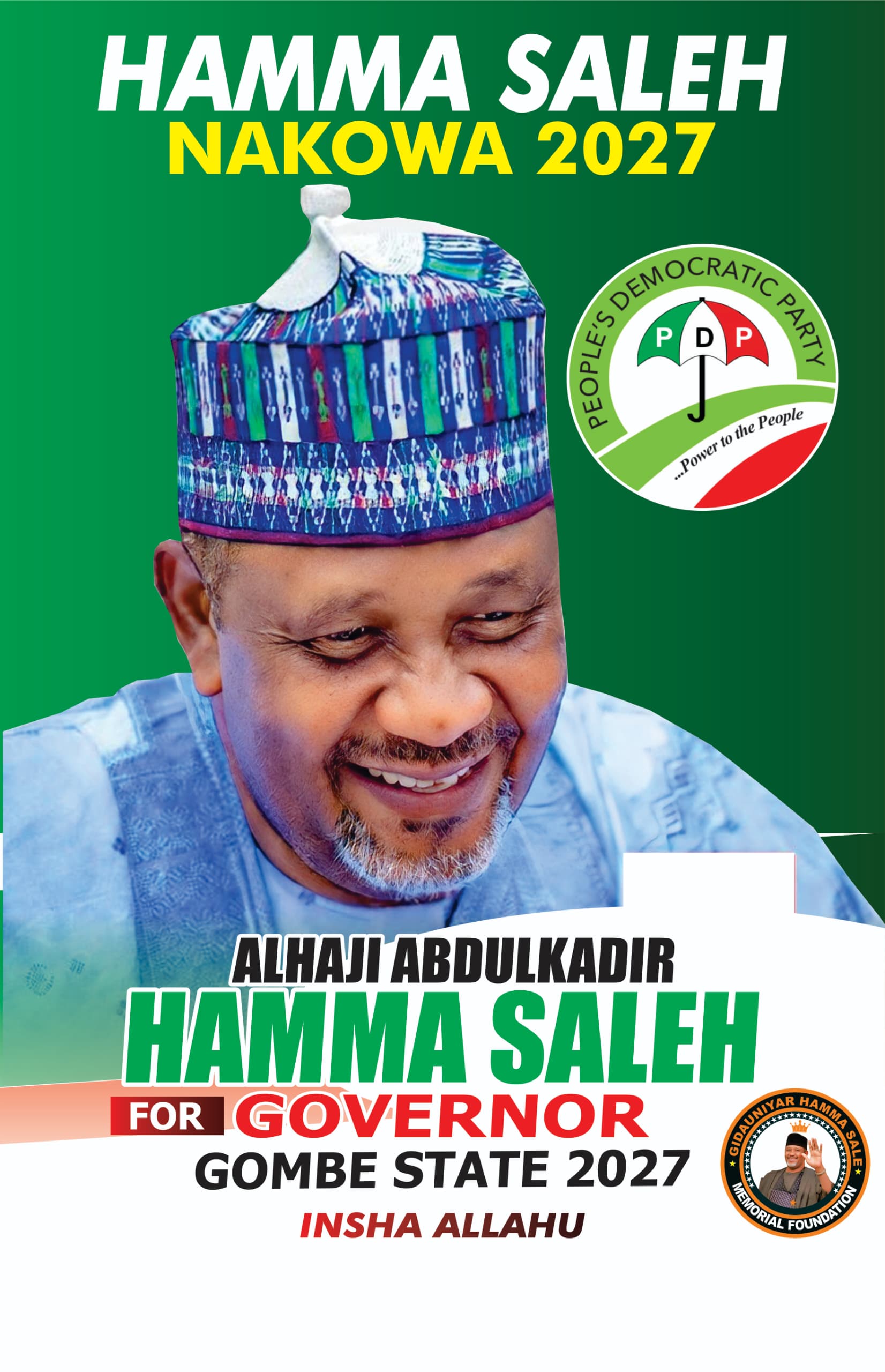
Hamma Saleh Felicitates Muslims, Rejects Pantami’s Alleged Imposition as PDP Candidate in Gombe
By Our Political Reporter
A prominent chieftain of the Peoples Democratic Party (PDP) in Gombe State, Alhaji Abdulkadir Hamma Saleh, has felicitated with Muslims across the state while also expressing strong opposition to what he described as the alleged imposition of Dr. Isa Ali Pantami as the party’s governorship candidate ahead of the 2027 elections.
In a statement made available to journalists, Hamma Saleh called on his supporters and political associates across the state to remain calm, peaceful, and law-abiding despite growing tensions surrounding the party’s internal affairs.
According to him, the principles of justice, fairness, and due process must be respected within the PDP, stressing that no individual should be imposed on party members against their collective will.
He stated that every loyal party stakeholder deserves equal opportunity and fair participation in the democratic process, adding that attempts to sideline aspirants or manipulate the process could threaten unity within the party.
“Justice must prevail. Democracy is built on fairness, consultation, and respect for the wishes of party members,” he reportedly said.
Hamma Saleh further assured his supporters that he would challenge any action capable of undermining internal democracy within the PDP in the state, insisting that the party must remain committed to transparency and credible leadership selection.
The PDP stalwart also used the opportunity to extend warm greetings to Muslims in Gombe State, urging them to continue praying for peace, unity, and progress in the state and the country at large.
He appealed to party supporters not to engage in violence or acts capable of disrupting public peace, emphasizing that political disagreements should always be handled through legitimate and democratic means.
Political observers believe the development may signal fresh political tension within the PDP in Gombe State as preparations gradually begin ahead of the 2027 governorship race.
The party leadership in the state is yet to officially react to the allegations surrounding the reported endorsement or imposition of any governorship candidate.
By Our Political Reporter
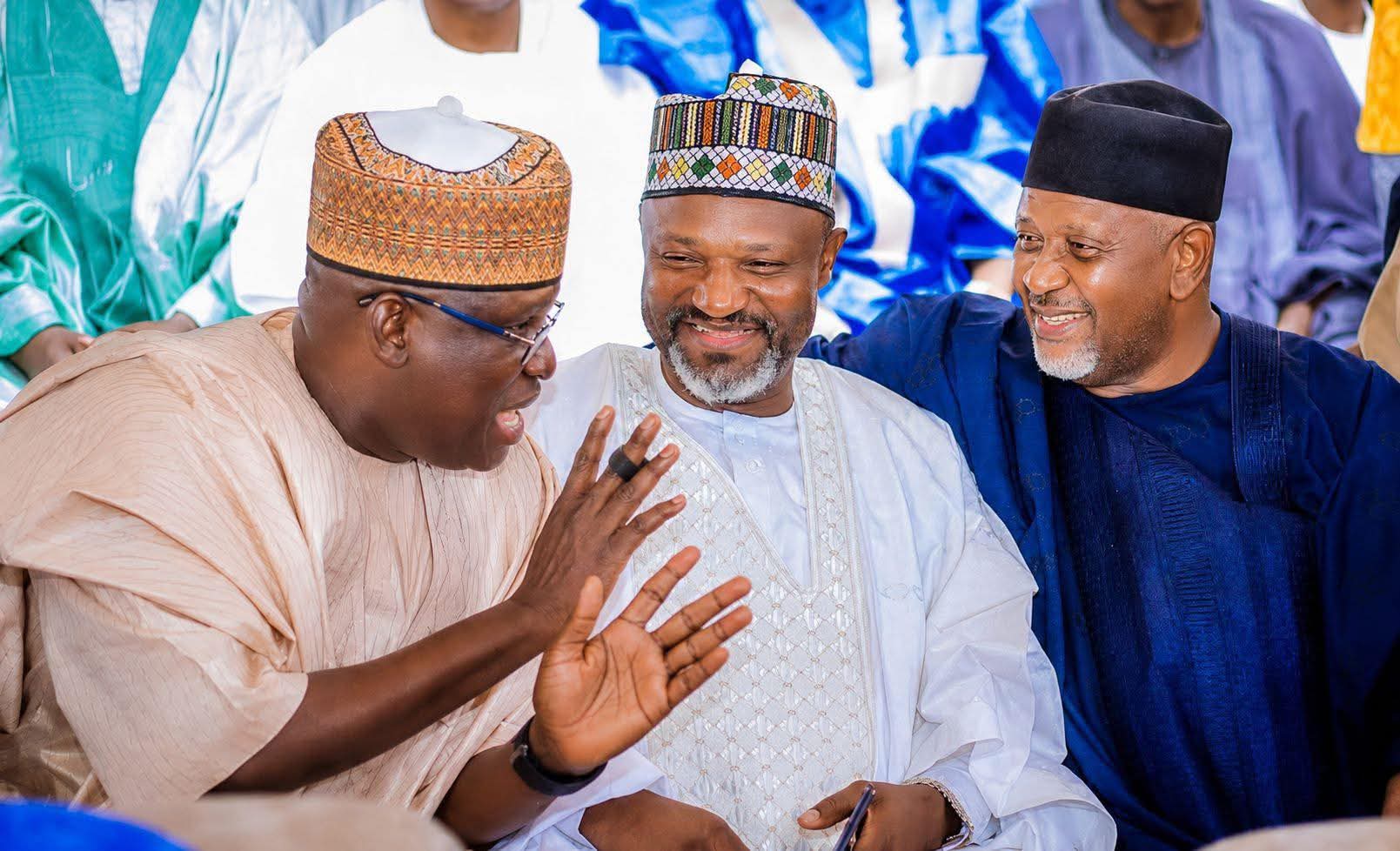
Governorship aspirants of the Peoples Democratic Party (PDP) in Gombe State have cautioned the party leadership against what they described as an alleged attempt to “smuggle” former APC governorship aspirant, Prof. Isa Ali Pantami, into the party’s ongoing governorship primary process ahead of the 2027 elections.
The aspirants, in a communiqué issued on Sunday, argued that Prof. Pantami, who participated in the governorship primary of the All Progressives Congress (APC) held on May 21, 2026, could not lawfully defect to the PDP and contest another governorship primary within the same election cycle.
The communiqué was jointly signed by Alhaji Abdulkadir Hamma Saleh, Hon. Khamisu Ahmed Mailantarki, Usman Aliyu Garry, and Monica Kaltho.
The development comes days after Prof. Pantami announced his withdrawal from the APC governorship primary, citing alleged irregularities in the conduct of the exercise.
The PDP aspirants disclosed that, in the interest of party unity and cohesion, they had unanimously agreed to allow the leadership of the party in Gombe State to select a consensus candidate among them for the 2027 governorship election.
According to the communiqué, the decision was taken “in respect and deference to the leadership of our great party,” particularly the PDP leader in the state, Senator Ibrahim Hassan Dankwambo, alongside members of the State Executive Committee, the 11 Local Government Chairmen, and the Elders Committee.
The aspirants stated that they had already signed a written undertaking pledging to abide by the final decision of the party leadership regarding the emergence of a consensus candidate.
“We therefore condemn in the strongest terms the alleged attempt to smuggle into the PDP primaries an aspirant who, by law and established democratic principles, is ineligible to participate, having already contested in the APC governorship primaries held on 21st May, 2026,” the communiqué read.
They further argued that the law does not permit a candidate to defect from one political party to another and subsequently participate in the same election process after votes had already been cast and counted in another party’s primary election.
While affirming that the PDP remains open to welcoming new members, the aspirants maintained that such individuals should not be allowed to join a primary process already at an advanced stage.
“We strongly object to any attempt to involve such a person in the ongoing PDP gubernatorial primaries,” they stated.
The aspirants also warned the party leadership against taking actions capable of exposing the PDP to avoidable legal disputes and internal crisis.
“We therefore call on the leadership of the party to be properly guided and to desist from promoting any action capable of undermining the rule of law or exposing the party to avoidable litigation,” the communiqué added.
They warned that any violation of due process could trigger serious legal challenges from aggrieved party members and even opposition parties.
The statement concluded with a cautionary note, saying, “As the saying goes, a stitch in time saves nine.”
-

 Politics2 years ago
Former Gombe State APC Promoters Forum Chairman Attacked Following Political Commentary
-
 Appointment2 years ago
Gombe State Indigene, Appointed New Vice Chancellor (ATBU)
-

 Leadership2 years ago
Breaking: African Union Appoints Pantami as Co-Chair of the 4th Industrial Revolution Policy Council
-
 Death1 year ago
Prominent Nigerian Islamic Scholar, Sheikh Sa’idu Hassan Jingir, Passes Away
-
 Health2 years ago
Gombe State Organizes Onboarding Workshop for Private Healthcare Facilities
-
 Politics2 years ago
Gombe State Inaugurates Human Capital Development Council
-
 Water2 years ago
Gombe Government Mobilizes Stakeholders to Combat Illegal Water Connections
-
 Politics2 years ago
Gombe State Launches Presidential Palliative Program (PPP) to Aid Small Businesses